
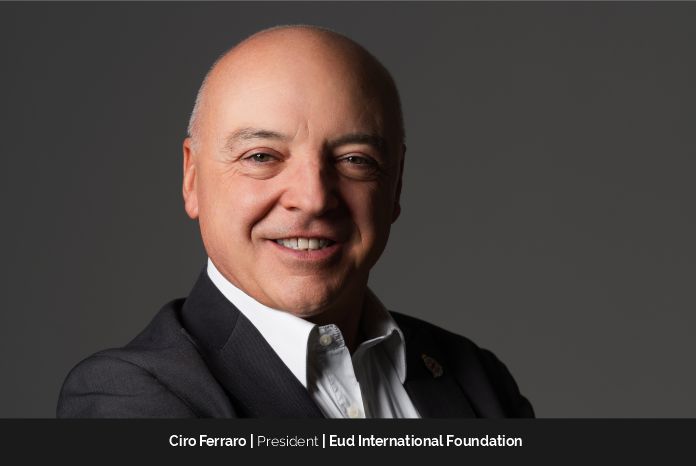
The international foundation sector has become one of the most dynamic arenas of global development, shaped by growing expectations around sustainability, responsible governance, and long-term social impact. In this quickly evolving landscape, only a few leaders succeed in reshaping not just the work of their organizations but the very purpose of the sector itself. Among those voices is Ciro Ferraro, a figure who has steadily emerged as one of the most forward-thinking architects of modern social development.
Ciro’s introduction to this world began with his financial leadership inside the foundation. Years spent overseeing complex international projects helped him understand the disparities that hold communities back, along with the transformative potential of collaboration. His exposure to global development challenges shaped the model he would later create: a practical framework known as social capitalism. Through this approach, he positioned economic value and social good not as opposing goals, but as mutually reinforcing drivers capable of creating long-term, inclusive prosperity.
His commitment to community empowerment is equally central to his work. Through initiatives that focus on skills development, project participation, and shared growth, he encourages people to become active contributors rather than passive beneficiaries. This philosophy is reflected in the Eud Academy, a platform dedicated to training and mentorship, and in initiatives that promote environmental care and sustainability, including large-scale reforestation efforts.
A Turning Point That Redefined His Path
Ciro’s rise to the presidency of Eud International Foundation C.I.C. did not happen by chance. It grew out of a moment that changed his understanding of what global development could look like. During his tenure as CFO, he spearheaded high-impact projects, including a landmark cooperation agreement with the Government of Honduras aimed at expanding education, social housing, and cultural advancement. This initiative revealed the potential of a development model rooted in social capitalism, a concept Ciro had studied and nurtured for years.
The Honduras experience became a defining moment. It showed him that social transformation and economic growth could coexist within the same structure. At that point, he saw the presidency not as a status but as a tool to pursue a larger mission. His belief that leadership must inspire, include, and innovate shaped his transition into the role. With international partnerships multiplying and initiatives such as Eud Academy gaining traction, he recognized that the foundation needed a guiding vision powerful enough to scale globally. According to Ciro, true leadership is understanding that simply leading is not enough. Inspiration fuels collective progress.
Responsibilities That Shape a Global Vision
As President of Eud International Foundation C.I.C., Ciro oversees a structure that spans multiple countries and operational models. His daily work is centered around four critical responsibilities that keep the organization aligned with its mission to create shared value through social inclusion and sustainable development.
Setting and Safeguarding the Strategic Direction
He ensures every project reflects the foundation’s long-term vision. This means transforming ideas into operational plans and measurable outcomes that demonstrate real progress in people’s lives and in regional development.
Governance and Ethical Compliance
Transparency is a non-negotiable principle for Ciro. He oversees regulatory compliance across jurisdictions and reinforces ethical management systems that protect both funds and partnerships. Integrity, in his view, is the backbone of sustainable progress.
Building Global Partnerships
He works closely with governments, international institutions, and responsible investors. These alliances make it possible to expand education initiatives, reforestation programs, social housing projects, and more. Ciro has positioned the foundation as a reliable partner for countries seeking inclusive development strategies.
Measuring Impact and Encouraging Innovation
Accountability drives the organization forward. Ciro monitors social ROI, emissions reduction, training outcomes, and other key indicators. He also nurtures innovation through initiatives like Eud Academy and the co-ownership project model, both designed to elevate communities from within.
His commitment to this mission has placed him among the most influential entrepreneurs in Europe and has contributed to the global recognition of his pioneering approach: a business model built entirely around social capitalism.
Finding Balance Between Global Responsibilities and Personal Life
Leading an international foundation often demands long days and constant decision-making, and Ciro meets these challenges with a structured approach grounded in discipline and clarity. In building and implementing international projects with high social impact and in leading others toward success, he believes that ethics, transparency, and positive, computational thinking are essential.
Delegating with Purpose
He surrounds himself with a trusted group of executives, allowing him to focus on strategy rather than micromanagement. Decision-making frameworks are clearly defined, which keeps the organization agile and cohesive.
Planning That Protects Personal Time
He uses time-management systems that separate professional tasks from personal commitments. Sports, reading, and time dedicated to his family are not luxuries but essential parts of his strategy for sustained leadership.
Living a Mission That Matches His Values
The principles guiding the foundation mirror his own. This alignment reduces the separation between work and personal life, allowing purpose to become a source of energy rather than pressure. Projects with social impact motivate him deeply, creating a meaningful balance between duty and identity.
Smart Use of Technology
Digital platforms allow him to stay connected without being physically present everywhere. Hybrid work styles help him maintain efficiency while reducing unnecessary stress.
Ciro often remarks that the key is not to do everything, but to do what matters and to do it well. His mornings begin with reading and reflection, a ritual that keeps his thinking sharp and imaginative.
A Personal Definition of Success
Ciro believes success has little to do with titles or the number of projects completed. He measures it through people: the students who gain access to education, the communities that grow stronger, and the individuals who discover new skills and autonomy. For him, true leadership creates value that lasts, visible in projects that continue to thrive even without his direct involvement, as demonstrated by the foundation’s model of social capitalism. Integrity also shapes his vision, since reputation, in his view, comes from consistency between words and actions, especially in a world where misinformation is common. He considers well-being a non-negotiable element of leadership and sees a clear mind and a motivated team as essential to sustainable progress.
Success, to Ciro, is ultimately defined by ideas that uplift communities, inspire new standards, and generate long-term value rooted in transparency, ethics, and respect for people and the planet.
A Challenge That Tested His Vision
Among the many hurdles that shaped Ciro’s journey as President, one stands out as a defining test of his leadership. As the foundation expanded into regions such as Honduras, Mexico, and several African nations, the ambition was profound. The goal was to reduce poverty, strengthen education, improve social housing, and build public-private partnerships capable of lifting entire communities.
The real difficulty lay in navigating cultural differences, complex regulations, and unpredictable economic conditions. Resources were limited, but expectations were high. Ciro approached this challenge with three decisive strategies. He built alliances with local governments, including a pivotal memorandum of understanding with the Government of Honduras. He introduced a new governance model rooted in the principles of social capitalism, a framework that made it possible to attract ethical investors during uncertain times. He also elevated transparency and communication, strengthening the foundation’s credibility as a global integrator of social and economic development. His belief that adversity can become a source of innovation helped transform a moment of strain into a catalyst for growth.
An Evolving Philosophy of Leadership
Ciro’s leadership philosophy has undergone significant transformation throughout his career. In the early years, shaped by his background in finance, he focused on performance, efficiency, and technical precision. Leadership meant making fast decisions and maintaining strict control.
Experience in international environments broadened his perspective. Over time, he saw that meaningful change comes from inclusion and shared purpose. People give their best when they feel connected to a mission. His leadership gradually shifted from directing to enabling, fostering a culture where individuals could grow, innovate, and take ownership.
Today his philosophy rests on three pillars. The first is a shared vision that aligns every decision with the foundation’s mission and is understood by all stakeholders. The second is empowerment, which means placing trust in people, giving them the tools to develop, and supporting their autonomy. The third is moral integrity, which guides decisions to respect both people and the planet and create long-term value.
A Landmark Achievement That Redefined His Leadership
Among Ciro’s many accomplishments, one milestone has had an extraordinary influence on his identity as a leader. The creation and implementation of the social capitalism model marked a turning point both for him and for the foundation. It evolved from a theoretical idea into a functioning economic-financial system that guided the organization through the global turbulence of the COVID-19 pandemic.
This model attracted ethical investors at a time when financial uncertainty dominated global markets. It enabled the foundation to launch sustainable projects with measurable impact, including a social ROI of 2.8 euros for every euro invested. It also allowed Eud Academy to train more than 5,000 people, providing skills that created real professional pathways. The success of this model demonstrated that social impact and financial sustainability are not opposing forces. They can advance together with the right structure and the right leadership.
Inspiring the Next Generation of Leaders
Ciro’s aspiration extends beyond organizational achievements. He aims to build a legacy that teaches future leaders how innovation, ethics, and economic strength can coexist without compromise. He hopes young innovators and changemakers will adopt three core principles in their journey.
He believes leadership should be viewed as a service, placing people and the planet at the center. He encourages courage in difficult times, seeing global challenges as opportunities to create solutions that benefit others. He also hopes that sustainability becomes a strategic pillar for future decision-makers, not an optional consideration. Through the foundation’s initiatives, he wants young leaders to discover that impact does not begin with power but with purpose.
Innovation and Collaboration as Drivers of Change
Ciro considers innovation and collaboration to be inseparable forces behind global progress. Within the foundation, innovation does not refer only to technology. It involves reimagining economic and social structures to produce shared value. This is the philosophy that led to the creation of social capitalism, the cornerstone of the foundation’s development model.
Collaboration is what gives innovation the capacity to grow. Ciro has built a network of governmental, corporate, and community partners, each contributing expertise and resources. This approach has enabled programs such as Earth’s Call and Eud Academy to reach thousands of people. His belief is simple: innovation plants the seed, collaboration helps that seed take root and flourish.
A Lesson That Changed His Understanding of Leadership
Ciro often recalls the moment when his understanding of leadership fundamentally changed. During the early phase of the foundation’s international expansion, which coincided with the global instability of the COVID-19 pandemic, he realized that control was not sustainable. Complexity demanded teamwork. At that point, he learned to trust others, delegate responsibilities, and build alliances that would strengthen the organization.
The lesson became a cornerstone of his leadership. Trust must be extended before it is demanded. Human capital must be treated as the foundation’s most valuable resource. Integrity must remain consistent, even when decisions are difficult. He believes leadership is an act of responsibility that looks beyond personal success to the development of others and the creation of opportunities for future generations.
Guidance for Rising Professionals in the Nonprofit World
Ciro offers practical advice for young professionals who aspire to lead within international foundations or nonprofit organizations. He encourages them to cultivate an authentic vision built on a clear understanding of the problem they hope to solve. He advises investing in personal growth through continuous learning and communication skills. He highlights the importance of forging partnerships with governments, businesses, and communities, noting that transformative change is always a collective effort.
He emphasizes the need to measure outcomes rather than intentions, using social, environmental, and economic indicators to demonstrate real results. Above all, he urges resilience and integrity, reminding emerging leaders that values must guide decisions, even when challenges intensify. His message is that true leadership is defined by the value created for others.
Foundations in the Future European Landscape
In Ciro’s view, international foundations will play a more strategic role in Europe over the coming decade. Their influence will expand across borders, supported by a growing number of organizations capable of operating transnationally. With assets surpassing one trillion euros and disbursements that rival American philanthropy, European foundations will increasingly shape public policy and societal development.
Digital transformation will become essential, with new technologies streamlining fund management, improving impact assessment, and strengthening transparency. Sustainability will take center stage as foundations play a crucial role in advancing the Sustainable Development Goals. Ciro sees significant potential in areas such as energy transition, reforestation, and social inclusion. He points to the foundation’s own initiatives such as Earth’s Call for reforestation, and the House of Children, Angiolino Pigiamino, and Smart Fun programs for social integration as examples of meaningful progress.
He emphasizes that the construction and implementation of projects and plants for sustainable energy production must be carried out responsibly, without damaging the planet’s subsoil, which he views as a shared heritage of the global community of all living beings. This, he believes, is the real global challenge of sustainability in the ecological and environmental transition of energy production.
Today, the foundation, together with its collaborators, partners, and highly qualified cultural and engineering professionals dedicated to this sector, already has three plants designed and under construction. He also anticipates a modernized regulatory framework in Europe, enabling easier cross-border collaboration and establishing a unified public benefit label. Foundations will play an increasing role in social diplomacy, partnering with governments to address migration, climate change, health challenges, and community development.