

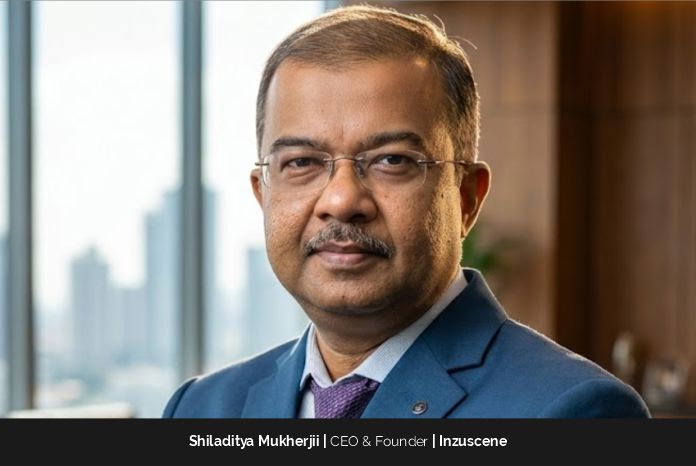
Shiladitya Mukherjee is the CEO and Founder of Inzuscene, a company that empowers multinational enterprises through digital transformation, ERP, and field service management solutions. After several years of experience as a project and program manager, he built Inzuscene to address gaps in partner expertise, client engagement, and business alignment, while fostering a culture where employees grow as leaders and innovators.
Purpose Built for Partnership
Inzuscene is an IFS partner in multiple geographies. They work closely with IFS to deliver projects in several industry verticals. Shiladitya explains how his background as a project and program manager shaped the foundation of Inzuscene. “Consistent delivery comes from discipline, accountability, and a deep understanding of business outcomes. When teams execute with clarity and ownership, confidence and credibility follow naturally,” he explains.
As the IFS ecosystem evolved toward a more partner-focused model, Shiladitya saw an opportunity to scale with intent. “Change exposes both strengths and gaps in the market. When you recognize where expertise, alignment, or ownership is missing, it becomes possible to build something more meaningful,” he reflects.
Shiladitya believes that a true partner does more than implement technology. They align with the client’s vision, take responsibility for outcomes, and build trust that lasts beyond delivery. Inzuscene was created to address gaps across technical depth, client engagement, account growth, and business alignment.
The company’s mission centers on trusted partnerships and people-led growth. “Technology only succeeds when the people behind it are empowered to lead and innovate. Culture is what sustains long-term value for clients and teams alike,” he says.
Leadership Shaped by Ownership
Founding a company reshaped Shiladitya’s view of leadership. Building from the ground up required him to wear every hat, creating deep personal ownership and practical problem-solving. “When you carry the full weight of decisions, you learn accountability in its truest form. That experience changes how you lead forever,” he explains. Challenges and burnout became critical teachers, reinforcing integrity and accountability as leadership essentials. “Leadership shows up most clearly in failure. Owning mistakes with honesty is what earns trust and respect,” he reflects.
As the company scaled, Shiladitya shifted from founder to CEO, learning to delegate and build teams that think like owners. He defines modern leadership as decisive yet empathetic, demanding yet human. “Growth is not about control. It is about empowering people to lead, adapt, and take responsibility. Authentic leadership empowers others to lead from every seat. That’s how resilient cultures and lasting impact are built,” he says.
“Growth without control is failure in slow motion.”
Navigating Growth Through Discipline
While building Inzuscene, Shiladitya faced several challenges across competition, delivery, talent, and culture. Facing strong competition from established and emerging ERP and IFS partners on entering the post-COVID market required constant differentiation across clients and regions. “Relevance has to be earned continuously. Every client and geography demands a clear and evolving value proposition,” he explains.
When operational complexity increased with global delivery across Africa, Southeast Asia, and the Middle East, he used strong coordination and communication to manage distributed teams. “Scale fails without structure. Global teams only work when alignment is deliberate,” he explains. Shiladitya learned that continuous innovation and quality focus were key to maintaining high delivery standards while growing the business. “Customer trust comes from consistency. Excellence cannot be situational,” he reflects.
As Inzuscene scaled and talent scarcity proved challenging, Shiladitya invested heavily in senior consultants, structured upskilling, and preserving organizational culture. “People stayed because they believed in the journey. Investing in capability was the only way forward. Culture does not grow automatically. It has to be reinforced intentionally as the organization expands,” he explains.
“Discipline compounds faster than talent.”
Balancing Vision with Execution
Shiladitya approaches the task of running a company by balancing creative thinking with strategic discipline, aligning innovation closely with the company’s core business to manage risk and ensure impact. “Creativity only creates value when it is anchored in strategy. Innovation without direction quickly becomes a distraction,” he explains.
He also emphasizes diversity of thought, building teams with varied backgrounds and perspectives. “No organization should be constrained by one person’s vision. When intelligent minds challenge and expand ideas, growth becomes exponential,” he reflects.
While encouraging new ideas, Shiladitya maintains a strong focus on operational rigor and financial sustainability. “Ideas may be exciting, but execution pays the bills. Creativity must coexist with discipline to ensure continuity and long-term success,” he insists.
“Focus determines success.”
A Milestone That Defined Credibility
A defining moment in Shiladitya’s career was securing a major multi-year digital transformation contract to modernize a client running a legacy system from the 1980s. This required a complete overhaul of processes and alignment with global best practices to transform how the business operated end to end.
The scale of the engagement placed Inzuscene in the industry spotlight and unlocked new accounts. Strong client ratings and continued contracts reinforced its impact. “That project validated our capability and changed how the market perceived us. Repeat trust from the same customer is the strongest indicator of success,” he observes.
Leading Through Values
Shiladitya embeds personal values into every aspect of Inzuscene, shaping culture, client trust, and long-term growth. Integrity guides transparency with clients and teams, reputation compounds faster than marketing, and long-term trust is built by honesty, excellence, ethical technology use, and continuous learning. His long-term vision guides decisions, while respect and empathy protect talent and sustain performance. “Empathy does not lower standards. It ensures excellence can be maintained over time,” he reflects.
For Shiladitya, customer outcomes take priority over billable hours. He stays involved in critical client interaction, modeling ownership, taking responsibility for failures, and crediting others for wins. “I’m building a company, not chasing invoices,” he notes. “When a client has a problem, it becomes our problem. Leadership means standing with both the customer and the team. Curiosity, ethics, and humility keep a business relevant and trusted.”
“Someone who doesn’t dive will never measure the depth of the lake.”
Innovation With Purpose
Shiladitya believes that innovation thrives when it’s intentional, aligned with business goals to solve real problems, and connected to impact and direction. Ideas emerge from day-to-day challenges and are supported in a safe-to-fail environment. Proof of concepts are encouraged, and learning is rewarded even if the idea does not manifest into a product. “Failure is part of discovery. Teams innovate best when they know experimentation is valued, not punished,” he reflects.
Client input informs innovation, but the company retains control over its vision to ensure alignment with strategy. Purposeful investment evaluates tools, time to market, relevance, and ROI. Strategy is periodically shaped by innovation, creating a streamlined go-to-market approach and measurable outcomes.
“Innovation without discipline is chaos. Measuring impact ensures creativity drives competitive advantage and sustainable growth,” Shiladitya observes. “True innovation shapes the future, but only when it’s integrated with execution and business priorities.”
Empowerment Through Trust and Clarity
Shiladitya is deeply influenced by Ratan Tata’s quote: “Take a decision and then make it right.” He believes cultivating empowerment and collaboration is not rooted in perks or slogans, but in how decisions are made and trust is demonstrated. “Empowerment grows when people understand their boundaries, can make decisions confidently, and know their voice matters,” he explains.
At Inzuscene, decision-making is decentralized, with clear limits and approvals defined for every role. Quarterly townhalls and transparent sharing of achievements, learnings, and financials reinforce alignment. “Transparency builds trust. When people see the full picture, they engage and collaborate more meaningfully,” he reflects.
Feedback loops are integral, ensuring empowerment and collaboration evolve continuously. “Empowerment is not a one-time effort. Continuous listening, learning, and adjusting is what sustains a collaborative culture,” he observes.
“Take a decision and then make it right.” – Ratan Tata.
Advice for the Next Generation of Entrepreneurs
Shiladitya advises aspiring entrepreneurs to be honest, grounded, and experience-driven, avoiding motivational clichés. “Entrepreneurship is not about shortcuts or glamour. It’s a responsibility that tests your judgment, resilience, and integrity,” he explains.
The key principles he emphasizes include:
- Entrepreneurship is responsibility before freedom – shortcuts and glamour rarely lead to sustainable success.
- Trust over shortcuts – credibility and relationships propel growth farther than marketing.
- Solve a real problem, not just a cool idea – practical demand outweighs brilliant concepts without impact.
- Execution matters most – consistent delivery of average ideas beats occasional brilliance.
- Treat failure as data – calculated risks teach more than success ever could.
- Embrace uncertainty – discomfort with unpredictability is a sign that entrepreneurship may not be the right path.
- People matter more than technology – talent decisions have a greater long-term impact than tech choices.
- Cash flow is critical – businesses fail from running out of cash, not from ideas alone.
- Define your own success – chasing others’ definitions leaves achievement hollow.
- Embrace personal transformation – entrepreneurship reshapes your mindset, skills, and resilience.
“Entrepreneurship will change you more than your business. Embrace it fully, with integrity and curiosity,” he advises.
Shaping the Future of IT Services
Shiladitya predicts that the IT services industry will shift toward outcomes, platforms, and intelligence, with traditional billing models becoming increasingly obsolete. Pure services firms will struggle without internal IP, specialization, and strong security protocols. “Labor-heavy services will face margin pressures, and vendors will need to focus on delivering measurable outcomes, not just technology,” he explains.
Inzuscene is preparing by building proprietary products and investing in cybersecurity expertise, AI-powered analytics, and security-first solutions. Continuous workforce training ensures the team can deliver AI-enabled and secure services effectively. “Data is the new currency, and protecting it while extracting meaningful insights will define competitive advantage in the next decade,” Shiladitya observes. “Innovation, security, and skill development are not optional. They’re the foundation for sustainable growth and differentiation in the data-driven era.”
“Competitive advantage is not only through technology, but rather the creation of value, which needs perseverance and dedication.”
Inspiring the Next Generation of Leaders
Shiladitya believes in leading as a role model rather than a traditional boss. Since the start of his career, he has embraced participative leadership, giving everyone a fair chance to share their thoughts and contribute to informed decision-making. “Leadership is not about titles or authority. It is about setting a standard through actions and creating environments where others can thrive,” he explains.
The impact he hopes to have on future business leaders includes:
- Systems Thinking – Future leaders should approach challenges holistically, understanding the interconnectedness of decisions rather than focusing solely on execution.
- Ownership and Accountability – Leaders must foster a culture where accountability is embraced without blame, and ownership is valued over hierarchy.
- Learning from Failure – Mistakes should not be feared; they must be normalized as opportunities for growth, with learning intentionally integrated into leadership development.
- Integrity as a Core Value – Ethics should be treated as foundational, not optional, guiding all decisions and actions.
- Collaboration Over Heroics – Encouraging respectful disagreement and the ability to make calm, informed decisions under pressure, future leaders should prioritize collaboration over individual heroics.
“True leadership is measured by the ability to empower others to lead. When integrity, accountability, and curiosity are embedded in culture, the impact lasts far beyond any single leader,” he reflects.
Redefining Success Beyond Numbers
Shiladitya defines success not by revenue growth or brand recognition, but by the positive impact created for all stakeholders. Integrity is central, guiding decisions over short-term gains and fostering lasting relationships.
“True success is about making a meaningful difference in the lives of customers, partners, and team members. It’s measured by trust, respect, and sustainable value, not just numbers,” he explains. “Choosing ethics over expedience preserves trust across every interaction, and that foundation outlives any recognition.”
Contributing to the broader ecosystem and society is equally important to Shiladitya. He derives a sense of achievement from designing resilient business models that endure leadership transitions, adapt to market and technology shifts, and uphold robust processes, and envisions building a self-reliant organization capable of navigating leadership transitions, where transparency and fairness guide every decision.
“Sustainability in business is about creating structures and culture that persist beyond any individual leader,” he observes. True success lies in creating a culture and organization that can thrive long after individual leaders move on.”
Ultimately, Shiladitya measures success by the legacy of trust and respect left behind. He aims to establish Inzuscene as a trusted and respected name in the industry, known for its values, integrity, and the positive difference it creates, as defined by its meaningful impact on customers and team members.
“Recognition fades, respect endures. Legacy is not measured by awards or numbers, but by trust, respect, and the lasting impact on people and the ecosystem. That’s the truest measure of success,” he reflects.
“Hard work will beat intelligence every time.”
Conclusion
Shiladitya Mukherjee envisions a legacy defined by meaningful impact on customers, employees, and the broader ecosystem. He aims to create a self-reliant organization guided by transparency, fairness, and integrity, capable of thriving through leadership transitions. Through his leadership, Inzuscene continues to be recognized not only for its technological expertise but also for the lasting trust, respect, and positive change it brings to all stakeholders.