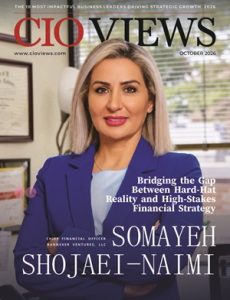

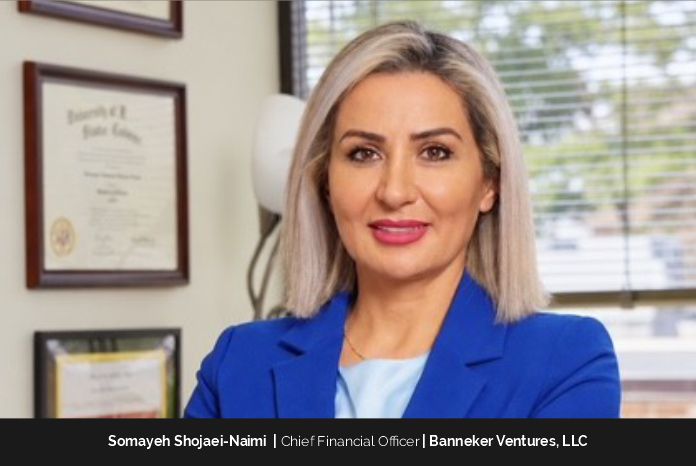
“Numbers tell you where a business stands; leadership determines where it can go.” For Somayeh Shojaei-Naimi, that conviction connects two leadership roles: CFO of Banneker Ventures, LLC, and CEO of Yaz Construction. With approximately 21 years in construction, she brings an operational perspective to financial strategy. Before entering the world of accounting and finance, she spent more than five years managing projects and building estimates from the ground up. Those early responsibilities taught her to see more than figures on a balance sheet. Behind the numbers were contracts, crews, deadlines, and decisions that shaped a project’s success.
Finance gave her a broader view of how those decisions fit together. Entrepreneurship made their consequences more personal. Today, her work connects the discipline of corporate financial leadership with the judgment of a business owner, guided by a central question: how can a company pursue opportunity without weakening the foundation that supports it?
From Operational Insight to Executive Influence
Somayeh joined Banneker Ventures eleven years ago, but not as chief financial officer. She earned that role through expanding responsibilities across corporate finance, construction, real estate development, property operations, and capital management. Working across those functions helped her understand not only how each performed, but how a decision in one could change the outlook for the others.
As CFO, she combines financial stewardship with a forward-looking role in executive decision-making. Cash flow, debt obligations, and tax strategy are not isolated responsibilities; together, they help determine which opportunities the business can pursue and how confidently it can commit. That places finance inside the strategic conversation, not at the end of it. The value lies in helping leadership understand the resources a decision requires, the risks it introduces, and the commitments the organization must be prepared to honor.
That experience has shaped a clear leadership principle: “Financial leadership is not about controlling growth. It is about creating the foundation that allows growth to happen with confidence.” Her focus extends beyond explaining past performance to anticipating pressure points, assessing trade-offs, and preparing the business for its next stage.
Yaz Construction: A Family Vision, a Disciplined Foundation
Yaz Construction began with a shared family ambition: to build a business of their own. Somayeh, her husband, and her brother brought their construction backgrounds to the venture, with Somayeh adding the financial and business expertise to help give that ambition structure.
From the outset, completing projects was only part of the goal. She wanted to build a company capable of sustaining its commitments, developing its capacity, and growing on sound financial terms. Shared ambition provided the starting point; financial structure would help determine how far the company could go. Building a family business brought those two priorities together, giving her professional experience a deeply personal purpose without diminishing the need for commercial discipline.
Ownership brings financial decisions into immediate focus. Payroll must be funded, subcontractor commitments honored, and working capital available when a project needs it. As the CEO of Yaz, she weighs those demands directly against the appeal of new work, bringing an owner’s accountability to every assessment of risk and return.
That perspective also informs her work in corporate finance. It keeps strategy grounded in what a business must deliver today while making room for what it hopes to achieve tomorrow.
Turning Financial Insight into Strategic Growth
For Somayeh, strategic growth begins with understanding what drives the numbers. A change in project costs can put pressure on cash flow; a financing decision can expand or limit the next opportunity. Seeing those connections allows her to bring operational consequences into financial discussions before commitments are made.
She describes the responsibility in terms that reach beyond any single reporting period: “The strongest leaders do more than manage today’s results. They build the financial strength, people, and systems that make tomorrow’s opportunities possible.”
In 2018, as Banneker Ventures considered moving away from general contracting to focus exclusively on real estate development, Somayeh supported the ambition while raising a practical concern: long-term asset growth needed operating cash flow. She advocated retaining general contracting alongside development. That decision helped to provide cash flow for acquisitions and expansion while preserving a capability that would become increasingly valuable: the ability to serve as general contractor on the company’s own multifamily and retail projects.
The value of that approach is now visible in Banneker’s development activity. The company broke ground on a $96 million development in Prince George’s County, Maryland, which is scheduled for completion by the end of 2026. Today, Banneker’s portfolio is valued at billions of dollars. With separate general contracting, property management, and real estate development arms, Banneker’s structure illustrates how maintaining complementary capabilities can support a broader growth strategy.
Somayeh’s experience across large-scale real estate development and family-owned construction gives her a practical view of growth at different stages. That combination is central to her recognition among The 10 Most Impactful Business Leaders Driving Strategic Growth, 2026.
Where the Boardroom Meets the Job Site
The two companies give Somayeh different vantage points on the same challenge: turning a sound financial plan into dependable execution. Each role strengthens her understanding of the other.
At Banneker Ventures, her perspective spans major real estate and construction projects, lender negotiations, risk controls, and project-level budgets. She connects capital decisions with conditions on the ground, assessing how a project’s progress affects the wider financial picture.
At Yaz Construction, the lens is that of an owner. Assessing a project opportunity means considering bonding capacity, available resources, and the day-to-day demands that follow a successful bid.
The scale and responsibilities differ, but the discipline remains consistent. Financial strategy must work in practice, not just on paper. Her background in estimating and project management gives that principle substance: she understands the work behind a budget as well as the financial expectations attached to it. That connection helps explain why operational knowledge remains central to her executive perspective.
Bigger Contracts, Better Questions
When evaluating new work at Yaz, Somayeh draws on three distinct perspectives. As she explains, ” I can evaluate an opportunity from the perspective of a project manager, financial executive, and owner.” Together, those perspectives help her test whether a contract fits the company’s capabilities, financial resources, and longer-term direction. The project manager considers what execution will demand. The financial executive examines the funding and risk. The owner weighs the broader consequences for the company. Bringing all three into the same decision makes the evaluation more complete than any single perspective could.
The real test comes after the contract is signed. Larger projects can increase payroll, subcontractor commitments, and working capital needs well before customer payments arrive. Somayeh weighs those demands against banking support, bonding capacity, and expected profitability to determine the right size and timing of a job. Her distinction is clear: “Growth gets attention, but disciplined growth builds companies that last.”
Creating Opportunity Beyond the Business
Somayeh’s ambitions extend beyond the organizations she leads. She wants her path to show aspiring professionals that financial expertise can open doors into operations, entrepreneurship, and executive leadership, rather than confine them to a single function.
For her, the human purpose of financial leadership is as important as its technical demands. Stronger businesses can support teams, sustain families, and create opportunities for others. She hopes to encourage emerging leaders to look beyond their job descriptions and consider the broader contribution their knowledge can make.
Technology That Serves the Strategy
Somayeh sees the next chapter of finance as an opportunity to spend less time assembling information and more time interpreting it. Her interest in automation, artificial intelligence, data analytics, and real-time reporting centers on their potential to support clearer insight and more timely decisions.
At Banneker Ventures, she is helping to strengthen systems and reporting practices to give leadership a clearer picture of the business. The objective is not simply more data. It is useful information, available early enough to influence a decision rather than merely explain its outcome. In that context, the promise of technology is not a replacement for judgment, but better support for it. Faster reporting becomes valuable when it helps leaders recognize a developing issue, understand its implications, and decide where their attention is most needed.
At Yaz, that same outlook informs how she thinks about estimating, scheduling, project controls, and collaboration. As the company takes on more work, its operating systems must be ready to support the added complexity. Her measure of technology is practical: does it improve execution and help the business anticipate what comes next? The guiding principle is that “infrastructure should enable strategic growth rather than struggle to catch up with it.”
A Milestone Earned Through Experience
Becoming CFO at Banneker Ventures was more than a change in title for Somayeh. It brought together the operational, financial, and strategic experience she had accumulated throughout her career. The designation recognized experience built across the organization, not simply within its finance function. By the time she stepped into the role, her responsibilities had already drawn her into decisions about the business as a whole.
Building Yaz with her husband and brother gave that experience a different purpose. Lessons learned through project management, estimating, and executive work became the foundation for a family enterprise in which responsibility was both professional and personal.
One role reflects the trust earned inside an established organization; the other, the responsibility of building something of her own. Together, they give her career a defining thread: a willingness to grow beyond the boundaries of the role she started in.
Building Teams, Not Dependence
Balancing corporate financial leadership with a family business requires more than longer hours. Audits, liquidity management, banking relationships, and daily operating decisions all compete for attention. For Somayeh, the challenge is to maintain rigor without making herself the only person who can move the work forward.
Her response rests on reliable systems, clear priorities, and meaningful delegation. Those demands have reinforced her belief that “a leader’s greatest impact is not measured by how much they accomplish alone, but by the strength of the organization they build to succeed beyond them.” Managing both roles has sharpened her executive discipline and reinforced the importance of building teams and processes that do not depend on one person for every decision.
Delegation, in this view, is not distance from responsibility. It is a way to extend an organization’s capacity while preserving accountability. The aim is to give people room to contribute without losing the clarity and consistency that complex work requires.
Trust as a Foundation for Growth
Somayeh’s approach to responsible growth begins with a clear conviction: “Ambition creates opportunity, but strategy, discipline, and accountability turn opportunity into sustainable success.” At Banneker Ventures, that means aligning liquidity, capital structure, and financial commitments with operational capacity. An opportunity must be assessed not only for its potential, but also for the pressure it places on the business.
Credibility is part of that discipline. Lenders, partners, employees, and clients make decisions based on the information and commitments a company provides. Accurate reporting and dependable follow-through are therefore central to the trust on which growth relies.
At Yaz, the same standard applies to contracts, compliance, project delivery, and relationships with employees and subcontractors. For Somayeh, financial judgment and personal integrity belong in the same conversation. Neither can substitute for the other. The strength of a business is expressed not only in the opportunities it wins, but also in how reliably it meets the obligations that follow. That is where a leadership philosophy becomes visible to the people who depend on it.
Advice for the Next Generation of Leaders
Her advice to aspiring financial executives starts with understanding the business behind the statements. Technical expertise matters, but it becomes far more valuable when connected to operations. As she explains, “A CFO becomes significantly more effective when he or she understands how revenue is generated, how projects are executed, where operational risks originate, how contracts are structured, what drives profitability, and how capital moves through the organization.”
Understanding how a decision becomes a cost, a commitment, or a cash requirement later helped her use financial information to guide action, not just record results.
She places equal weight on communication. Financial professionals must explain complexity clearly, question assumptions constructively, and work with operational teams to connect decisions with financial outcomes. Knowing the answer is only part of the responsibility; helping others understand why it matters is what makes that knowledge useful. For emerging leaders, this means learning to move between technical detail and the broader business choices that detail should inform.
For entrepreneurs, she emphasizes a distinction that can determine whether growth is sustainable: a business can show a profit and still lack the cash to meet its obligations. She explains, “Revenue does not necessarily equal profitability, and profitability does not necessarily equal liquidity.” Working capital, access to funding, and the timing of cash flows must remain part of every growth decision.
From job-site decisions to executive strategy, Somayeh’s career has been shaped by a consistent ambition: to build the capacity that makes progress possible. Her message to the next generation is to keep learning, protect credibility, and develop people alongside the business. In her words, “Strategic leadership is ultimately about creating the financial and operational foundations that empower companies and the people within them to succeed.”