
While many technologies in enterprise software continue to be driven by the abstract measurement of features and hype around algorithms in today’s world of software engineering, benefits administration software stands out as one of the most high-risk, people-focused fields in today’s corporate environment. As a field, benefits administration technology is fundamentally focused on the connection between people and process, and the execution of that process within an increasingly regulated environment.
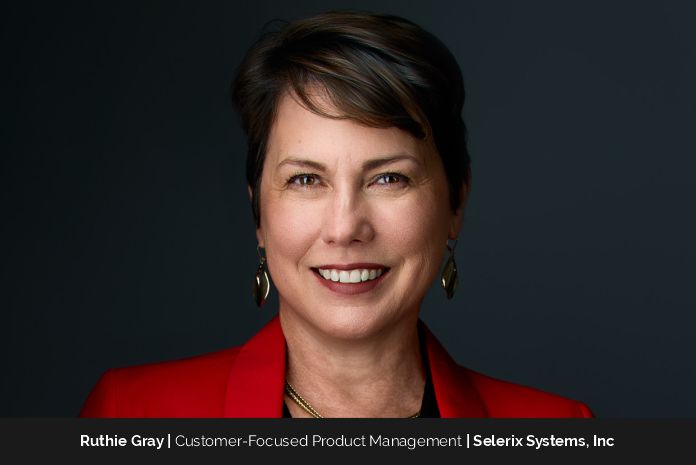
Ruthie Gray, Chief Product Officer at Selerix Systems, has embodied this multidisciplinary perspective throughout her career. Having come to the industry with an unorthodox background that includes organizational psychology, computer programming, a long break from working, and a practical path from startup generalist to product executive, Ruthie has formulated a product philosophy that emphasizes intentionality, radical candor, and aggressive customer advocacy. Through Ruthie’s product management, Selerix has been able to expand its platform, complete acquisitions, and create innovative, closed loop artificial intelligence.
The Psychology of Product: Building for the Human Element
The path Ruthie took towards software leadership didn’t start in computer science classrooms, but in organizational psychology. The initial direction of her studies was to learn about human behavior, task efficiency, organizational behavior and interface efficiency, basic principles that she used forevermore in dealing with technologies.
She joined the world of development after passing through an intensive internal program of Systems Engineering at Electronic Data Systems (EDS), where people from non-technical backgrounds were quickly taught coding. After a ten-year career break spent raising her children, Ruthie returned to work in 2009 as the twelfth employee at Selerix and joined in a position specially designed for someone knowledgeable of technical reasoning without the need to write code.
“When I found myself in benefits technology, it resonated immediately,” Ruthie observes. “The whole point of this industry is supposed to be simplifying something people find confusing and high-stakes. Building for the human being on the other end of the process, not an abstract enterprise buyer, is where my organizational-psychology instincts keep pointing me.”
This non-linear path turned out to be a great strategic asset. In benefits technology, in which software affects how employees perceive, choose, and use their health and financial coverage, the psychological perspective of Ruthie helped concentrate on the task at hand. The perspective oriented her towards solving the issues that the front-line administrators and individual employees faced while choosing their health plans during open enrollment.
Navigating Scale: Integrating Complexity Without Compromising Utility
As Selerix grew from being a startup company to becoming an enterprise solution, Ruthie shifted into more structured leadership with roadmaps and development cycles. The significance of her tenure as Chief Product Officer lies especially in her strategy regarding corporate acquisition. In just 18 months of expansion, Selerix managed to integrate not only an ACA compliance system but also two resellers without having all acquired codebases in one architecture.
“Acquisitions are not inherently a product story, but each organization forced a different kind of product decision,” Ruthie Gray explains. “Neither decision was about technology. Both were about deciding whose approach was right for the client, even when it meant absorbing complexity rather than eliminating it.”
Seeing the value of the ACA compliance engine, Ruthie kept the solution as an independent product in addition to BenSelect, creating user groups and a coordinated development cycle. For the acquired resellers, whose solutions were developed on top of BenSelect, she looked into their features, productizing those aspects of the solutions that were worth adding to the platform and avoiding fragmentation of the software. Through the process, Ruthie showed that good product management means delivering the best result for the customer.
“Every problem is a communication problem. Get good at it, and most of the technical and strategic problems you’re worried about get a lot smaller.”
The Strategic-Tactical Continuum: Staying Close to the Work
The issue of transitioning from tactical execution to visionary thinking is one of the main challenges facing developing leaders. According to Ruthie, strategic thinking and tactical action are not mutually exclusive steps up a ladder but a constant transition between big picture thinking and backlogs.
“The hardest shift in my career has been moving from tactical to strategic,” Ruthie reflects. “The best product leadership means staying close to the work on purpose, long after most people would stop.”
Even as she continues to put all her faith in her teams, she ensures that she is aware of any friction points by staying close to sprint rhythms and customer feedback. Intentionality is what characterizes her outlook towards work life balance as well. Her thinking is influenced by the practices of Disney Parks, where nothing is left to chance in ensuring that the customer has a great experience. She brings this outlook into software design as well.
“If a theme park can make thousands of small details feel magical instead of arbitrary, there’s no excuse for a benefits enrollment screen to feel like an afterthought.”
Governing Innovation: Responsible AI and the Evolving Product Model
The rapid developments in AI are rapidly redefining software development by blurring the lines between the stages of design, product definition, and engineering. As product managers can now develop their prototypes utilizing AI tools, Ruthie is navigating Selerix through this structural change with proper governance and transparency.
As opposed to top-down decisions and siloed efforts of different teams, Ruthie, alongside other leaders at Selerix, sits on the cross-departmental AI steering committee at Selerix that meets weekly and is empowered to define how AI will be integrated, budgeted, and implemented.
Thanks to the efforts of Ruthie, the AI architecture at Selerix is designed to be close looped and naturally safe. The AI responses that occur on the platform are always based on proprietary documentation from Selerix, not any other outside models or networks. This approach to the architecture is a reflection of the values of the company: “Be a Good Human,” and “Say the Quiet Part Out Loud.”
Moreover, the temporary uncertainty concerning the roles of software does not bother Ruthie. She encourages her product teams to try out AI prototyping, without letting the clients use the technologies that have not been validated yet.
“The best product leadership means staying close to the work on purpose, long after most people would stop.”
Aligning Ecosystems: Strategic Synergy Across Stakeholders
In order to make an impact through benefits administration, Ruthie Gray stays highly aligned within her complex network of stakeholders, which include:
- Human Resource & Benefits Administrators Providing administrative staff with efficient processes, ACA compliance automation, reports and a communications engine that allows for less strain on operations.
- Covered Employees & Families: Offering user-friendly and effective enrollment interfaces, decision support solutions, and communication solutions such as Engage, to support employees at the right time and reduce message fatigue.
- Insurance Carriers & Integration Partners: Making sure to be highly aligned in terms of data flows, carrier EDI feed and open enrollment timing in order to avoid any transmission errors at critical moments.
- Internal Product, Engineering & Go-to-Market Teams: Being fully aligned on technical capabilities, commercial messaging and future feature roadmaps in order to avoid operational constraints and facilitate smooth deployment.
Considering every operational issue or requirement mismatch a core communication problem, Ruthie ensures that there is clarity in all conversations across stakeholder communities.
“If my path proves anything, it’s that this industry needs more people who arrived sideways, not fewer.”
Sustainable Impact and Legacy: Unconventional Paths and Total Candor
The leadership demonstrated by Ruthie Gray at Selerix Systems is a highly valuable model for the modern practice of executive product management. Ruthie has been guided throughout her career by two essential ideas: supporting non-traditional routes into technology and embedding the culture of radical candor into corporate environments.
By showing that a non-traditional approach – blending psychology knowledge, self-made technical skills, caregiving, and startup mentality – may lead to great results in the sphere of product management, Ruthie opens new opportunities for non-traditional professionals in the world of software development.