

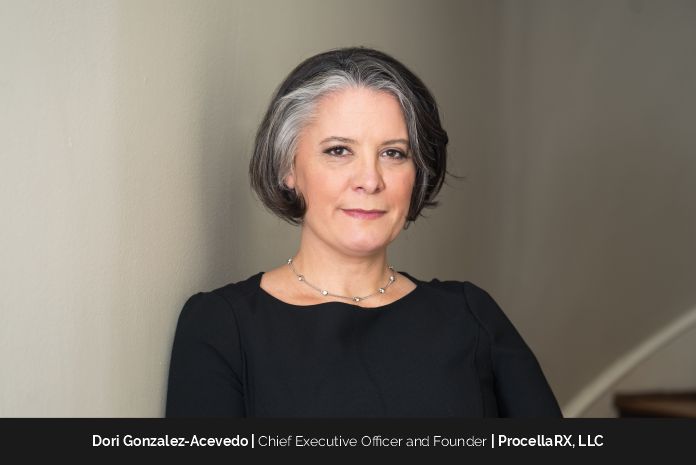
Dori Gonzalez-Acevedo is the Founder and CEO of ProcellaRX, a minority-owned strategic consulting firm helping life sciences organizations rethink validation, quality, and governance for a digital world. In an industry long defined by control, documentation, and risk aversion, she is known for asking a different question: What does trust really mean in a digital world?
With nearly three decades of experience across pharmaceutical, biotechnology, medical device, and digital health sectors, Dori works at the intersection of technology, regulation, and human judgment – where many organizations struggle as digital platforms, automation, and AI accelerate change. She serves as co-lead of ISPE’s Digital Validation Subcommittee and is a co-author of the ISPE® Good Practice Guide: Digital Validation.
ProcellaRX’s philosophy – “Quality isn’t proprietary. Progress isn’t optional.” — guides its work helping clients navigate the tension between compliance tradition and digital innovation. As Dori often says, “Quality was never meant to slow innovation. It was meant to protect what matters – patients, data, and decisions.” Her forthcoming book, The Courage to Reinvent™ (September 2026), explores the personal and organizational courage required to challenge legacy thinking.
Trust, Visibility, and Digital Accountability
Dori’s drive was shaped by decades inside systems that were technically compliant yet operationally fragile. Trained as a biochemist and chemist on a pre-med track before becoming a chemical process engineer developing controlled substance APIs, she saw early on how “technical excellence, regulatory demands, and human judgment must align to create systems that are not only compliant, but also robust and trustworthy.”
She learned that “systems rarely fail because people don’t care. They fail because of what and who the system was designed to see.” As an Indigenous, queer, neurodivergent scientist and leader, she became attuned to assumptions, omissions, and power dynamics embedded in processes, data models, and governance structures.
During the industry’s shift from paper to electronic validation, Dori recognized that removing paper doesn’t remove risk; it just changes where risk hides. This insight shaped her advocacy for digital validation grounded in context, risk-based thinking, and defensible decision-making rather than documentation volume.
A defining audit reshaped her leadership approach. “That was the moment I realized documentation alone doesn’t equal assurance. If you can’t explain why a decision was made, you haven’t truly validated anything,” she observes.
Building Foundations for Modern Quality
Dori explains that ProcellaRX emerged from a growing recognition that the industry was at an inflection point, as organizations modernized technology while still governing systems with outdated quality models. “The right moment came when it became clear that incremental change would not close that gap,” she says.
ProcellaRX was created to help organizations shift from documentation-centric compliance to context-driven assurance rooted in human accountability and trust, while serving as a tool-agnostic strategic advisor able to support clients regardless of platform or technology.
Dori observes that technology alone cannot deliver compliance or quality, and that even the most sophisticated systems depend on people operating within environments that enable sound judgment. This insight led to her Quality TEA framework, built on Trust, Education, and Accountability.
“Technology doesn’t create compliance. People do, when they’re trusted, educated, and held accountable in meaningful ways,” she explains. “Sustainable quality cannot be imposed from outside; it must be cultivated from within. Organizations that develop quality as a capability achieve stronger outcomes than those that treat it as a constraint.”
From Expertise to Enabling Judgment
Dori reflects that early in her career, leadership meant expertise: having answers, enforcing controls, and minimizing deviation. Over time, she learned that certainty can be a liability in complex systems and that many failures stemmed from unchallenged assumptions embedded in systems and processes.
As CEO, her leadership evolved from knowing to enabling. She focuses on cultivating judgment rather than dependency, creating environments where uncertainty can be named, assumptions can be challenged, and decisions can be owned responsibly.
Dori notes that walking away from partnerships that no longer align is not a sign of failure, but often the most successful and courageous course of action, including the difficult decision to part ways with a customer or partnership when mutual respect and dignity are absent. “Sometimes, leadership means having the strength to let go when alignment cannot be achieved,” she says.
Her leadership is shaped by experiencing systems from outside their default assumptions. “Trust is not built through perfection or performance, but through transparency, dialogue, and accountability,” she reflects. “The question isn’t whether you can produce documentation, but whether you can defend your decisions when the pressure is real.”
Shifting How Organizations Relate to Quality
One of Dori’s defining accomplishments has been helping organizations change the question from “How do we document this?” to “How do we know this decision is right?” That shift, from fear-based compliance to confident, judgment-driven decision-making, is where quality becomes truly strategic. It happens when people understand context, use their judgment, and trust one another to own outcomes responsibly. Through large-scale enterprise assessments with multinational life sciences organizations, Dori and her team have been able to help embed this way of thinking at scale.
Dori’s industry influence extends through serving as co-lead of ISPE’s Digital Validation Subcommittee and co-author of its Good Practice Guide on digital validation. “Standards shouldn’t preserve the past. They should enable the future while protecting what matters,” she insists. She also advanced the concept of Decision Quality after observing that many failures stem from poor decisions rather than poor documentation. “Quality isn’t about perfection. It’s about making decisions you can defend and learning from the ones you can’t,” she observes.
Curiosity, Integrity, and Systems Awareness
Dori builds her teams around “curiosity, integrity, and systems awareness,” emphasizing that technical competence is essential but not sufficient in regulated environments. Team members must be able to navigate ambiguity, surface inconvenient truths, and reason through risk rather than default to procedure. Education is central to her approach, focused not on checklist training but on building context awareness of intended use, patient impact, data integrity, and ethical consequence.
“Teams thrive when they’re trusted to think, supported to learn, and held accountable in ways that strengthen judgment rather than punish uncertainty,” she reflects. Concepts like “Yes, and” and dialectical thinking shape her culture, helping teams acknowledge competing truths and make thoughtful, context-driven decisions in complex environments.
“You can’t build trust while asking people to hide parts of themselves. Trust requires authenticity, and authenticity requires safety,” Dori says. She observes that psychologically unsafe environments often produce documentation that satisfies auditors without reflecting the underlying reality, which limits the organization’s ability to identify and address risk early.
She believes the role of quality leaders is evolving as digital transformation accelerates. “The future of quality belongs to leaders who can translate between technology, regulation, and human judgment and who dare to challenge assumptions when they no longer serve us,” she explains.
Unlearning Control, Choosing Intentional Risk
The most unexpected challenge for Dori has been helping organizations unlearn the belief that control equals safety. “Technology change is rarely the hardest part; mindset change is,” she says. She navigates resistance by recognizing that most resistance is a form of risk management. When leaders understand that quality is not the absence of risk but the discipline of choosing risk intentionally and transparently, progress becomes possible.
“Trust is built through repeated, defensible decisions, not through perfection,” Dori reflects. She notes that as a small company, ProcellaRX must often fight harder for favorable terms while staying nimble enough to grow. Protecting the company’s interests while adapting quickly creates constant tension that sharpens organizational resolve and agility.
To remain aligned with patient-centric values and sustainability, every engagement begins with the context of use and impact. “Patient safety and data integrity are not abstract principles; they are design constraints,” Dori observes. “Long-term sustainability comes from capability building rather than dependency. ProcellaRX is not the right fit for organizations seeking affirmation rather than difficult conversations.”
Rituals That Sustain Focus and Creativity
Dori shares that one of her greatest strengths is the ability to absorb information in various formats, whether reading, writing, or listening to thoughtful, in-depth content. Each morning, before meetings begin, she dedicates time to these practices to set the tone for focused engagement.
As she works through perfectionist tendencies, she remains committed to fostering environments where curiosity and questioning are not just encouraged but valued. She intentionally protects time for reflection and synthesis because true clarity does not come from simply doing more; it emerges from discerning which decisions truly matter. Guarding sleep and maintaining strict physical routines are non-negotiable investments in her health and focus.
Dori observes that optimizing how she works with her own invisible learning differences has strengthened her ability to delegate and lead with clarity. She relies on peer communities and trusted advisors to challenge her thinking. “Leadership is not about projecting certainty but engaging in rigorous dialogue,” she explains. Maintaining a forward-looking perspective allows her to balance strategic vision with operational demands.
From Compliance to Decision Governance
Dori believes AI and automation will reshape healthcare operations, but the most significant shift will be philosophical rather than technical. “We’re moving from compliance-driven models toward decision-driven governance,” she explains, noting that people and their collective demand for trust will determine how effectively the industry progresses.
Dori frames the critical questions as “What assumptions does this system encode? Who does it make visible and who does it obscure? Can we explain and defend its behavior when outcomes matter most?” She notes that risk is a values-based choice shaped by governance, incentives, and culture, and that successful organizations will embed ethics, transparency, and human judgment into system design.
As AI becomes embedded in regulated workflows, Dori warns that you can’t validate a system that changes by pretending it doesn’t change. You have to build assurance into the change itself. Rather than freezing systems in validated states, she advocates validating the governance, monitoring, and intervention mechanisms that surround them, ensuring human oversight remains meaningful as systems learn and adapt.
Reframing Quality for Future Leaders
Dori hopes future professionals inherit a different relationship with quality, seeing it as a leadership discipline grounded in trust, judgment, and responsibility rather than policing. She wants them to recognize their worth as decision-makers because too many capable professionals are trained to defer to process instead of owning judgment. “In a digital, AI-enabled world, that deference is dangerous,” she observes.
Dori emphasizes that leaders must become comfortable with discomfort. “If you’re not experiencing discomfort, you’re likely not evolving,” she reflects, noting that reinvention should be an ongoing process rather than a response to crisis. Looking ahead, she believes the core questions of quality will endure despite technological change. “Technology changes. Regulations change. But the need for trust doesn’t change. The organizations that understand this will lead,” she predicts.
Trust Your Judgment Early On
Dori offers this advice to aspiring women leaders: Don’t wait for permission to trust your judgment. Many women are conditioned to over-prepare and over-justify as a form of self-protection. Your perspective, shaped by your experience, your way of thinking, and how you move through systems, is an asset. Leadership is about making sound decisions amid complexity and helping others do the same. When you exist outside the default, you learn quickly that trust isn’t automatic. It has to be earned – through consistency, integrity, and action.
Dori emphasizes the value of generosity and mentorship: investing in social infrastructure—networks, knowledge sharing, and mentorship—enables sustainable advancement and strengthens organizations for everyone. “Women in quality and technology have always done the connective work. When women give knowledge and mentorship, organizations gain capability,” she explains.
Shaping Trust in Digital Transformation
Dori is most excited about shaping how organizations govern AI-enabled systems and digital quality ecosystems, because this is where trust will be won or lost. Alongside co-leading the ISPE® Digital Validation Subcommittee and serving on advisory councils, she focuses on influencing mindsets so organizations move from fear-based compliance to trust-based leadership.
Later this year, she will publish her first book, The Courage to Reinvent™, which explores the personal and organizational courage required to move beyond outdated paradigms and embrace digital, risk-based approaches to quality and validation. “Reinvention requires letting go of what made you successful before – even when you can’t yet see what will make you successful next. That’s not analysis. That’s courage,” she reflects.
Dori’s book addresses both technical and human dimensions of transformation, and will launch alongside the Reinvention Lab, a global program designed to help organizations apply its principles in practice.
Closing Thoughts
Dori Gonzalez-Acevedo’s work exemplifies the power of generosity, courage, and thoughtful leadership. She believes that progress comes from sharing knowledge, mentoring others, and creating opportunities for people to contribute, not from individual achievement alone. She emphasizes that true impact requires both capability and the courage to act on it by challenging assumptions and advocating for meaningful change.
For Dori, excellence and authenticity coexist; rigor and humanity reinforce one another; and the courage to reinvent is essential. Her vision continues to guide organizations and future leaders in building trust, embedding quality, and fostering environments where people can bring their full selves to work that matters.