

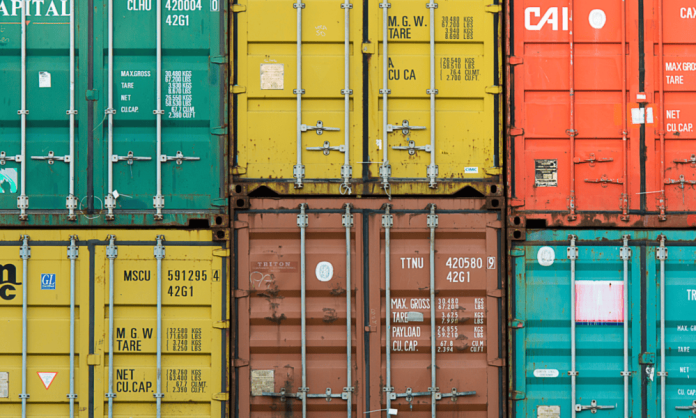
For decades, the conversation about supply chain resilience started and ended at the coasts. Analysts fixated on the Ports of Los Angeles, Long Beach and New York. When cargo slowed, cameras pointed at ships anchored offshore.
But a quieter, more consequential shift has been underway. It’s one that moves the locus of supply chain risk and opportunity from saltwater terminals to the interior of the continent.
Inland container yards have become the new pressure points in global logistics, and the operators who understand that are the ones keeping goods moving. Vahooman “Shadow” Mirkhaef, founder of Cub Terminal in McCook, Illinois, has built his career around exactly this insight.
The Numbers Tell the Story
The inland container depot and dry port market was valued at an estimated $30.12 billion in 2024 and is projected to reach $50.03 billion by 2033, growing at a compound annual growth rate of 5.8%.
That trajectory isn’t an accident. It reflects a structural reconfiguration of how global freight moves, and it’s one that’s accelerated by pandemic-era congestion, geopolitical trade disruptions and the relentless growth of e-commerce.
The broader container yard services market tells a similar story. North America holds 35.4% of the global container yard services market, and the U.S. alone accounted for $13.1 billion of that in 2024.
As shippers increasingly seek alternatives to coastal port congestion, inland facilities have absorbed the demand and the pressure.
Chicago: The Undisputed Inland Crossroads
No inland freight story can be told without centering Chicago.
Six of the seven Class I railroads converge in the Chicago region, making it the only location in North America where all major freight railroads meet. Approximately 25% of all freight railcars and 50% of all intermodal rail containers and trailers in the nation pass through Chicago, according to the Federal Highway Administration.
The scale is staggering. Over 7.8 million freight cargo containers originated or terminated in the Chicago region in 2016 alone. That’s nearly 16.3 million twenty-foot equivalent units, making it the largest point of origin and termination for intermodal shipments in the U.S., surpassing Los Angeles, New York and Seattle.
And that volume has only grown since.
Will County, just southwest of Chicago, has become emblematic of the transformation. Multimodal freight volumes there are projected to reach 600 million tons valued around $1.2 trillion by 2040. What was once a quiet suburban county is now home to the largest inland port in North America.
Inland Yards Are Under More Pressure Than Ever
The concentration of freight in the Chicago corridor is a double-edged sword. All that connectivity creates efficiency, but it also creates fragility. When something goes wrong anywhere in the system, the effects ripple outward from Chicagoland fast.
The COVID-19 pandemic exposed just how vulnerable inland yards could be.
Chassis shortages paralyzed rail terminals. Containers piled up waiting for trucks that couldn’t get there fast enough. Dwell times ballooned. Demurrage charges mounted. During peak disruptions, train queues outside Chicago stretched for days, as the city’s aging rail infrastructure strained under demand it was never designed to absorb at this scale.
Container maintenance became a crisis point of its own. “Equipment doesn’t take care of itself,” Mirkhaef has famously noted. Shippers who’d been pushing off repairs found their equipment flagged, rejected or grounded at the worst possible moments. An inland container yard that doesn’t keep up with maintenance isn’t just an inconvenience. It’s a bottleneck that compounds every other problem in the system.
Why Cub Terminal is Focused on Container Maintenance
Container maintenance and repair might be the least glamorous segment in logistics, but it’s arguably one of the most operationally critical. A damaged container that slips through inspection can result in rejected cargo, insurance claims and regulatory headaches. A container that sits idle waiting for a minor repair costs shippers money every day it’s out of rotation.
More than 70% of new initiatives in the container yard sector focus on improving terminal efficiency metrics and reducing cargo damage, according to Technavio market research. That’s not a coincidence. It reflects an industry-wide recognition that the “last mile” of container management happens in places like McCook and not at the port gate.
Cub Terminal positions itself directly at this intersection. As a container yard and maintenance facility embedded in the greater Chicago freight ecosystem, it handles the inspection, repair and storage work that keeps containers moving in and out of one of the world’s most active freight corridors.
For shippers, carriers and leasing companies, having a trusted maintenance partner close to the intermodal action isn’t a nice-to-have. It’s operationally essential.
Tariffs, Trade Uncertainty and the Inland Advantage
The current trade environment has added another layer of complexity. Shifting tariff structures, ongoing uncertainty around U.S.-China trade relations and the broader trend of supply chain diversification are pushing more freight through non-traditional corridors.
Companies that once relied on single-source, port-centric logistics strategies are diversifying their networks, and inland yards are benefiting.
ICDs and dry ports play a vital role in relieving seaport congestion by redistributing cargo processing activities across a larger geographic area, and that function becomes more valuable the more volatility there is at the coasts. When West Coast ports face labor slowdowns or East Coast terminals back up, the Chicago corridor absorbs diverted freight, which means inland yards need to be ready.
The Midwest’s position as what analysts call a “headhaul market,” which is one that generates outbound freight rather than merely receiving imports, makes it somewhat more insulated from the feast-or-famine cycles that hit coastal markets hard. That stability is valuable for operators and shippers alike.
Technology Is Raising the Bar
Inland yards that were running on clipboards and phone calls five years ago are now expected to offer real-time tracking, digital gate management and predictive maintenance scheduling.
AI-driven logistics platforms can now forecast container arrival times with 95% accuracy, and shippers increasingly expect that level of visibility from their inland partners, not just from ocean carriers.
The integration of IoT, automation and data analytics is enhancing operational efficiencies in container yard management and reducing turnaround times. For inland yards, keeping pace with those expectations is no longer optional. It’s a competitive prerequisite.
A Different Way to Think About Supply Chain Infrastructure
The narrative around supply chain resilience needs to catch up with the operational reality. Inland container yards aren’t secondary facilities filling in the gaps between “real” logistics infrastructure. They’re primary nodes in a network that keeps the American economy running, and they’re under more demand, scrutiny and technological pressure than at any point in history.
For Mirkhaef and Cub Terminal, that’s not a burden. It’s a calling.
Operating in the heart of the most active inland freight corridor in North America means that the work done in McCook has direct consequences for supply chains touching every corner of the country. Understanding those stakes, and meeting them with the right infrastructure, expertise and responsiveness, is what separates facilities that are genuinely useful from those that simply take up space.
Inland container yards are the new pressure points. The question is whether the operators running them are built for the job.