
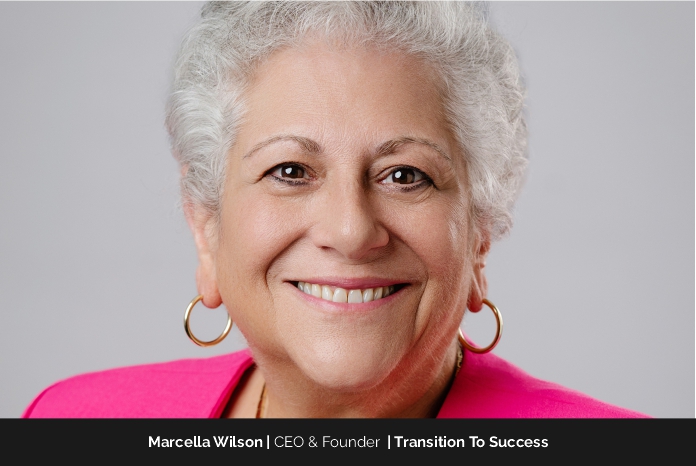
Marcella Wilson PhD left a high-paying CEO position in a healthcare organization to lead a struggling charity. This decision became a turning point in her career. Confronted with abject poverty on a near-daily basis, her understanding of poverty and its causes changed. This journey led her to found Transition To Success® (TTS), a system of care that changes one’s understanding and treatment response to the condition of poverty. Now, as its CEO, Dr. Wilson is leading the development, implementation, and integration of the U.S.’s first standard of care to treat the condition of poverty.
In her interview with CIO Views, Dr. Wilson informs and inspires readers to join their quest to transform the nation’s, and the world’s, understanding of poverty from a perceived character flaw to what the science tells is an environmentally based, treatable condition. She is dedicated to this social transformation movement that is gaining traction across the United States, fueled by the growing voice of believers carrying this message forward.
Path Leading to Founding Transition To Success®
In the early 2000s, during the collapse of the auto and housing industries in Detroit, Dr. Wilson decided to leave her position as CEO at a managed healthcare corporation. She joined a Detroit-based struggling charity. There, through lived experience and data, she came to understand that, despite deeply embedded cultural beliefs, poverty is not a character flaw. “The science is irrefutable: Poverty is an environmental condition caused by exposures to the social determinants of health,” she says.
When Dr. Wilson took the helm of the charity, Detroit was the poorest urban community in the U.S., with the highest infant and maternal mortality rates, comparable to many underdeveloped countries. She spent her first two days making calls while pretending to be a single mother seeking food, childcare, and employment. Her “secret shopper” strategy was enlightening – but the results weren’t good. She couldn’t secure a single service, nor did she receive a single return call. “Even at the organization I was now leading, I was told there were no Head Start slots, call back in July,” she recalls.
The complexity and unresponsiveness of this system were only surpassed by the abject poverty she was witnessing. She saw hungry children, abandoned teens, and the elderly living in squalor. Homelessness, deplorable living conditions, and pervasive hopelessness were rampant, a mere 35 minutes from her community. Dr. Wilson soon realized that the living conditions, hunger, destitution, and dire circumstances faced by thousands of clients they were serving, aged 0 to 103, were beyond the scope of her expertise. She felt ashamed of her lack of awareness and preconceived notions about poverty.
Dr. Wilson found herself overwhelmed, leading a failing charity and feeling distraught over the human circumstances she was expected to address. She began asking a simple question: “How do you treat the condition of poverty?” No one could answer that, and so began her research.
“Despite the millions of pages of research, poverty sliced and diced any way you want to examine, I learned very quickly there was no answer,” Dr. Wilson says. “Unlike every other condition and/or industry, the condition of poverty has no standards of care.”
She noted that practitioners, organizations, and communities developed their own approach to helping those in need. She realized that the treatment of poverty is void of standardization. A character-flaw mentality steeped in blame and shame fuels a system filled with blatant inequities and devoid of science-based protocols. In the United States, poverty is usually viewed as a character flaw, a choice rooted in laziness and unwillingness to pull themselves up by their bootstraps. However, when she met her clientele, she realized that no one chooses to be poor, hungry, or homeless. “We expect those with the least amount of resources to self-navigate one of the most complex, siloed delivery systems in the world.”
“I also discovered that in the treatment of poverty, practitioners and providers are not bound by any evidence-based standards of care,” she adds. The treatment of poverty has eluded standardized protocols based on science and data. If someone is poor, the type of care they receive depends on “the luck of the draw.” And, in Detroit, it was like the Wild West, with dozens of not for profits competing with each other for survival with limited, ever changing, and conditional funding streams.
Her experiences in Detroit led to the discovery of her life’s work and her organization Transition To Success® (TTS).
Continued Research and Initiatives
As Dr. Wilson continued her research, she uncovered new insights and information. She recalls being stunned when she found “irrefutable evidence” showing a direct relationship between poverty and health.
Dr. Wilson explains that if someone is living in poverty in the U.S., they will have, according to statistics, higher rates of diabetes, coronary illness, asthma, high blood pressure, and mental health issues. “When I learned that even intermittent exposure to food insecurity can cause compromised brain development of the white matter, gray matter, hippocampus, and amygdala, especially among young children, I was devastated.”. She knew that these brain functions are key to learning, memory, and impulse control.
As the CEO of Detroit’s largest Head Start, with nearly 2000 children in their care, hunger proved to be a daily challenge for Dr. Wilson. Realizing the impact that hunger was having on the futures of young children, food became the number one priority across all of their programs. Rather than seek additional funding for food Dr. Wilson developed mutually beneficial partnerships with food organizations across the city. These partnerships led to food deliveries at every Head Start site across their organization at no cost to them. The food programs supporting Head Start then received additional funding as a result of their partnership with Head Start. “This began a model of collaboration we now call our CARE Network.” CARE stands for Coordinating All Resources Effectively.
With continued research, she soon learned that the exposure to environmental conditions called social determinants of health (SDoH) are the real root causes of poverty. “Regardless of your age, race, sex, religion, or culture, when you have negative exposures with any of the 20 recognized SDoH, these directly affect health, life expectancy, educational, and economic outcomes,” she explains. Examples of these negative exposures include lack of food, unaffordable or insecure housing, limited access to transportation, poor performing schools, unemployment, and underemployment. The relationship between poverty and health is direct and irrefutable.
“It is not widely known that poverty is recognized as a medical condition in health care,” Dr. Wilson notes. “However, unlike every other condition, poverty lacks any standardization of care despite the complexity of the condition.
She founded Transition To Success® to change America’s understanding and response to the devastating and widespread condition of poverty by using evidence-based standards of care. She believes that the foundation of this work is shifting the nation’s perspective on poverty: from viewing it as a character flaw to recognizing it as a treatable condition. “Our work is being integrated throughout the delivery systems of health, human services, government, education, and faith-based organizations.”. “To date, it is demonstrated with statistically significant outcomes in seven independent evaluations.”
Dealing with Challenges
Contrary to popular belief, the biggest challenge to treating poverty is not its cost. The United States offers the most extensive and expensive delivery system to help the poor in the world. It is the pervasive shame and stigma associated with poverty, which results in a dysfunctional, siloed system of care that treats clients with suspicion and disrespect.
Initially focused on helping clients in Detroit, her research eventually led her to identify several key evidence-based best practices for treating the condition of poverty, such as care management, financial literacy with a focus on predatory lending, peer mentoring, and volunteerism.
“Our first step was training at every level of our organization, including the board and volunteers, on the science of the real root causes of poverty,” Dr. Wilson explains. “Then, using the medical model, we trained every direct care worker across multiple programs and locations on how to use care management (CM) to coordinate all services effectively.” This key practice, used extensively in health care, improves both quality and cost-effectiveness.
Instead of clients self-navigating the most complex delivery system, the organization’s direct care workers, were now trained to help clients understand the science behind their struggles, help them identify and prioritize their environmental SDoH challenges, access services and hold the delivery system accountable.
“The evidence-based practices transformed our organizational culture and the lives of those we were serving,” Dr. Wilson says. “The focus on accountability within and outside our organization empowered staff and clients to trust that services and benefits would be provided, and they would be treated like customers and not beggars.”
Heartwarming Stories to Evidence-backed Change
Initially, Dr. Wilson could share heartwarming stories of clients’ transformations, but realized she didn’t have the data to support them. That changed with their first study, thanks to funded by the Community Foundation of Southeast Michigan. They were able to apply their model with 200 returning citizens coming home to Detroit’s poorest and most violent zip code, without any new program funding. “After three years, only 7% of the 200 clients returned to prison (nationally, the rate of return to prison was approximately 40%, and in Detroit, at the time, it was over 60%). This initial study led to an award from the Kellogg Foundation to develop the first standard of care and corresponding curricula to treat the condition of poverty across health, human services, government, education, and faith-based organizations using common data collection points. Kellogg also funded 3 independent evaluations using this new standard of care. All three independent studies reported statistically significant results. These results led to what has become Wilson’s life’s work. “For the first time since I was 15, I left traditional employment,” she recalls. She wrote the book “Diagnosis: Poverty” and started TTS.
TTS: Leading Social Transformational Change
The key to driving social transformational change is engaging others and empowering them to become champions to engage others. The TTS culture embraces every opportunity to change hearts and minds. At TTS, social change is fueled with each conversation, publication and every opportunity to present to an audience.
The TTS Train the Trainer framework offers individuals and organizations the opportunity to lead their community-based initiatives as the training organization, creating a sustainable training social enterprise. This framework also includes unlimited printing rights for client Map of My Dreams Workbooks for certified practitioners. The Map of My Dreams Workbook is a step-by-step guide for clients to assess and prioritize their SDoH challenges, and identify the programs and services they are eligible for in the pursuit of their dreams. TTS promotes adoption of the standard across practices, organizations, and communities in pilots across the country, and maximizes the existing funded delivery system, holding it accountable. This focus on maximizing existing services promotes sustainability and collaboration across organizations.
Science and data are at the core of the TTS paradigm, the standards of care and the ability to demonstrate effectiveness.
Measuring Outcomes: Client-Centered Model
Key TTS outcomes are focused on measuring pre- and post-scores on clients’ Life Area Survey. The Life Area Survey measures SDoH exposures, the level of exposure, and client priorities. Using a simple Likert scale, clients can self-score and self-identify the areas they want to address in pursuit of their dreams.
“Client testimonials demonstrate that our work is effective and important,” Dr. Wilson says. For example, the words from Jumar, a client from Detroit who was struggling with unemployment and raising three children as a single father described his experience with TTS. Referring to the organization, he said: “We’re not going to just walk you through it, we’re going to attack it with you.”
Testimonials from people who have moved from desperate situations to finding stability and experiencing a dramatic improvement in their quality-of-life fuel the TTS social transformation movement.
Champions Helping Spread the Word
Dr. Wilson’s work is now supported by many champions. Together ensuring that the truth about the real root causes of poverty is heard across the country. Maria Randall, a social worker at a Children’s HIV Day Care Program, is one such champion. After hearing Dr. Wilson speak in DC, Maria talked to Dr. Jan Young at The Assisi Foundation of Memphis.
Because of these Champions, TTS is thriving in Memphis, across multiple organizations, including United Way of the Mid South, Neighborhood Christian Centers, and Porter-Leath. Dr. Wilson says that Memphis was also the site of their seventh independent evaluation, funded by the Robert Wood Johnson Foundation, that demonstrated significant improvements in SDoH exposures, improved A1C levels for diabetics, and improved mental health outcomes for those with depression.
Connie Chesnick, Administrator of the Division of Family and Economic Security at the Wisconsin Department of Children and Families, brought TTS to Wisconsin. TTS is now integrated into workforce development, immigrant and refugee services, and child support services. Forward Service Corporation is leading TTS trainings across the state.
In Hawaii, CEO Amanda Pump is strengthening TTS implementation across a wide range of community-based programs at Child & Family Service (CFS). “Recently, CFS was awarded funding from Aloha United Way to continue trainings across the islands,” Dr. Wilson says.
Mary Jane Osmick, M.D., a board member of Bridges Reentry, is championing TTS in Phoenix. Bridges Reentry is expanding its partnerships and network throughout the community. Dr. Osmick has also cited TTS in her publications.
In Michigan, Madiha Tariq and her team at Oakland County Health and Human Services, are leading county wide TTS integration, while David Underwood is leading a faith-based initiative in Detroit. He is engaging churches, healthcare, and education to improve health, educational, and economic outcomes for their congregation and the broader community. Shauna Batcheller is leading TTS 2-1-1 integration in South Dakota at the Helpline Center.
“These are just a handful of leaders dedicated to social change,” Dr. Wilson says. “They did not plan to be leaders in social change, yet when called upon, they went beyond inspiration and took action, promoting what could be and inspiring others to join our cause.”
A Call to Action
Quoting a popular African proverb, “Spider webs united can tie up a lion,” Dr. Wilson hopes for a growing army of transformational leaders to change the way a nation understands and responds to poverty. These leaders must believe in science, what is possible, and they must be willing to carry the message forward. Her quest is to inspire the next generation of transformational leaders who will continue to advance this mission. Today TTS has become a social transformation movement that spans from Hawaii to Detroit, and it is fueled by individuals who believe in it.
“If this work inspires you, visit our website (www.transitiontosuccess.org), read my book ‘Diagnosis: Poverty,’ learn more, and share it with others,” she adds. “Contact me (mwilson@tts-llc.org) to ask questions, introduce me to others, and/or invite me to speak.” If interested, one can discuss with her how-to bring TTS to one’s practice, organization, or community.
“My hope is that this article inspires you and our international audience of readers to respond to the call to action and join our social transformation movement. Together, we can lift the masses out of poverty.”