
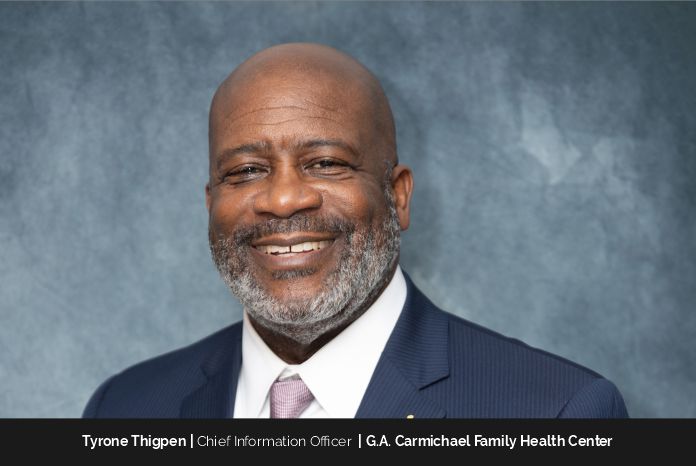
The G.A. Carmichael Family Health Center (GACFHC) has been providing accessible healthcare to men, women, and children in Central Mississippi since July 1972. Today, technology plays a pivotal role in helping the organization expand healthcare access for underserved communities. Its IT strategy is driven by the dynamic Tyrone Thigpen, the Chief Information Officer (CIO).
He oversees technology modernization, clinical integration, and wellness initiatives for a diverse patient population across multiple counties in the Delta and Central Mississippi. For more than 15 years, he has worked in the Community Health Center environment. He has led critical projects, including Patient-Centered Medical Home recognition, Meaningful Use attestation, interoperability initiatives, EHR upgrades, telehealth expansion, and data analytics strategies that support risk stratification and population health management.
“Technology has been instrumental in aligning IT capabilities with organizational strategy, ensuring compliance, implementing quality initiatives, and driving innovation in patient-centered care,” Tyrone says. He is especially passionate about using technology to reduce disparities in underserved and rural communities. As part of his commitment to advancing the mission of equitable, high-quality healthcare, he champions digital health access, workforce wellness, and strong community partnerships.
Tyrone bridges the gap between clinical teams and technology, bringing both vision and execution to the evolving intersection of healthcare and technology.
Remarkable Career Arc
While reflecting on the arc of his career, Tyrone remembers a line from a book: “I had fainted, unless I had believed to see the goodness of the Lord in the land of the living.” He feels that the place he has reached today in his career is because he believed in seeing the goodness of God.
To stress that point, he also recalls something his pastor, Jennifer Biard, once said in a sermon: “His goodness pursues you to preserve you, and His goodness blocks what was meant to break you.”
Tyrone began his career as a Health IT leader with a strong foundation in information technology. Gradually, that foundation evolved into a mission-driven commitment to transforming healthcare delivery. During his time in IT, he developed deep expertise in software development, systems integration, data management, and enterprise technology. According to him, he served in organizations such as IBM, Walmart Stores, Inc., and Blue Cross and Blue Shield of Mississippi.
“Over time, I recognized the growing need for innovative technology solutions within healthcare,” Tyrone says. “Outdated systems and fragmented data often create barriers to quality care.” This insight led to his transition into Health IT. In this sector, he could apply his technical skills to improve patient outcomes, enhance provider workflows, elevate the patient experience, and strengthen organizational performance.
“Ultimately, my career path reflects both a technical foundation and a mission-driven purpose: leveraging technology not just to optimize systems and processes, but to help create healthier communities,” Tyrone says.
Great Achievement
Tyrone graduated from the UCLA/Johnson & Johnson Health Care Executive Program under the guidance of his CEO, Dr. James Coleman, Jr. He considers this a major achievement in his career. According to him, it provided the knowledge, perspective, and leadership tools needed to strengthen G.A. Carmichael Family Health Center’s ability to deliver high-quality, equitable care to communities across the Delta and Central Mississippi.
“The program’s emphasis on strategic leadership, financial sustainability, population-health innovation, and community-based care models equipped me to enhance our operational performance while expanding access for underserved residents,” he says. Because of his exposure to national best practices and proven FQHC improvement frameworks, he is now able to accelerate their work in value-based care, strengthen care management programs, advance health equity strategies, and implement more data-driven approaches in the organization.
“For our communities, the impact translates into more coordinated services, better chronic disease outcomes, improved patient experience, and stronger partnerships with local schools, faith organizations, and public health agencies,” Tyrone says.
He hopes that the insights and capabilities that he gained through the program will help G.A. Carmichael build a more agile, resilient, and community-centered health system. He wants it to be better positioned to close gaps in care and improve the overall health of the population they serve.
Vision, Velocity, and Values
Tyrone notes that in 2025, the role of the CIO is no longer about running IT. “It’s about positioning the entire organization to compete and win in a digital economy,” he says. “To do that, we need three things: Vision, Velocity, and Values.”
Vision, to him, means tying technology directly to business outcomes. He explains that every dollar spent on IT must clearly accelerate growth, improve customer experience, or reduce risk. Velocity is next on the list of things needed. It means speed of execution. Tyrone points out that in today’s world, the ability to pilot, learn, and scale quickly is a competitive advantage. “We can’t afford two-year implementations,” he says. “We need rapid wins that build momentum.”
And values represent trust and responsibility. From cybersecurity to AI ethics, Tyrone explains that people need to believe that their technology is secure, transparent, and designed with them in mind.
“If we get these three things, vision, velocity, and values, right,” Tyrone says, “we don’t just keep up with the future. We help invent it.” So, CIOs of today must see this opportunity and stop being back-office operators and start being front-line leaders of transformation, he adds.
Set of Core Principles
Tyrone’s decision-making is guided by a set of core personal values that reflect his integrity as well as his purpose in leadership. “Integrity is central to every decision I make,” he says. For him, transparency, accountability, and ethical judgment are non-negotiable. This is why he is able to ensure trust across all levels of the organization.
Service is another guiding value for Tyrone. He views technology as a means to improve the quality of care, empower clinicians, and enhance the patient experience. Collaboration is another value he adheres to, as he recognizes that sustainable progress in health IT depends on aligning the voices of clinicians, administrators, and community partners.
Other core values of Tyrone include innovation and stewardship. Innovation drives him to continually seek smarter, data-driven solutions that advance their mission and improve outcomes, while stewardship reminds him to be responsible with every resource entrusted to their team.
“Ultimately, my decisions as CIO are anchored in a commitment to equity and access,” Tyrone says. He strives to ensure that technology serves as a bridge, not a barrier, to quality healthcare for every patient they serve.
All these values shape not only how he leads projects but also how he cultivates trust, resilience, and alignment throughout the organization.
Cybersecurity Threats
The healthcare sector continues to face unprecedented cybersecurity challenges. They have the potential to impact patient safety, data privacy, and the functioning of the healthcare systems. Tyrone points out that in a nonprofit healthcare environment, staying ahead of cybersecurity threats requires a “delicate balance” between vigilance, practicality, and empathy for the mission.
To combat cybersecurity threats, he is building a culture of security awareness. According to Tyrone, he empowers staff at every level to see themselves as part of the defense. In addition to that, he stays current with evolving threats through partnerships, threat intelligence networks, and regular risk assessments. “At the same time, I ensure that controls don’t create barriers to care by employing secure yet user-friendly systems,” he says.
He also underscores that compliance is the framework that supports patient trust and protects the organization’s ability to serve its community effectively.
Collaboration with Teams
Tyrone recognizes the value of teamwork. He frequently collaborates with clinical and administrative teams, and he always approaches them with genuine curiosity and respect for their expertise. He spends time listening to how they work, understanding their challenges, and observing where technology can make their day easier rather than harder. “I have found that trust is built when people see IT as a partner, not just a support function,” he points out. So, he focuses on transparency, consistent follow-up, and celebrating small wins together.
“For me, success isn’t just about seamless integration,” he says. “It’s about optimizing solutions that reflect the voices of the people who deliver and support patient care every day.”
Tyrone’s collaboration approach reflects what John Maxwell once wrote: “Inexperienced leaders are quick to lead before knowing anything about the people they intend to lead. But mature leaders Listen, Learn, and then Lead. Know and relate to what others value.”
Role of Emerging Technologies
Tyrone notes that emerging technologies such as AI, remote patient monitoring, the Internet of Medical Things (IoMT), telehealth, kiosks, and drone logistics have huge potential to redefine how healthcare is delivered in underserved communities. One of the main reasons these innovations matter is access and reach. Tyrone explains that they help reduce geographic, economic, and resource barriers by bringing care directly to where people live, rather than requiring them to travel long distances.
Cost efficiency is another key factor. Tyrone says that remote care and monitoring can lower expenses for both patients and health systems, as they reduce hospitalizations and make preventive care more scalable. Technologies also enable workforce amplification. According to Tyrone, AI and remote tools extend the reach of existing clinicians, allowing less-specialized staff to deliver more advanced care.
Data-driven public health is another reason why emerging technologies are important. Tyrone says that continuous monitoring and data collection provide insights into population health, which enable targeted interventions and early warning systems. He believes that when technologies are deployed thoughtfully, they can bridge access gaps, improve clinical outcomes, and advance more equitable care.
Typical Work Day
Tyrone’s typical workday involves strategic focus and hands-on leadership. At the start of his day, he reviews key metrics and priorities to stay aligned with long-term goals. He also leaves room for the unexpected, because in healthcare IT, something urgent always comes up.
“I balance strategy and day-to-day demands by empowering my team to manage immediate issues,” he says. This allows him to completely focus on initiatives that move the organization forward. And, when he does step into tactical matters, it is usually to remove barriers or support collaboration.
“My guiding principle is to stay connected, both to the mission and to the people who make the technology work,” Tyrone says.
Words of Advice for Aspiring CIOs
For those aspiring to serve as CIOs in the healthcare sector, Tyrone offers a glimpse of what the role entails and the qualities needed to succeed. The CIOs lead and manage an organization’s technology strategy. Tyrone says that they are a key executive who oversees the planning, implementation, and management of technology to improve operations, support innovation, and deliver value.
Because of that, he points out, anyone aspiring to step into a CIO role must be a strategic thinker with a deep understanding of both technology and business. They also need to be skilled leaders with strong communication and collaboration abilities. And, as the technology landscape and market demands continue to evolve rapidly, aspiring CIOs must know how to adapt as well. Another core quality they must possess is the ability to balance innovation with risk management, says Tyrone.
“The CIO plays a critical role in transforming technology from a support function to a strategic enabler, ensuring the organization remains competitive, innovative, and future-ready,” he adds.
The Legacy Talk!
Tyrone hopes to leave a legacy for future generations of IT professionals in the healthcare sector. So, he dedicates his efforts to establishing structures that future leaders will depend on. These include strong governance, secure and interoperable technology, data-driven decision frameworks, and a culture that embraces innovation instead of fearing it.
“My goal is to leave the next generation with both the competence and the confidence to move healthcare forward with courage and vision,” Tyrone says. He believes leaders can add value to others when they are able to:
- Truly Value Others – Becoming a leader means giving up one’s right to think of oneself first. They need to focus on others.
- Make Ourselves More Valuable to Others – The whole idea of adding value to other people depends on the idea that one has something of value to add. One can’t give what one does not possess.
- Know And Relate to What Others Value – Inexperienced leaders are quick to lead before knowing anything about the people they intend to lead.
- Do Things That God Values – This final value may not be for everyone. But for Tyrone, it is nonnegotiable. He believes that God desires one not only to treat people with respect but also to actively reach out to them and serve.
“If I am making things better for the people who follow me, then I have succeeded in leaving a legacy that truly matters,” Tyrone says.
If Given One Opportunity…
If Tyrone were given the opportunity to implement one nationwide digital initiative to improve public health, it would be a National Interoperable Digital Health Infrastructure. This would combine a unified patient portal, real-time health information exchange, AI-enabled triage, and remote monitoring networks. Tyrone explains that this system would securely connect EHRs, public health departments, immunization registries, pharmacies, and community-based organizations in a single ecosystem.
“The goal would be to enable proactive population health management, strengthen disease surveillance, and ensure no patient’s health data, or care, falls through the cracks,” he adds.