

In recruitment, speed is often mistaken for success. Placements are celebrated, targets are chased, and metrics are met. But behind every role filled is something less visible, trust, timing, judgment, and the long-term impact of a single hiring decision. The difference between transactional recruitment and transformational talent strategy lies in understanding that people are not line items on a spreadsheet; they are the architecture of a company’s future.
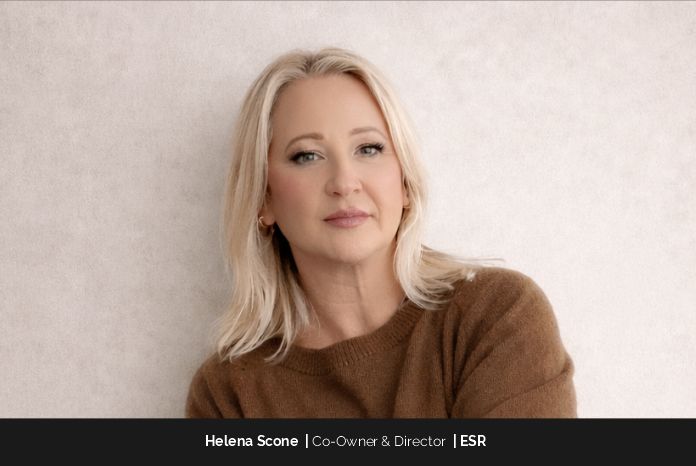
For Helena Scone, leadership in recruitment has never been about volume. It has been about responsibility. As Co-Owner and Director at ESR Talent, she has helped shape an approach that positions recruitment not as a service function, but as a strategic lever, particularly within the fast-evolving iGaming and FinTech sectors. Yet her philosophy did not begin in a boardroom. It began much earlier, shaped by personal experience, quiet observation, and the subtle but powerful influence of psychological safety.
Early Lessons in Support and Confidence
Helena describes herself as a shy child. With two older brothers who were fiercely protective, she grew up knowing she had support behind her, even when she felt unsure stepping forward. “I was always encouraged to try, regardless of the outcome,” she says. “Failing wasn’t seen as failure; it was learning.”
That mindset, simple yet profound, formed the foundation of her leadership style. Watching her brothers push limits, and occasionally falling herself while trying to keep up, taught her something that many leaders only learn much later: confidence does not come from avoiding mistakes; it comes from surviving them. “If I fell, I got back up again,” she explains. “That feeling of psychological safety stayed with me.”
Today, she consciously recreates that same environment within her teams. In sectors where innovation moves quickly and competition is relentless; stagnation is not an option. But neither is fear-driven performance. Helena believes that people only push boundaries when they feel secure enough to do so. “As a leader, I try to give people that same level of support, space to try new things without fear of repercussions,” she asserts. The result is not recklessness, but measured courage, the kind that fuels sustainable growth.
Talent decisions are strategic decisions; recruitment belongs in the boardroom.
Experience on Both Sides of the Table
Few recruitment leaders can speak with credibility about both agency and internal talent acquisition environments. Helena can. That dual perspective has shaped her approach in ways that go beyond theory. “I never ask anyone to do something I haven’t done myself,” she says plainly.
Having navigated both success and setbacks across her career, she brings realism into leadership conversations. Her team benefits not only from her wins, but from her lessons. Yet she avoids prescribing a single method. “I’ll say, ‘This works for me,’ but if something else works better for you, go for it,” she explains.
Recruitment, Helena believes, is deeply human. Scripts do not build trust. Authenticity does. “You can’t build trust without being genuine, whether that’s with clients, candidates or your own team,” she says. That philosophy encourages individuality within structure, a balance that many firms struggle to achieve.
The Defining Shift Toward Co-Ownership
Interestingly, Helena once believed her future lay firmly within internal roles. She valued the strategic and commercial depth they offered. Returning to external recruitment was not part of her plan. Then came a professional partnership that shifted her perspective. Although she jokes about being on “opposite sides of the fence,” Helena quickly realized that she and her business partner shared a common ambition: to improve the recruitment process from the inside out. “We actually want the same thing, to elevate and improve the process,” she says.
The turning point came when she was offered a permanent internal Director role but instead of reinforcing her previous direction, it clarified something else entirely. What started off as a temporary arrangement with ESR “It made both of us realise how much we valued working together, and that we had an opportunity to build something special,” she explains.
Co-ownership was not an impulsive leap. It was mapped carefully, with January 2026 set as a milestone. “We’ve been working towards that ever since, intentionally, not impulsively,” she says. That deliberate approach reflects her broader leadership mindset: vision supported by planning.
Redefining Recruitment in iGaming and FinTech
Operating within niche sectors demands more than surface familiarity. With over fifteen years of experience in iGaming, Helena understands the regulatory shifts, technological advances, and rapid market expansions that define the industry. But what distinguishes ESR Talent is not longevity alone. It is positioning.
“We’re not a traditional recruitment agency,” Helena explains. “I’d describe us more as a talent strategy and delivery consultancy.”
The distinction matters. Rather than stepping in only when a vacancy appears, the firm works alongside start-ups and scale-ups from the earliest stages, mapping talent markets, building hiring roadmaps, advising on budgeting, and supporting onboarding and development.
“We’re not just filling roles; we’re helping businesses build long-term capability,” Helena says. In industries where growth can be explosive, hiring mistakes are costly. Helena’s approach integrates recruitment into strategic planning rather than isolating it as a reactive function.
The Hardest Decisions Teach the Deepest Lessons
Leadership inevitably brings moments where empathy and responsibility collide. Early in her management career, Helena faced a situation that would quietly redefine her perspective. She had taken over a team transitioning from an administrative model to a more proactive, sales-driven approach. One team member stood out, talented, reliable, and personally valued.
“I wanted so much for them to stay and grow with us,” she recalls. But their strengths aligned more closely with HR than with the new commercial direction. Encouraging them to pursue a different path felt difficult, yet necessary. “It taught me something important: leadership isn’t about what you want for someone, it’s about what they want for themselves,” she reflects.
Since then, listening has become central to Helena’s management style. Performance improves when motivation aligns with role design, not when individuals are molded into unsuitable expectations.
People only move forward when they feel safe enough to try, fail and grow. Creating that environment is real leadership.
Culture Over Competition
Having left agency recruitment over a decade ago due to overly aggressive environments, Helena was determined to shape something different. “That never sat comfortably with me,” she says, referencing transactional cultures focused solely on quick placements.
At ESR, collaboration is intentional. If someone struggles with a search, others step in. Advice is shared. Networks are opened. “We win as a team,” she says simply. That ethos extends beyond daily operations. Bringing three Non-Executive Directors into the business signaled a commitment to governance and commercial discipline, a rare move in recruitment. For Helena, if talent decisions shape board-level outcomes, recruitment firms must operate with similar accountability.
Leadership Under Pressure and the Future Ahead
When identifying executive leaders in niche markets, Helena looks beyond credentials. “Transparency, integrity and honesty,” she says, are non-negotiable. She pays particular attention to behavior during adversity. “Real leadership shows during pressure,” she explains. Missed targets and regulatory hurdles reveal far more than growth periods ever could.
Looking forward, she anticipates shifts in leadership expectations. Younger professionals increasingly seek context and reasoning. Authority without explanation no longer resonates. Yet she cautions against overcorrecting. Approachability matters, but clarity and standards must remain intact.
Helena’s advice to aspiring leaders remains grounded: “Be credible. Be authentic. Be genuine.” Research deeply. Immerse yourself fully. And ensure actions consistently reinforce words.
In niche industries, reputations travel fast. Credibility is built through consistent action, not words.
Conclusion: Leadership That Endures
Helena Scone’s journey illustrates that recruitment, when treated strategically, becomes far more than a transactional function. It becomes a catalyst for organizational direction, cultural strength, and long-term resilience. Her leadership is not loud. It is intentional; it is built on integrity, shaped by experience, and strengthened by reflection. In industries defined by rapid evolution, that steady foundation may prove to be the most valuable asset of all.