
The media and telecommunications industries are in a constant state of motion. Audiences evolve faster than platforms. Technology reshapes how stories are told, how brands are built, and how trust is earned. In this environment, success is no longer driven by scale alone, but by relevance. The organizations that lead are the ones that truly understand people, listen deeply to their needs, and design experiences that feel both meaningful and measurable.
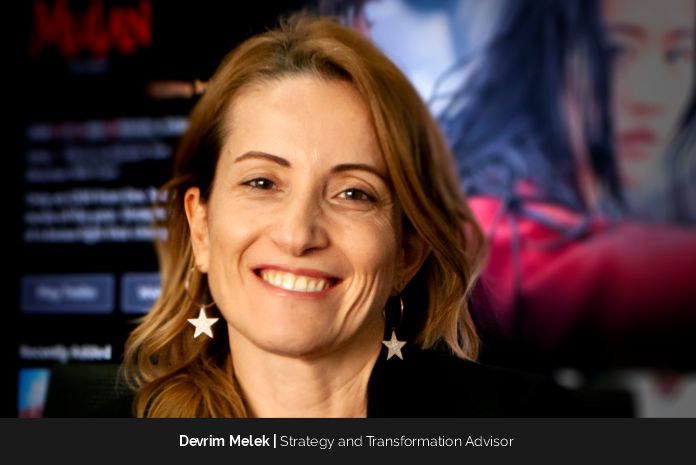
This is where strategic leadership makes the difference. Devrim Melek, Former Senior Vice President of Strategy at OSN, has spent more than two decades working at the intersection of media, marketing, and technology, helping companies stay ahead of change while remaining grounded in human insight. A high-achieving marketing professional, she is known for guiding organizations toward competitive advantage by identifying real customer needs, designing thoughtful solutions, and strengthening capabilities that drive sustainable revenue growth.
What sets Melek apart is her ability to balance creativity with clarity. She brings a data-savvy mindset without losing sight of emotion, culture, and storytelling. Throughout her career in media and telecom, she has played a key role in transforming how brands connect with their audiences, reshaping interactions to be more relevant, engaging, and impactful.
A true team player, Melek is recognized for her impassioned approach and her colourful, original ideas. She is a storyteller at heart, using data, analytics, and insight not as cold numbers, but as tools to uncover meaning, spark imagination, and guide smarter decisions. Her work reflects a belief that when strategy is built around people, brands do more than grow. They resonate.
Seeing the System, Not Just the Symptom
Long before digital transformation became a boardroom phrase, Melek was already trained to think in systems. Her academic grounding in mechanical engineering and fluid dynamics at Istanbul University shaped how she approached complexity from the very beginning. Engineering taught her to look beyond isolated problems and understand how individual components interact to create outcomes.
That way of thinking never left her. Markets, organizations, technologies, and customer behaviours all followed similar principles in her mind. When one element shifts, the entire system responds. She often reflects on how engineering trained her to reduce complexity without oversimplifying it. Problems were never viewed in isolation. They were patterns waiting to be understood. This mindset later became central to how she approached strategy, transformation, and leadership across industries.
An Executive MBA in Marketing from Istanbul Technical University added a crucial second dimension. Numbers alone were not enough. Understanding people, motivations, and behaviour completed the picture. Over time, her work proved that analytical rigor and human insight were not opposing forces but complementary ones.
“Data only has meaning when you can build the right stories around it. My intuition is like interrelated data that isn’t visible. It’s processed from one generation to another, carrying evolution and wisdom. The numbers alone never tell you why people behave the way they do.”
Building Intelligence Before It Was Fashionable
Melek’s early years at Digiturk, a BeIN media company, set the foundation for her reputation as a strategist who builds before she scales. Joining the company in 2003 as Head of Business Intelligence, she focused on creating analytical infrastructure rather than short-term reporting. Her work went far beyond databases. She designed systems that allowed the organization to anticipate customer behaviour, not merely react to it. Predictive thinking became embedded in decision-making.
By the time she stepped into the role of Marketing Director in 2013, those foundations paid off. Marketing strategies were driven by insight rather than instinct alone. Campaigns delivered consistent growth, adding more than 400,000 customers year after year.
Creativity remained central, but it was disciplined creativity. Every idea was informed by intelligence, every insight translated into action. That balance became one of her defining leadership traits.
Redesigning Growth at Turk Telekom
At Turk Telekom, where Melek served as Chief Commercial Officer for Media between 2015 and 2017, she faced a challenge that required rethinking the rules. The media business ranked fourth in the market and managed a P&L exceeding $200 million. Conventional wisdom would have suggested aggressive spending and competitive battles for share.
She chose another path. Rather than chasing volume, she focused on understanding customer behaviour at a granular level. The question was not how to acquire more users, but how to redesign the experience so that growth became a natural outcome.
The transformation delivered striking results. TV subscribers grew fourfold. Revenues increased by more than 35 percent. OTT subscribers expanded by 45 percent. Yet the real change ran deeper than metrics. New IPTV and OTT experiences were designed to increase engagement, not just sign-ups. Content consumption rose by 34 percent as customers spent more time, more meaningfully, within the ecosystem.
It was a lesson that stayed with her. Sustainable growth comes from experience design, not surface-level expansion.
Rebuilding OSN for a Streaming-First World
When Melek joined OSN in 2017, the company faced an existential question familiar to traditional media players worldwide. How could a premium satellite business transition to a streaming-first future without losing its identity or value?
Across roles spanning VP of Marketing Strategy, VP of Strategy, and later Managing Director of OSNtv from 2022 to 2024, she led that shift with precision and patience. The transformation touched every layer of the organization. Technology was only one piece. Culture, operations, and decision-making frameworks had to evolve as well.
IP-based products repositioned OSN from a satellite operator into a streaming pay-TV provider. Data analytics moved from a support function to a core organizational capability. Audience intelligence systems enabled smarter content investments and more effective marketing.
Operational improvements followed. Subscriber acquisition costs dropped by 50 percent. Churn declined. Business simplification generated millions in savings. Customer support shifted toward self-service models aligned with modern consumer behaviour.
Most importantly, OSN changed how it saw its audience. The company moved from delivering content to understanding viewers. That shift unlocked growth that technology alone could not have achieved.
The Biggest Disruption Yet
Melek is candid about where her thinking is being most actively challenged right now. It is not in boardrooms or inside strategy decks. It is happening in a much quieter and more uncomfortable place. It is unfolding in the deliberate process of unlearning.
“I don’t call what is happening transformation anymore,” she says with conviction. “Transformation implies you are improving what exists. What AI is doing is more fundamental than that. It is the biggest disruption any of us will live through, and I think we need to stop softening that language.”
After two decades of building expertise in strategy, marketing, and customer behaviour, she has begun intentionally questioning her own foundations. She is examining which parts of her knowledge remain relevant and which may already have been overtaken by change. It is not an easy exercise, and she does not pretend that it is.
For Melek, what feels most striking is not the threat AI poses, but the scale of opportunity it presents. She sees extraordinary potential for those who combine deep domain knowledge with genuine curiosity and the courage to rethink how they operate.
“For the first time in history, the gap between having an idea and executing it has collapsed,” she explains. “AI is a vessel that has never existed before. If you understand your industry deeply, if you know your customer, if you can think in systems you can now do things that would have required an entire organisation. The question is not whether AI replaces expertise. It is whether you are willing to rebuild how you think alongside it.”
At this point, her engineering background begins to surface again. Systems thinking, she believes, is becoming even more valuable in an AI-enabled world. “The people who will lead in this era are not the ones who mastered one domain and defended it,” she says. “They are the ones who understand how systems interact and can design across them with AI as a genuine collaborator, not a tool you manage from a safe distance.”
She is deliberate about her use of the word unlearning. For her, it does not mean forgetting. It means consciously releasing assumptions that once served her well but may now limit her perspective. “The leaders who are struggling with AI are not those who fail to understand it technically,” she observes. “They are the ones who built their identity around a specific kind of expertise and cannot let go of it. Adaptability was always a leadership virtue. Now it is a survival condition.”
Rather than watching from the sidelines, Melek spends meaningful time inside AI-enabled tools. She approaches them as a practitioner, not merely an observer. She is reshaping how she thinks about business creation, about strategy, and about what it means to generate ideas when the cost of execution has fundamentally shifted.
“AI doesn’t make understanding human beings less important,” she adds. “It makes it more important than ever. Because the platforms and the tools are becoming table stakes. The competitive advantage now lives entirely in how deeply you understand people and in the wisdom to know what matters.”
She also reflects on how leadership itself is evolving. “A leader’s knowledge and expertise used to be their most valued assets. But much of that can now be handled by AI. The real value comes from what I call ‘unknown expertise’: our intuition, the invisible data processed across generations, carrying evolutionary wisdom. AI amplifies this. It does not replace it.”
In her view, the future does not belong to those who cling to what they know. It belongs to those willing to rethink, rebuild, and rediscover what it truly means to lead.
Applying Streaming Logic to Cognitive Health at Beynex
Her advisory role at Beynex represents one of her most purpose-driven engagements. The AI-powered brain health platform tackles one of the most pressing challenges of aging societies. Cognitive decline often begins years before symptoms appear, yet detection still happens too late.
Founded by neurologist Professor Dr. Türker Şahiner alongside CEO Elif Bayındır and a multidisciplinary team, Beynex shifts cognitive monitoring from occasional clinical tests to daily, personalised tracking. Short, gamified micro-tests establish individual baselines and detect subtle changes over time.
“What drew me to Beynex wasn’t just the technology,” Melek explains. “It was the profound human purpose behind it. Every member of the founding team has personal experience with cognitive illness in their families. They are not building a product; they are trying to change outcomes for people they love.”
Her contribution centres on product strategy and adoption. The challenge is not technological capability, but behavioural change. Convincing people to monitor cognitive health before problems appear requires trust, clarity, and a compelling narrative.
She recognised parallels with her media experience. Streaming transformed episodic viewing into continuous relationships. Beynex applies the same principle to brain health, replacing isolated tests with ongoing insight. The strategy positions Beynex as infrastructure for cognitive resilience rather than a simple health app.
Building Creative Ecosystems with Cineshort
If Beynex reflects Melek’s commitment to health and longevity, her advisory work with Cineshort highlights her belief in creative sustainability. Cineshort supports short film creators across more than 140 countries, working with thousands of directors, distributors, and festivals. The platform is designed not only for audiences, but for creators who often lack visibility, infrastructure, and long-term opportunity.
Her involvement began through mentorship rather than formal structure. Founder and CEO Hasan Celil Tombul recalls being struck by a simple question she asked early on: How can I support you?
That mindset shaped the relationship. Strategic guidance focused on building a balanced ecosystem where creators and audiences grow together. Without supporting creators, the pipeline weakens. Without audiences, sustainability disappears. Her experience at OSN proved invaluable. Content and customer experience must evolve together. At Cineshort, that principle extends to global creative communities.
Purpose as the Engine of Performance
Across OSN, Beynex, Cineshort, and her angel investments, a single philosophy connects Melek’s work: purpose and performance cannot be separated without weakening both. She has never treated mission as a communications layer or a slogan. In her leadership, purpose sits at the centre of strategy. Businesses endure when they create real value for real people. Results then become a consequence, not merely the objective itself.
Her conviction comes from experience rather than theory. Time and again, she has observed that organisations solving real problems build stronger cultures, sharper execution, and greater resilience. When people feel genuine ownership of what they are creating, performance follows naturally.
“The winners won’t be those with the biggest content libraries. They’ll be those who truly understand their audience, design personalised experiences, and create value beyond content access.”
Leading with Soul, Not Detachment
Melek describes her leadership style as leading with soul — a philosophy grounded in discipline rather than impulse. This way of thinking was shaped early by her grandmother, whose intuitive understanding of people and situations showed her that wisdom accumulates across generations. Without relying on formal frameworks, her grandmother could read context and emotion with remarkable clarity, teaching Melek that some of the most valuable intelligence cannot be quantified.
The first pillar of this approach is trust in judgment. Years of pattern recognition have taught her that not every right decision arrives neatly packaged in data. Some ideas reveal their value before spreadsheets can justify them. Strategic intuition, built through experience, often signals the right move before logic catches up.
The second pillar is humanity. Melek draws a firm line around how success is achieved. Results gained through disrespect or emotional damage do not qualify as transformation in her view; they simply replace one form of dysfunction with another.
The third pillar is care. Teams that genuinely believe in the brand and its mission outperform those driven only by incentives. Motivation rooted in meaning proves more durable than motivation driven by pressure.
“Leading with soul means knowing that an idea will work even if it isn’t completely rational, genuinely believing that no outcome is worth breaking a heart, and fostering genuine love for the work because motivation and intention matter more than just intelligence.”
Authority Without Apology
Navigating leadership as a woman in transformation-heavy industries has shaped her clarity around authority. She has never sought legitimacy through gender, nor has she softened her stance to meet expectations. Respect, in her experience, comes from competence, consistency, and results.
Her response to additional scrutiny has been straightforward: stay grounded in outcomes. Collaboration matters, but it does not replace accountability. Transformation requires both inclusion and momentum. True leadership combines empathy with accountability. Teams are trusted to operate independently, but remain responsible for what is made visible.
Clearing the Path for Those Who Follow
Legacy, for Melek, has never been about personal achievement alone but about progress. She believes the next generation of women leaders should not have to navigate the same unnecessary obstacles. Success carries responsibility, and that responsibility includes making leadership more navigable for those who come after.
Her advice to young leaders is grounded in realism. Strategic thinking sharpens most when rooted in deep understanding of people — whether in analytics, customer experience, or product development. She encourages courage. The most defining career moments often come from stepping into situations others have avoided. Complexity and discomfort frequently offer the greatest opportunities for impact.
“Strategy without wisdom is just sophisticated tactics. But wisdom without the ability to execute is just philosophy. The real opportunity is bringing both: the analytical rigor to understand what’s possible and the human wisdom to know what matters.”
Strategy Across a Region of Contrasts
Years of operating across more than twenty Middle Eastern markets have reinforced one lesson above all others. The region cannot be approached as a single market. Each country brings its own regulatory framework, cultural norms, and consumer behaviours. Success depends on balancing a unified strategic vision with deeply localised execution.
Her experience across Turkey, the Gulf, and North Africa has taught her to look beyond business mechanics. Cultural context shapes how people engage with brands, content, and technology. Strategy that ignores this reality rarely scales. The strongest models, in her view, combine global discipline with regional sensitivity.
Why Wisdom Matters More Than Ever
As technology accelerates, Melek believes leadership must rebalance. Data remains essential. Analytics remain powerful. But information alone does not create direction. Wisdom does. She speaks often about what she calls spiritual quotient — a blend of judgment, empathy, and awareness that machines cannot replicate. In times of disruption, the ability to read human signals and emotional undercurrents becomes a competitive advantage.
Her leadership framework rests on three anchors. Data must inform intuition. The customer experience must remain the central reference point. Autonomy must always be paired with accountability. Across industries, roles, and contexts, the principles remain constant even as details change.
Legacy as Transfer, Not Trophies
When Melek reflects on legacy today, outcomes no longer sit at the centre. What matters more is what endures after the project ends: the thinking teams carry forward, the judgment they develop, and the confidence to navigate ambiguity without constant guidance.
Her definition of legacy has evolved, perhaps most clearly since becoming a mother. When she considers what she wants to leave behind, it is not limited to boardrooms or product roadmaps. It also lives in the example she sets for her daughter — that women can lead transformation, that authority does not require compromise of values, and that success means creating value that outlasts any single tenure.
At Beynex, this belief shows up in how she works. Her role extends beyond product direction into shaping how leaders communicate complex science in ways that influence behaviour. “The most valuable thing I can offer now isn’t my knowledge of streaming platforms or customer analytics,” she explains. “It’s the pattern recognition that comes from two decades of leading transformation across different contexts. It’s the intuition about when to push and when to pause. It’s the clarity about what truly matters versus what only feels urgent in the moment.”
For Melek, legacy is not something to be displayed. It is a perspective, a confidence, and a set of values which are passed from leader to leader, and from one generation to the next.