
How an unconventional career in people, performance and change shaped a human-centred approach to business transformation through AI
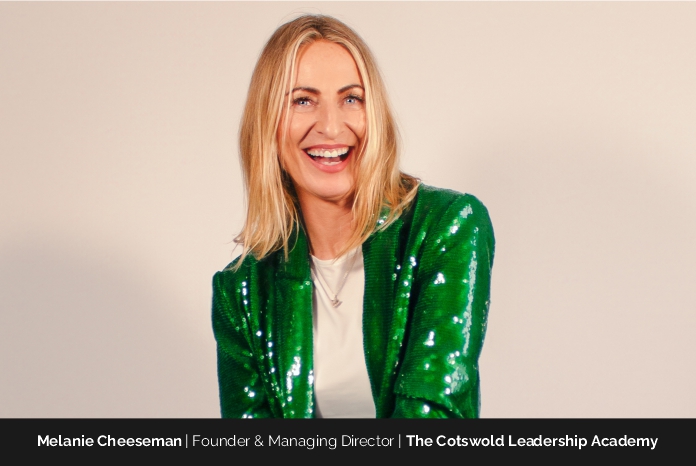
Melanie Cheeseman did not set out to work in artificial intelligence. She left school wanting to be a dancer, took typing classes in the 1980s and still jokes that she is not a particularly good typist. She describes herself as nontechnical. Yet today she leads OnyxAI, a business transformation program at Emerge Digital built around the golden triangle of people, process and technology.
That apparent contradiction is the point. Mel’s contribution to AI is not a claim to know more about the technology than the engineers around her. It is her understanding of how people respond when work changes: where confidence falters, why capability does not automatically follow training, and what leaders must do if new tools are to improve performance rather than simply add pressure.
Her career has moved through financial services, education, marketing, leadership, coaching, positive psychology and business ownership. From the outside, the route can look fragmented. In hindsight, she sees a consistent thread: people navigating change.
AI is the latest, and perhaps most consequential, version of that challenge. The technology has changed. Many of the human questions have not. Will people trust it? Will they feel capable of using it? What happens to their sense of value when part of a role changes? How should leaders respond to hesitation without dismissing it?
Mel describes herself as a mass of contradictions: warm and energizing in a room, yet fiercely protective of quiet and time alone; optimistic, but questioning; willing to walk into unfamiliar territory, even when every instinct tells her to stay outside. Those tensions have shaped a practical, empathetic approach to leadership. She knows confidence is not always visible and that hesitation does not mean someone has nothing to contribute.
Her expertise sits at the intersection of people, performance and change. Rather than presenting herself as an AI technologist, she helps connect those disciplines to the technology.
Learning Change From the Inside
Her first accidental immersion in technology came in financial services in 1997, when internet banking was unfamiliar to most customers and far from routine. Without a technology background, she found herself leading a team responsible for helping people navigate this significant change.
Shortly after accepting the leadership role, Mel learned she was expecting her daughter. Managing both personal and professional change at the same time strengthened her understanding that transitions are never purely technical. People need confidence, reassurance and support to navigate the unfamiliar.
The experience did not turn her into a technologist. Instead, it shaped an understanding that would remain central to her leadership approach: adoption is never only a technical challenge.
Customers needed clear information, reassurance and the confidence to try an unfamiliar way of doing something important.
Mel could recognize the frustration of a new system without understanding every line of its architecture. That ability to stand between technical possibility and human experience would reappear throughout her career.
It was not the only time she led in a world that was not naturally her own. She later ran a cider business even though she did not drink cider. In both cases, her strength was not personal enthusiasm for the product or deep technical expertise. It was understanding customers, people and what the business needed to work.
The route that followed was organic rather than planned. She moved through education, support work, charities, freelancing and business leadership. While raising her daughter, she studied beside her at the kitchen table. “Her homework took five minutes,” she says. “Mine took five days.”
One formative role involved supporting a university student who used a wheelchair and was navigating the practical barriers of higher education. It sharpened Mel’s instinct to notice what makes participation difficult and to ask what conditions would allow someone to contribute fully.
Her academic and professional development followed the same curiosity. She completed degrees in marketing and marketing management, trained in education, and studied positive psychology, executive coaching and Emotional Freedom Technique. The qualifications matter less to her as a list than as evidence of a habit: when something is useful, she wants to understand it deeply enough to put it into practice.
People, Performance and Wellbeing
Across those roles, Mel became interested in the relationship between strengths, energy, confidence, mindset, relationships and performance. She does not treat wellbeing as a benefit sitting beside the “real” work. In her view, it is part of the operating environment that makes sustainable performance possible.
She learned some of this the difficult way. There were periods when she ignored her own internal signals, stayed in roles too long and eventually paid a physical and emotional price. That experience made her wary of leadership language that celebrates endurance without judgment.
A phrase Mel returns to is that progress creates a responsibility to keep going. For her, persistence matters most when paired with the judgment to listen, reconsider and change direction when needed. She has always championed people who were overlooked or underestimated, but she is equally interested in whether the systems around them make good work possible.
She is candid, too, about wanting to know her work has made a difference. Over time, that need for validation became a discipline: listen carefully, look for evidence of impact and remain accountable for whether the work has genuinely helped the people it was designed to serve.
Part of her own development has been learning to become her own cheerleader, recognizing progress without waiting for permission or praise. That is not a slogan for her. It is a way to keep moving while remaining honest about what still needs work.
The same perspective now informs how she thinks about AI. A tool may improve performance, but only if people have the confidence, capability, relationships and leadership support to use it well. A rollout that overlooks energy, identity or workload may create activity without meaningful change.
“Fear and uncertainty are normal responses to change,” she says. “The answer is not to dismiss them. It is to understand them and help people move through them.”
That emphasis on human behavior does not mean lowering expectations. It means creating the conditions in which people can take responsibility, experiment thoughtfully and turn learning into better work.
The Capacity That Changed Her Direction
By 2025, Mel was running a coaching practice built around highly individual client relationships. The work mattered deeply to her, but success generated administration: reports, learning materials, plans, client records and documentation. The more clients she served, the less capacity she had to develop the business.
She began using Microsoft Copilot because she needed practical help without losing the individuality of her work. It gave her a starting point for reports, learning materials, plans and other tasks that were consuming time, while leaving her responsible for reviewing and refining the result.
What surprised her was not simply the time saved. It was what the released time made possible. She could think, create, build relationships, develop new ideas and consider opportunities she had previously been too busy to pursue. AI had created capacity.
That distinction has become central to her philosophy. The value of AI is not only the hours removed from a task. It is what a person or organization chooses to do with those hours. Efficiency can create breathing room, but leadership determines whether that room becomes innovation, deeper customer relationships, better decisions or simply more work.
That new capacity made one particular decision possible. An acquaintance she had met at a speaking event invited her to a networking group. Mel dislikes networking. Social anxiety has accompanied her through much of her adult life, and a room full of strangers does not become easy simply because she can appear composed inside it.
She missed the first meeting, then the second, then the third. At the fourth, she made herself go. In the room, she heard two leaders from Emerge Digital discussing AI. She listened, crossed the room and joined the conversation.
“Internally, I had to fight to do it,” she says. “But I knew that if I did not do it then, I might not do it at all.”
Within two weeks, the conversation had become a collaboration. Emerge Digital saw value in her methodology. Mel recognized a setting where decades of experience in behavior change, learning and leadership could contribute to a wider transformation. She accepted an associate role without knowing exactly where it would lead.
In retrospect, she can see the connections. If AI had not reduced the paperwork in her business, she may not have had the capacity to attend the event. If she had not attended, she may not have met Emerge Digital. But she resists turning the sequence into destiny. Opportunities appeared through circumstance. Walking through the door was a choice.
A Human Perspective Inside a Technology Business
Emerge Digital is a UK-based managed services provider and AI consultancy focused on helping small and midsize businesses use technology for growth. It gave Mel a new setting for work she had been doing in different forms for years: helping people understand what is changing, what it asks of them and how to respond without losing confidence or judgment.
Her role now brings together client experience, marketing and the OnyxAI Transformation Program. More importantly, it gives her an opportunity to ask a leadership question at each stage of a client journey: what will help people feel informed, capable and ready to act?
OnyxAI is structured around the golden triangle of people, process and technology. The premise is that AI transformation cannot be sustained if one side is treated in isolation. Technology may enable a new way of working, but processes must change around it, and people need the confidence, capability and permission to behave differently.
For Mel, AI adoption is therefore a business transformation challenge rather than a software rollout. Training matters, but information alone rarely changes behavior. People must apply what they learn to real work, reflect on the result, share what works and turn effective use into repeatable practice.
She is especially interested in the questions technology cannot answer by itself. Will people trust the output? Where must human judgment remain decisive? How will a role change when repetitive tasks take less time? What happens to an employee’s sense of contribution? How should leaders measure value without mistaking license activation for transformation?
Questioning AI From Inside the Conversation
Mel was not an early AI enthusiast. She had reservations about ethics, environmental impact, the meaning of human work and the consequences of poorly managed change. She still has them.
Her environmental concern is not abstract. The International Energy Agency has documented the growth in electricity demand associated with data centers and AI-focused infrastructure. Mel does not use that concern as a reason to claim purity from outside the system. It is one reason she believes deliberate use, governance and judgment matter inside it.
“Refusing to engage would not stop the technology developing,” she says. “Participating gives me an opportunity to influence how it is used.”
Her grandfather used to advise working within the system you are in to create the change you want to see. That principle helped her resolve some of the tension. She could remain questioning while becoming useful. She could acknowledge risk while helping organizations build safer habits and retain human accountability.
Her position is therefore neither resistance nor evangelism. She sees herself as a discerning participant. She wants leaders to ask where AI adds value, where it can cause harm, what evidence supports a use case and who remains responsible for the decision.
More Space for Human Judgment
Mel often describes Microsoft Copilot as a personal assistant, not because the comparison captures every technical detail, but because it sets a useful expectation. An assistant can organize information, reduce repetitive administration, draft a starting point and help someone prepare. It does not remove the owner’s responsibility to think, check and decide.
“The value is not that AI thinks for you,” she says. “The value is that it can create more space for you to think.”
That space can be used badly or well. A business can fill it with a higher volume of low-value work, or it can use it to improve decisions, strengthen client relationships, innovate and address problems that have been repeatedly deferred. The technology creates possibility. Leadership shapes the outcome.
This is also why Mel resists measuring success through adoption rates alone. Usage can show whether people are engaging, but it does not prove the work is better. She is more interested in hours released, productivity gains, improvements in quality, clearer decisions and whether effective use becomes part of everyday process.
When a good use case is found, she wants it codified into a pattern, prompt, agent or process that others can use. Individual experimentation matters, but organizational value appears when learning can be shared, improved and repeated.
In that sense, OnyxAI is less about persuading people to like AI than helping them change how they work with it. The human remains in the loop as both a design principle and an ethical stance.
Leadership in the Uncertain Middle
Mel’s leadership perspective is grounded in the uncertain middle between refusal and certainty. She has experienced uncertainty herself, watched other people experience it and spent much of her career helping them move through it.
That makes her skeptical of messages that tell employees not to be afraid. Fear may be entirely reasonable when a person does not know how a role will change, whether their expertise will still be valued or who will be accountable when an AI-supported decision goes wrong. Leaders build trust by taking those questions seriously.
Her preferred starting point is curiosity. Not blind optimism, but a willingness to examine a real task, test what the tool can do, check the result and decide whether it improves the work. Small, relevant experiences allow confidence to grow from evidence.
Leaders also have to model the behavior. If they talk about transformation while continuing to reward only visible busyness, new working practices will struggle to take hold. If they invite experimentation but punish imperfect first attempts, people will retreat to familiar methods.
Keeping the Person in the Story
It would be easy to make Mel’s story neater than it is. To suggest that the dancer, the reluctant typist, the financial services leader, the student, the coach and the program director were all moving inevitably toward AI. She rejects that version.
She made choices, changed direction, learned and sometimes stayed too long. Some experiences were difficult. Some only made sense later. The connections she sees now are an interpretation built with hindsight, not evidence that everything happened for a reason.
She also believes leadership literature has not always reflected the full range of ways people lead. Her own approach values collaboration, community building, attentive listening and the ability to bring people with you. In organizational transformation, those qualities are central to building trust and making change part of everyday work.
Her advice to anyone entering technology, AI or any room where they feel out of place is simple: find people who value what you bring, then build with them. Leadership does not require abandoning your identity to fit the room. It requires recognizing the contribution you can make.
And, she adds, go to the networking event. Even the fourth one. Especially the fourth one.
What People Choose to Do With It
Mel now finds herself close to one of the biggest changes in how people work, not because she planned a career in AI, but because the questions around it are questions she recognizes. How do people build confidence? What enables sustainable performance? How does a leader create the conditions for thoughtful action? What should remain unmistakably human?
Her answer begins with the person rather than the platform. It asks what work is consuming energy, what process needs to change, what capability is missing and what outcome matters. Only then does it ask where technology can help.
She does not believe AI should replace human judgment. She believes it should create more space for it. That requires people who are willing to question the tool, learn how it behaves, take responsibility for its use and notice what happens to the humans around it.
Her journey brings together experiences that once looked unrelated: financial services, education, business ownership, coaching, positive psychology, client experience and technology. They now form a leadership practice centered on helping people navigate change without losing sight of themselves.
The lesson is not that every career must follow a plan. It is that experience becomes valuable when a person recognizes the thread, trusts what it has taught them and puts it to work in service of others.
Confidence rarely comes first. Curiosity can come first. Then learning, action and the willingness to stay with the uncertainty long enough to understand it.
Confidence follows.