
Healthcare across Latin America is shaped by constant motion. Economic cycles shift, access frameworks evolve, and innovation moves faster than many systems can absorb. Biotech, pharmaceutical, and medical device companies operating in the region must balance scientific progress with affordability, regulation, and deeply varied patient needs. Leadership in this space is less about control and more about judgment, adaptability, and the ability to translate long-term vision into daily execution across diverse markets.
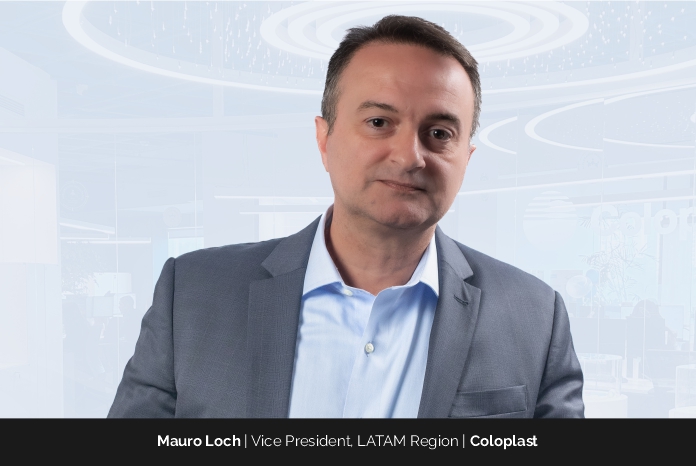
Within this demanding landscape stands Mauro Loch, an experienced and energetic leader whose career spans more than 30 years across the biotech, pharmaceutical, and medical device industries in Latin America. Over the past 20 years, he has served in General Manager roles, leading complex organizations through growth, transformation, and volatility. Known for his strategic clarity and hands-on approach, Mauro has built a strong record in marketing, sales, and general management, consistently delivering accelerated yet sustainable business results.
What defines his leadership is not only performance, but direction. He brings teams together around a clear and engaging vision, sets priorities that align ambition with reality, and translates medium and long-term strategies into measurable progress.
From the Field to the Boardroom
Mauro’s professional story did not begin in a corner office or a regional headquarters. It started on the ground, in Southern Brazil, where he entered the pharmaceutical industry as a sales representative. Those early years were formative, not only because they introduced him to the realities of healthcare markets, but because they taught him how trust, relationships, and consistency shape long-term success.
After three years in the field, he moved to São Paulo, where his career began to take on new dimensions. He alternated between internal roles and commercial leadership positions, including sales management. This mix of perspectives allowed him to understand the business from multiple angles, from strategy and operations to execution in the field. Along the way, he changed companies, entered new markets, lived abroad, and took on regional responsibilities, experiences that accelerated both his professional growth and personal maturity.
Rather than chasing titles, his progression was guided by readiness and responsibility. A defining moment came when he assumed full P&L accountability, raising the complexity of his role and sharpening his decision-making. From there, his career advanced steadily through experience, learning, and well-timed transitions.
A Leadership Mission Anchored in Purpose
Today, as Vice Presidente for the LATAM Region at Coloplast, Mauro describes his leadership mission with clarity and restraint. At its core, it is about bringing the company’s global purpose to life across Latin America. That purpose, making life easier for people with intimate healthcare needs, is not treated as a slogan, but as a practical guide for decision-making.
The region he oversees is far from uniform. Countries differ widely in economic stability, healthcare infrastructure, and access to treatment. His role requires balancing consistency with sensitivity, ensuring that Coloplast’s mission is delivered in ways that respect local realities. Whether operating through direct affiliates or distributor-led models, the objective remains the same: relevance, credibility, and impact in each market.
When the mission is executed well, business growth follows naturally. Expansion is not pursued for its own sake, but as a consequence of delivering value in a sustainable and responsible way. The ambition lies in extending that purpose across the region with discipline, patience, and long-term commitment.
The One Strategy That Never Changed: People
Across leadership roles at Coloplast, Cardinal Health, Bomi Group, Amgen, and Baxter, Mauro has worked with different products, market dynamics, and commercial models. While many elements have evolved from one organization to another, one constant has remained at the center of his approach “People”.
From the beginning, he has prioritized building strong, specialized, and well-trained teams capable of representing the company at the front line. He views team quality as the bridge between ambition and execution. Strategies, investments, and go-to-market tactics can be adapted to local conditions, but without the right people, none of them deliver lasting results.
This focus on talent development, training, and accountability has been the foundation behind sustained and accelerated growth across multiple markets. Products may change, and competitive landscapes may shift, but a capable and committed team remains the most reliable asset in navigating complexity and driving performance.
Operating Inside Uncertainty
Operating across Latin America involves challenges that go far beyond commercial execution. Each country carries its own economic, regulatory, and cultural realities. Argentina, for example, is shaped by recurring macroeconomic volatility, where disciplined monthly monitoring of key indicators is essential to protect the business while maintaining continuity.
Across the region, access remains the most persistent challenge. Healthcare resources are limited, innovation continues to raise costs, and public budgets rarely keep pace, intensifying competition for funding. Access therefore becomes a core capability, not a supporting function.
At Coloplast, this has led to a more structured approach, with dedicated access teams engaging governments, healthcare institutions, and private stakeholders, supported by clinical evidence, economic data, and international benchmarks. Combined with strong country-level management, this model helps navigate uncertainty and ensures innovation reaches patients who need it most.
Turning Strategy into Action Across Borders
Translating long-term ambition into tangible results across Latin America requires flexibility as much as discipline. Mauro approaches strategy by first redefining what “long term” actually means at the country level. In Brazil, a five-year horizon allows for structural planning and sustained execution. In Argentina, where volatility is part of the operating reality, three years already represents a distant future. Chile sits somewhere in between, allowing for three to five years of forward planning.
Strategy, in his view, cannot be written in isolation. It must be built collectively. Rather than delivering a finished plan to his teams, he involves them in shaping it. That shared construction creates ownership from the outset, turning strategy into a living framework rather than a static document.
Once the direction is set, the plan is broken into annual stages. Each year carries clear objectives and measurable indicators that keep execution grounded and expectations realistic. This cadence creates momentum, sustains motivation, and allows teams to see progress rather than abstract ambition. It also strengthens alignment with headquarters through regular milestones that reinforce trust and credibility.
Guidance in Motion
Periods of transformation test both organizations and individuals. Mauro believes leadership during change starts with transparency. He compares it to a flight encountering turbulence. When passengers know what to expect and are assured that safety is not compromised, anxiety eases. The same logic applies inside organizations. Clear explanations about why change is happening, what it affects, and where the risks lie help preserve trust and engagement.
Leadership development goes beyond communication and formal training. Courses and job rotations matter, but growth truly happens when people are given real responsibility. Managers must be willing to delegate meaningful challenges and stand behind their teams as they learn.
This belief was shaped by his own experience leading a subsidiary in Chile at the age of 34, a demanding role that accelerated his development. Today, he creates similar opportunities for his teams by balancing challenge with support. Potential is assessed, expectations are clear, and guidance is constant. Without support, delegation leads to failure. With it, leaders are built.
Expanding Access Where It Matters Most
Improving quality of life for people with intimate healthcare needs depends on access, and access is built over time. In many Latin American markets, inclusion in public coverage protocols takes years, not months. Recognizing this, Mauro treats access as a strategic priority rather than a tactical activity.
In Brazil, Coloplast has established an access team comparable to leading pharmaceutical organizations, a rare approach in medical devices. These teams work with policymakers, healthcare institutions, and payers, supported by clinical evidence, economic data, and real-world outcomes.
The effort extends beyond institutions. Close collaboration with patient associations helps educate users on care, conditions, and quality of life, enabling stronger advocacy for better standards. Engagement with municipal and state governments continues across the region, with Brazil receiving greater focus due to its scale.
User services complete this model. Programs such as Ativa personalize support and product combinations, raising care standards while building trust. Combined with competitive pricing, reliable availability, and consistent service, this ensures access is practical, sustainable, and continuous.
Where Business Performance Meets Patient Trust
Throughout his career, Mauro has worked with products that do more than compete in markets. They save lives, restore dignity, and improve daily living. From that perspective, he sees no divide between business success and patient well-being. One naturally follows the other.
When real clinical needs are met with meaningful solutions, the fundamentals must be in place. Strategy has to be sound, teams well trained, pricing fair, and logistics reliable. When these elements align around patient needs, commercial results emerge organically. Sales are not pushed; they come alongside genuine patient benefit.
Ethics, in this setting, is not confined to policies. It is practiced daily. Mauro views ethical conduct as a matter of attitude, not language. Every organization he has served has operated under a Code of Ethics and Compliance, and he treats those standards as non-negotiable. Growth cannot come at the expense of integrity. If an action conflicts with the Code, it stops there.
Sustaining this culture requires constant reinforcement. Compliance must be embedded, not symbolic, supported by clear structures, tools, and continuous communication. Senior leadership, in particular, demands the judgment and courage to set limits. Long-term growth, in his view, is only meaningful when it protects the company, its people, and the patients it serves.
Leading with Clarity in High-Responsibility Roles
Managing large, diverse organizations comes with pressure, complexity, and constant decision-making. Mauro maintains balance by grounding his leadership in clarity. Communication is direct and transparent. Strategy is clearly defined, with priorities established early and shared openly with his leadership team.
Alignment is not assumed. It is built through regular communication and consistent updates. Mauro believes people should never be surprised by direction or change. When teams understand where the organization is going and why, commitment strengthens naturally. He places strong emphasis on gathering people at key moments to revisit strategy, review progress, and recalibrate when needed. These moments of collective clarity create stability, even in fast-moving environments. They allow teams to stay focused, resilient, and confident in their role within the broader mission.
Recognition as a Reflection, Not a Destination
Being named one of the “10 Most Influential Leaders Driving Business Success, 2026” arrived as a meaningful moment in Mauro’s career. It was both unexpected and deeply appreciated. He has never approached his professional life with a distant end goal in mind. His focus has always been on the next step, taken carefully and with intention. Growth came through execution, consistency, and responsibility rather than ambition for titles. Across the organizations he has served, he has delivered results while leaving behind stronger teams and developed leaders.
The recognition came at a time of professional maturity, when many personal and career goals are being realized simultaneously. Today, he leads within a company he respects, alongside a team he values, in a phase marked by both fulfillment and perspective. The acknowledgment feels less like a milestone to chase and more like a confirmation of the path taken.
Notes for the Next Generation
To professionals aspiring to lead healthcare markets such as Latin America, Mauro offers advice shaped by experience rather than theory. The region is dynamic and demanding, shaped by economic swings, cultural diversity, access constraints, and social complexity. Openness to challenge is not optional. It is essential.
Flexibility matters. So does patience. Careers, in his view, should be built step by step. Skipping stages often comes at a cost. Each phase brings learning that cannot be replaced or rushed. Allowing growth to unfold naturally creates stronger, more resilient leaders.
Above all, he stresses the importance of the team. Leadership is never a solo effort. Results, transformation, and long-term impact depend on being surrounded by capable, committed people. Alone, nothing meaningful is built. Together, even the most complex markets become navigable.
The Upcoming Wave of Patient-Centered Care
Coloplast’s regional direction is shaped by four strategic pillars guiding the next five years. Within this framework, leadership in emerging Latin American markets is sustained through agility, differentiated service, and ongoing innovation. Markets are segmented by potential, timing, market share, and risk, with structure and investment adjusted to focus resources where they deliver the greatest impact. Technology launches, quality standards, access initiatives, and disciplined prioritization work together to keep pace with a healthcare landscape that is evolving unevenly across the region.
Looking ahead, Mauro sees personalization becoming a defining force in healthcare. Care is moving beyond basic product access toward ensuring each individual receives the right solution for their body profile, condition, and lifestyle.
This shift is especially important in areas such as urinary retention, where products must do more than function. They need to prevent injury, reduce infection risk, and enable safe self-use, particularly for patients with motor limitations. Yet many public procurement systems still favor volume-based standardization, often overlooking individual needs.
The next phase lies in balancing efficiency with clinical adequacy. Systems that recognize individual variation while maintaining sustainability will deliver better outcomes and shape the future of intimate healthcare across Latin America.