
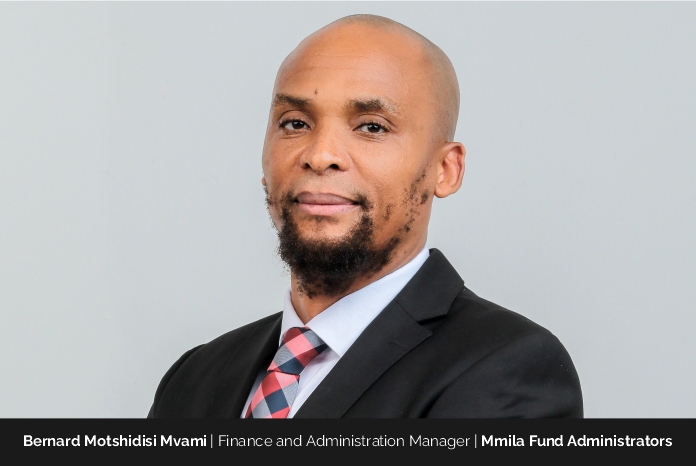
Careers in finance are often associated with numbers, reports, and compliance requirements. Yet for those who spend years in the profession, the work becomes about much more than financial statements. It becomes about people, trust, responsibility, and the ability to make sound decisions when the stakes are high. For Bernard Motshidisi Mvami, Finance and Administration Manager at Mmila Fund Administrators, those principles have guided a career built on continuous learning, strong mentorship, and a commitment to helping organizations and individuals succeed.
Over the years, Bernard has taken on increasingly complex responsibilities, moving from accounting roles into positions that require both strategic thinking and operational leadership. Along the way, he has learned that while technical knowledge is essential, lasting success often comes from qualities that cannot be measured on a spreadsheet, integrity, consistency, resilience, and the willingness to invest in others.
The Influence of Mentorship and Early Career Foundations
When Bernard reflects on the early stages of his career, one person immediately comes to mind: Michael Kampani. Shortly after joining G4S Botswana as an Accountant in 2008, Bernard began working closely with Michael, who was serving as Finance Director at the time. The professional relationship would become one of the most influential experiences of his career.
As Bernard advanced through different roles within the organization, eventually succeeding into the Finance Director position himself in 2015, he benefited from guidance that extended well beyond technical finance matters. Michael’s passion for leadership and professional development left a lasting impression, encouraging Bernard to continuously challenge himself and pursue further qualifications.
The ACCA journey was not always easy. Like many professionals balancing work and studies, there were moments when the process felt overwhelming. Looking back, Bernard credits much of his determination during that period to the encouragement he received from his mentor. Those experiences taught him lessons that continue to shape the way he approaches leadership today.
They also explain why mentorship remains so important to him. Having experienced firsthand the impact that one person can have on another’s career, Bernard has made it a priority to support and develop those around him whenever possible.
Beyond Traditional Finance Leadership
Bernard’s current role at Mmila Fund Administrators looks very different from the position he held when he first entered the profession. While finance remains central to his responsibilities, his role now extends into operations, strategy, client service, and business leadership.
That shift has given him a broader perspective on how organizations function. Financial performance is important, but it is only one part of a much bigger picture. Success also depends on efficient operations, capable teams, strong client relationships, and the ability to adapt when circumstances change.
Leading both Finance and Fund Administration Operations has reinforced the importance of understanding the business as a whole. It has also strengthened Bernard’s appreciation for the service side of the industry. Fund administration is ultimately about serving people, and meeting those expectations requires constant attention to detail, responsiveness, and accountability.
For Bernard, leadership today involves finding the right balance between strategic priorities and day-to-day realities. That balance is not always easy, but it becomes possible when people are trusted, empowered, and given the opportunity to take ownership of their responsibilities.
Managing Challenges When the Pressure Is On
Every career includes moments that test a leader’s ability to remain calm and focused. One of Bernard’s most demanding professional experiences came during the implementation of the IFRS 17 Accounting Standard for a client with an annuity portfolio.
The assignment involved a wide range of stakeholders, including regulators, auditors, consultants, project teams, and the client itself. Technical requirements were constantly evolving, and differing interpretations added further complexity to an already challenging project.
Rather than focusing solely on the technical aspects, Bernard concentrated on maintaining communication and alignment among everyone involved. “Success required decisive leadership, constant stakeholder engagement, and a clear focus on the broader objective,” he explains.
The experience reinforced an important lesson: major projects are rarely completed through technical expertise alone. They require collaboration, patience, and the ability to keep people working toward a common objective even when obstacles arise.
Building Confidence Through Accountability
Trust plays a critical role in fund administration. Members need confidence that their retirement savings are being managed responsibly, while trustees and regulators depend on accurate information and strong governance practices.
Bernard believes accountability begins with creating systems and processes that support transparency. At Mmila Fund Administrators, integrated administration and financial management systems help ensure accuracy, traceability, and consistency across operations. Automation has reduced the risk of manual errors while improving efficiency and reporting capabilities.
At the same time, Bernard is quick to point out that technology alone is not enough. Strong governance and a culture of responsibility remain essential. Systems can support good decision-making, but people still need to uphold the standards expected of them.
That belief has remained consistent throughout his career. Whether working with clients, colleagues, or regulators, Bernard understands that trust is earned over time through reliability, professionalism, and accountability.
Adapting to Change and Embracing Technology
Having spent years in finance, Bernard has witnessed significant changes in the way organizations operate. Advances in technology have transformed everything from reporting and compliance to forecasting and decision-making.
Tasks that once required extensive manual effort can now be completed more efficiently through automation and integrated systems. Access to real-time information has also changed how leaders evaluate performance and respond to emerging challenges.
“Technology is a critical enabler of modern financial management,” Bernard says.
His interest in innovation is not driven by technology for its own sake. Instead, he sees it as a practical tool that helps organizations operate more effectively. Better information leads to better decisions, while improved systems allow teams to focus on higher-value activities rather than repetitive administrative tasks.
At the same time, Bernard remains mindful of the broader economic environment. Botswana’s economy, like many others, has faced periods of uncertainty. Those experiences have reinforced the importance of adaptability, careful planning, and maintaining a long-term perspective.
Investing in People and Future Leaders
Despite the advances in technology, Bernard believes people remain the most important part of any organization. His own career was shaped by individuals who invested time in his development, and he has tried to do the same for others throughout his leadership journey.
One of the aspects of leadership he enjoys most is seeing people grow professionally. Whether through coaching, mentorship, or simply providing opportunities for greater responsibility, he takes pride in helping individuals build confidence and reach their potential.
For aspiring finance professionals, Bernard often emphasizes the importance of qualities that go beyond technical expertise. Work ethic, preparation, attitude, punctuality, and a willingness to learn continue to make a difference throughout a career.
“Lasting success is often built on qualities that require commitment rather than talent,” he notes.
Those values have guided his own professional journey and continue to influence how he approaches leadership today.
A Legacy Built on People and Progress
Among the achievements Bernard looks back on with particular pride is achieving a clean external audit while serving as Finance Director at AECI Botswana. The milestone reflected years of effort spent strengthening controls, improving governance, and building a culture focused on accountability. He is equally proud of helping lead Mmila Fund Administrators through a successful post-COVID-19 turnaround. Today, the organization is financially stable, operationally resilient, and positioned to support future growth.
Looking ahead, Bernard sees significant opportunities for the future of fund administration across Africa. Digital platforms are expected to play a larger role in how members interact with their retirement savings, creating greater accessibility, transparency, and engagement.
For Bernard Motshidisi Mvami, however, success has never been defined solely by organizational milestones. He hopes to be remembered as someone who contributed to the growth of Botswana’s retirement funds industry while helping others build successful careers of their own. In the end, he believes leadership is measured not only by results but by the people who continue to grow because of the opportunities, guidance, and trust they received along the way.