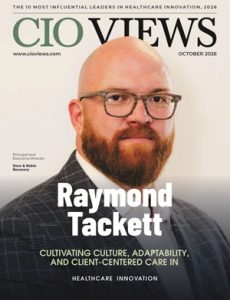

Efficiency and empathy go hand in hand in addiction recovery and behavioral care. Adapting to changing regulations, reimbursement systems, and bureaucratic procedures requires more than a classic managerial approach. It calls for an executive, one grounded in experience, adaptability, and a strict respect for clients’ rights and dignity.
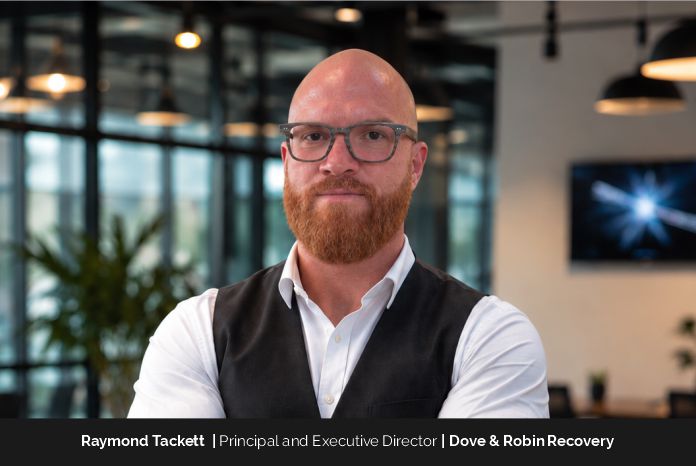
Raymond Tackett, Principal and Executive Director of Dove & Robin Recovery, brings that combination to his work. With more than fourteen years of personal recovery experience and broad operational experience across several industries, Raymond has developed a leadership style built on servant leadership, an intentional organizational culture, and frontline accountability. Under his direction, and with the trust and partnership of the company’s owners, Dove & Robin Recovery has developed a continuum of care that includes Partial Hospitalization Programs (PHP), Intensive Outpatient Programs (IOP), outpatient care, and recovery housing in affiliated facilities.
Gratitude for the Owners Who Opened the Door
Raymond is quick to point out that none of this happened alone. The owners of Dove & Robin Recovery welcomed him into the fold, and gave him room to lead. He speaks about them with genuine affection and loyalty.
“I owe an enormous amount to the owners who brought me in. They saw something in me, trusted me with their business, and treated me like a partner long before I ever held equity. I love these people. Everything I’ve been able to build here rests on the door they opened for me, and I try to honor that trust every single day.”
That sense of gratitude shapes how Raymond leads. He views his role less as ownership of an outcome and more as stewardship of something entrusted to him by people he respects.
The Intersection of Lived Experience and Operational Rigor
Raymond’s path to executive leadership in healthcare was non-traditional. He came up through operational leadership across industries before moving into behavioral health. Before entering the recovery field, he spent years on multi-faceted operational projects, overseeing governmental and commercial contracts and working through every phase of service delivery.
A key realization drew him toward behavioral health: organizations need more than good clinical care. They also need strong operational leadership, and that leadership does not always require a clinical license. Having found recovery on November 30, 2011, Raymond found his own skills and experience well suited to that need.
“From the day I got sober, all I’ve ever wanted to do is be of service to others, because everything I have was given to me freely by people who asked for nothing in return. Pairing that lived experience with a strong operational skill set turned out to be a useful combination for helping build and grow this business.”
This blend of operational and personal discipline forms the basis of his management philosophy. Rather than viewing treatment from a strictly managerial or medical perspective, Raymond considers provider operations in light of how vulnerable clients feel when they seek treatment. His administrative framework is consistently oriented toward the good of the client.
Defining Culture as an Operational Imperative
At Dove & Robin Recovery, Raymond works to sustain an environment where client-centered care is the primary measure of the organization’s health. Technical competence, process adherence, and clinical documentation can all be taught through coaching and professional development. Empathy and basic respect, in his view, are prerequisites in every team member.
To protect this principle, Raymond leans on a direct, servant-leadership approach. Drawing on structured leadership models, particularly John Maxwell’s The 5 Levels of Leadership, he focuses his energy on building internal capability and earning influence by empowering the team.
“I won’t ask anyone, from my direct reports to our front-line staff, to do something I wouldn’t do myself. Everyone in our buildings knows I’ll push a broom, take out the trash, help open a new facility, or step into any role that keeps us serving clients. I’d run groups too, if licensure allowed it. Whatever it takes to support the client and get the job done.”
By removing unnecessary barriers between executive oversight and daily facility operations, Raymond helps create a shared sense of responsibility. New hires understand that administrative mistakes can be corrected through training, but any breach of core values or mistreatment of a client is not compatible with a role in client care.
Cross-Industry Adaptability and Contracting Expertise
An important period in Raymond’s development as an executive included more than ten years managing competitive requests for proposals, contract acquisitions, and implementation processes in fields outside healthcare. Handling a wide range of scopes of work, from environmental restrictions and safety checks on utility gas meters to standing up high-volume call centers from scratch, built the operational flexibility he still draws on today.
That experience helped Raymond develop the ability to analyze systems in depth, identify problems within them, and design scalable models for delivering results. With frequent shifts in the regulatory environment, licensing, and operational requirements across healthcare, that cross-disciplinary flexibility helps keep operations steady during periods of macro-level change.
Raymond’s move into the executive director role at Dove & Robin Recovery began with taking responsibility for daily operations as though the business were his own, well before he held any equity. Because he applied those skills and cared for the company that way, the owners came to trust him and invited him in as a Principal partner. He considers that invitation one of the defining honors of his career.
Navigating Regulatory Shifts and Reimbursement Realities
Behavioral health and addiction treatment operate in a landscape of constant policy and financial change. In state Medicaid systems such as Ohio’s, policy adjustments are made to strengthen regulation and protect public funds, which in turn requires providers to adapt their operations quickly.
Raymond acknowledges the need for regulation to protect public money and prevent bad actors in the sector. At the same time, he notes that sudden policy changes can create unintended barriers for organizations that provide full-scope treatment. Recent national shifts in healthcare policy have changed billing rules, limited the size of dual diagnosis groups, and reduced the minimum number of PHP weekly group hours from 20 to 16.
More specifically, when reimbursement changes prevented billing certain dual diagnosis groups alongside other groups on the same day, the additional substance use programming organizations could provide dropped from roughly 10 hours per week to about 5. Even so, the team at Dove & Robin Recovery worked to protect the quality of patient care.
“When changes like these happen, rather than dwell on the constraints, we focus on what we can control. We get creative within the services still available to us and lean hard into the areas where we can still add real value. In just ninety days we doubled our peer-support services, expanding one of the most powerful and human elements of recovery precisely when other hours were being reduced. When the system narrowed, we found a compliant way to widen support for the client.”
This approach reflects a simple conviction: compliance and quality care are not at odds. By continually adjusting the delivery model and keeping compliance first, the organization has stayed both effective and sustainable through market change.
Executive Discipline: Delegation, Empowerment, and Operational Focus
Leading a multi-faceted organization demands discipline, especially around time management and resource use. As an executive who is inclined to solve problems through action, Raymond counts delegation and trust among his hardest daily disciplines.
Building a resilient organization means creating a setting where employees are empowered to make decisions and work within clear processes. Raymond encourages a growth mindset across departments, recognizing that mistakes are part of how people learn.
Executive life also means balancing operational and personal demands. Raymond approaches his schedule methodically, reviewing his weekly waking hours to allocate time for executive management, strategic planning, and family.
“Once you subtract a forty-hour work week, meals, sleep, and travel, there are still roughly sixty-five waking hours left each week for family, personal time, or extra work. So the real discipline is making sure that time is used with intention. I don’t spend much of it in front of a television. I won’t pretend I’ve mastered the balance, but what I’ve learned is not to punish myself for it, and to try to be a little better each day.”
Fostering Collaborative Networks Across the Care Continuum
To support long-term outcomes for people in recovery, Raymond helps ensure that an ecosystem of professionals works well together at Dove & Robin Recovery:
- Front-Line Behavioral Health and Support Specialists: empowering peer support specialists, case managers, and administrative staff to work directly with clients and provide uninterrupted care.
- Administrative and Clinical Leadership Teams: building a structure that aligns the clinical program with operational policies and cadence so that barriers are minimized.
- Regulatory Bodies and Managed Care Organizations: communicating openly with agencies and organizations to maintain full compliance with changing healthcare policy.
- Recovery Housing and Community Partners: collaborating with affiliated housing programs to provide safe, stable environments that support long-term recovery.
Raymond treats each administrative, financial, and clinical process as one connected part of the whole system.
Sustainable Leadership, Personal Achievements, and Legacy
As behavioral health and addiction care continue to evolve, ethical and well-run leadership matters more than ever. Raymond’s guidance for future leaders and innovators strips away the superfluous and returns to basic operational values.
He often reminds emerging leaders that lasting success, along with an organization’s reputation and growth, comes down to one unassailable promise: the best possible quality of care for every person who comes through the door.
“My advice to any aspiring leader is to stop searching for the shortcut and put your energy into the fundamentals of care. There is no proprietary ingredient, no special software, no magic process we follow. The one thing we do differently is try to treat every single client as well as humanly possible. Get that right, and everything else follows.”
For all that has been accomplished at Dove & Robin Recovery, Raymond stays grounded in his own recovery and his family. Maintaining his sobriety for more than fourteen years and being a good father and partner is the foundation that supports everything else.
Looking ahead, Raymond measures success less by expansion figures, revenue, or titles and more by the culture he helps nurture and the leaders he helps form, always mindful of the owners who made his role possible. Through servant leadership, operational adaptability, and a firm respect for human dignity, he hopes to leave a legacy defined by care that stays high in quality and deeply compassionate.