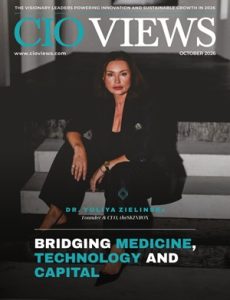

How a physician, former international executive and entrepreneur is helping decision-makers navigate evidence, AI and the future of beauty, aesthetic medicine and ethical longevity.
The New Innovation Approach
Beauty, aesthetic medicine and longevity are entering a period of rapid convergence. Artificial intelligence, advanced diagnostics, biotechnology, robotics and data-enabled personalisation are moving from research environments into products, clinics and investment portfolios. At the same time, medical professionals are being asked to evaluate increasingly complex claims, consumers are navigating an expanding field of choices, and investors are searching for opportunities where scientific promise and commercial momentum do not always develop at the same speed.
The defining challenge is therefore no longer access to innovation. It is the ability to evaluate innovation responsibly and translate it into decisions that remain scientifically credible, clinically meaningful and commercially viable.
This challenge sits between disciplines. A technology developer may understand an algorithm but not the realities of a clinical workflow. A clinic may have access to advanced equipment without the resources to assess every scientific claim independently. A company may see a compelling market opportunity while still needing a stronger evidence strategy. An investor may recognise market momentum but lack the specialised perspective required to judge whether the underlying science can support durable value.
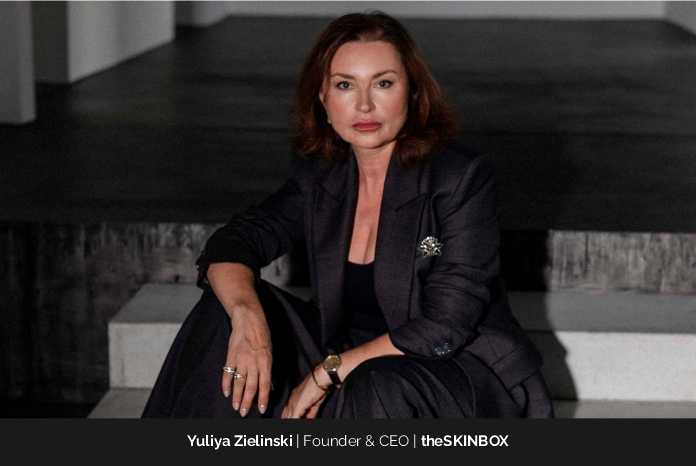
Dr. Yuliya Zielinski has built her career in these intersections. Trained as a physician, she moved into international industry leadership and spent more than two decades working across medical science, research and development, innovation pipelines, marketing and business strategy. Today, as founder and CEO of theSKINBOX, she works independently with organisations and decision-makers navigating the boundaries between medicine, technology, clinical practice, investment and market expectations.
Her ambition is not to become the loudest commentator on every emerging trend. It is to contribute a disciplined, independent perspective to decisions that are becoming more consequential—and, over time, to build an institutional voice for responsible innovation.
“Innovation creates possibility. Evidence, judgement and leadership determine whether it becomes progress.”
A Medical Foundation: Skin, Evidence and Human Aspiration
Zielinski’s journey into beauty and longevity did not begin with a conventional interest in the beauty market. It began with medicine and with the skin as an organ that connects physiology with identity, confidence and social perception.
Medical training taught her to look beneath first impressions, distinguish observation from assumption and ask what evidence is required before reaching a conclusion. When she later moved into the healthcare and dermo-cosmetic industries, she recognised the potential created when scientific knowledge meets human aspiration. She also saw how easily complexity can be reduced to simplified messages as an innovation travels from research to marketing and ultimately to the person expected to use it.
Over time, her focus expanded from skincare and dermo-cosmetics to aesthetic medicine, healthcare innovation and longevity. AI-supported analysis, cellular technologies, diagnostics and increasingly personalised products and treatments have made the relationship between medicine and business more dynamic—and more demanding.
Zielinski is strongly positive about these possibilities. Yet responsible adoption requires evidence models that fit the innovation. A static study may not fully capture an algorithm that changes over time; large data sets matter only when they are relevant, representative and clinically interpretable. Personalisation should improve decisions or outcomes, rather than become sophisticated marketing segmentation.
For her, the question is not whether technology should enter beauty, medicine or longevity. It already has. The question is how human expertise, clinical responsibility and transparent evidence remain part of the architecture through which technology is assessed and used.
“Technology should augment expertise, not replace judgement.”
From Executive Authority to Entrepreneurial Independence
Zielinski’s professional path has taken her from clinical medicine to international industry leadership, and from corporate authority to independent entrepreneurship. Each stage strengthened her ability to translate between disciplines.
During more than two decades in corporate roles, she worked across medical science, research and development, pipeline innovation, marketing and business strategy. This gave her a practical understanding of how scientific ideas become products, services and market propositions—and why promising innovations can lose momentum.
Promising ideas often lose momentum because stakeholders work with different languages, incentives and definitions of success. Researchers prioritise methodological validity; clinicians focus on patients; commercial teams need a proposition the market can understand; and executives or investors must weigh resources and risk. Zielinski frequently acted as a translator among these groups. She came to see that her greatest contribution lay in framing the questions they needed to answer together.
Founding theSKINBOX allowed her to turn that capability into an independent business. It also changed how professional legitimacy had to be created.
“In a large organisation, a title, a team and an established brand create immediate legitimacy,” she says. “As an entrepreneur, you have to rebuild that legitimacy around your own judgement, the quality of your work and the trust you create with clients and partners.”
The transition required her to assume responsibility not only for scientific quality and strategy, but also for business development, positioning, commercial negotiation and financial continuity. She had to communicate the value of her expertise without allowing the business to become a generalist consultancy that promised everything.
There was no single breakthrough moment. Credibility was built project by project and decision by decision. Leaving a corporation may remove an organisational structure, but it does not automatically create an independent identity. That identity has to be earned through a recognisable point of view, economic resilience and the willingness to stand behind one’s recommendations.
The same principle shapes her approach to entrepreneurial balance. She focuses less on perfect division than on alignment: constant visibility and a crowded calendar are not the same as value. Time for learning, health, relationships and uninterrupted thinking remains part of leading well.
Building theSKINBOX has therefore been meaningful not only as a commercial achievement, but as the creation of a professional identity beyond the corporate positions that previously defined her.
What theSKINBOX Does Today—and What It Is Building Toward
theSKINBOX currently operates as an independent strategic advisory platform and flexible expert network. It helps organisations make more defensible decisions where scientific evidence, emerging technology, clinical implementation and commercial strategy intersect.
Its B2B ecosystem includes beauty, skincare, healthcare and medical-technology companies; medical professionals and specialised clinics; technology and innovation ventures; and investors, boards and strategic decision-makers. These groups enter the innovation process from different positions, but often face related questions.
A company may need to test whether a scientific concept can support a credible product and claims strategy. A clinic may need to assess the clinical and operational implications of a new treatment, device or diagnostic capability. A technology venture may need to translate a complex proposition for medical, commercial and investment stakeholders, while an investor or board may need to distinguish an attractive narrative from a defensible opportunity.
The common denominator is not a single product category. It is the need to make better decisions where science, technology, clinical practice, investment and market expectations meet.
Rather than replacing expertise already present, theSKINBOX is intended to connect it. Zielinski works through a flexible network of scientific experts, medical professionals, clinics, developers and strategic partners. Her role may include examining evidence, identifying meaningful outcomes, considering real-world implementation and aligning scientific integrity with a viable business strategy.
This approach is deliberately partner-oriented. Zielinski does not argue that companies, clinics, developers or investors are incapable of making good decisions. She believes innovation becomes stronger when complementary expertise is connected early, before assumptions become embedded in a development programme, investment case or market promise.
The same principle informs her definition of sustainable growth: building innovations, capabilities and business models that retain scientific credibility, commercial relevance and stakeholder trust. It also means creating knowledge beyond one launch and helping partners make stronger future decisions.
“The next competitive advantage will not be access to more information, but the ability to evaluate it responsibly.”
Zielinski distinguishes this current advisory work from her longer-term ambition. theSKINBOX is not presented as an established standards body or proprietary technology platform. Her vision is to develop it gradually into a broader institutional platform for evidence assessment, strategic dialogue, education and cross-sector collaboration. That future may include more transparent assessment principles, comparative approaches and forums through which industry, medicine, clinics, technology ventures and investors can examine emerging innovation together.
The objective is not to add bureaucracy. It is to make credible innovation easier to recognise, finance, translate and adopt.
Information Asymmetry, Responsible AI and Ethical Longevity
The concept that most clearly connects Zielinski’s work is information asymmetry. In fast-moving markets, stakeholders do not have equal access to scientific, technical, clinical or commercial information, nor the same ability to interpret what is available.
The imbalance is not necessarily the result of bad intent. Knowledge may be specialised, evidence difficult to compare and commercial communication faster than independent understanding. Yet products can be overinterpreted, clinics pressured to adopt technologies they have had little opportunity to evaluate, investors drawn to evidence that is less mature than the narrative, and patients or consumers left without a reliable frame of reference.
“Information asymmetry is not only a market inefficiency,” Zielinski says. “In medicine and longevity, it can become an ethical risk.”
AI makes this issue more urgent. Used well, it can accelerate research, identify patterns, support more precise decisions and extend access to expertise. Used without transparency, it can increase the distance between those who build a system and those expected to trust its output.
Zielinski encourages decision-makers to move beyond asking whether a solution uses AI. They should ask what problem it solves, how its data were selected, whether performance is consistent across relevant populations, how it fits into clinical workflows and who remains accountable for consequential decisions.
These questions do not reject technological progress. They define conditions under which progress can earn trust. The purpose of evidence is not to protect established practices from every new idea, but to create a disciplined route through which promising ideas can be tested and translated.
This is especially important in aesthetic medicine and longevity, where demand, technology and powerful narratives about ageing can move faster than scientific consensus. Evidence approaches may need to evolve for digital tools, adaptive algorithms, personalised interventions and combinations of products, devices and clinical services.
Zielinski’s position is neither anti-industry nor anti-innovation. She advocates better evidence pathways—rigorous, but appropriate to the technologies being assessed—and earlier collaboration among industry, clinicians, clinics, researchers and investors on relevant outcomes, real-world monitoring and responsible communication.
Her approach to longevity follows the same logic. Ethical longevity should focus not simply on more years, but on healthspan, function, dignity and reliable information. It should ask for whom an intervention is appropriate, what it improves, how uncertainty is communicated and whether informed choice is protected.
For investors, this perspective has commercial as well as ethical relevance. Technologies that cannot support their claims or integrate into clinical and consumer realities may generate attention but weak long-term value. Innovations built on appropriate evidence, credible implementation and transparent communication are better positioned to sustain trust.
“The objective is not to slow innovation. It is to make innovation more credible, more investable and more responsible.”
Leadership, Legacy and an Emerging Institutional Voice
Zielinski believes the next generation of leaders in beauty, aesthetic medicine and longevity will need two qualities sometimes treated as opposites: ambition and intellectual honesty.
They must act on emerging opportunities while recognising the limits of what is known. Calling an innovation promising but not yet proven is not a failure of vision; it can be a sign of mature leadership.
Future leaders must also be literate across disciplines. As AI, diagnostics, biotechnology, clinical practice, consumer behaviour and investment converge, the ability to bring experts into a shared decision process will become as important as individual technical mastery.
For Zielinski, leadership also carries a responsibility to create opportunities for others. One of her personal priorities is supporting female industry leaders and entrepreneurs. Throughout her career, she has met highly capable women whose expertise was strong but whose visibility, commercial confidence or access to decision-making networks did not yet reflect their potential.
She wants to help them “spread their wings” through candid feedback, strategic access, visibility, commercial confidence and support in navigating structures of influence—not through abstract encouragement or permission.
“Many capable women do not need to be told to be brave,” she says. “They need honest sponsorship, access to the right conversations and the confidence to claim the value they already create.”
For her, leadership should create more people who can think, decide and lead independently—not followers dependent on one central figure.
Zielinski applies the same restraint to her own institutional ambition. She does not claim that she or theSKINBOX already constitute an industry institution. She is building toward an independent institutional voice capable of convening medicine, industry, clinics, technology creators, investors and society around more intelligent questions.
Her long-term objective is to improve how innovation is evaluated, funded, translated and communicated. She wants evidence treated as part of strategy, AI adopted without becoming an unquestioned authority, and longevity concerned with health, function and dignity rather than aspiration alone.
Her trajectory from physician to international executive and independent entrepreneur gives this ambition its foundation—not a claim to possess every answer, but experience across systems in which answers must be tested, financed and implemented.
“I do not want to become the loudest voice in the industry,” Zielinski says. “I want to become one of its most trusted independent voices.”
That aspiration captures the positioning she is building: intellectually rigorous, open to innovation, commercially engaged and independent in judgement. Her goal is to help those shaping beauty, aesthetic medicine and longevity make better decisions—and create conditions in which credible ideas, responsible technologies and diverse leaders can spread their wings.