
Introduction: The Intersection of Global Enterprise and Human Dignity
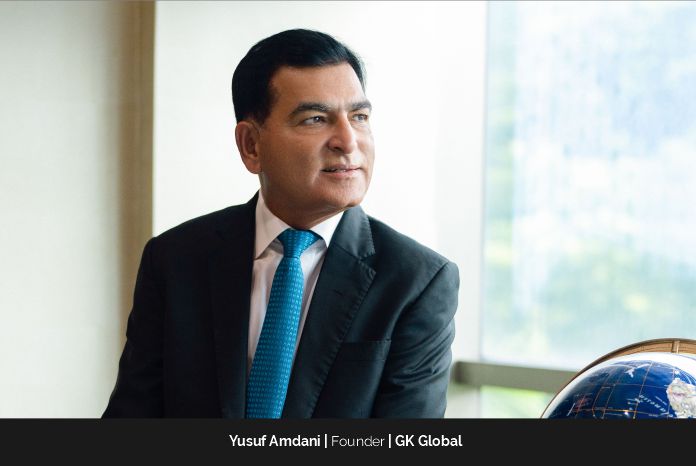
Most multi-billion-dollar corporate stories begin with a breakthrough technology or a windfall of capital. Yusuf Amdani’s story began with a quiet conviction passed down through generations of traders: that a business only truly succeeds when it elevates the communities around it.
Moving to North America to expand his family’s commercial reach, Yusuf spotted a glaring geographic disconnect, an immense consumer market adjacent to a region rich with human potential yet starved of long-term investment. What started as a practical expansion into nearshore manufacturing rapidly evolved into a lifelong commitment to regional transformation.
Over the past three decades, as Yusuf Amdani worked to overcome every operational bottleneck, building clean power grids, establishing technology cities, and funding healthcare and bilingual schools, he built a multinational empire grounded in human dignity. Today, his legacy is written not in corporate press releases, but in the economic elevation of entire communities across continents.
Roots in Trade: Dinner-Table Lessons and Strategic Horizons
Yusuf Amdani’s journey into global business was an inheritance of values and perspective. Born in Karachi, Pakistan, Yusuf represents the third generation of a family deeply immersed in the textile industry since 1946. Growing up surrounded by international commerce, business was a natural staple of daily life.
“I was born in Karachi into a family that has been in textiles since 1946,” Yusuf reflects. “I am the third generation in yarn and cloth, so business was part of our dinner-table conversation. Two lessons stayed with me. First, a well-run business supports far more families than just its owners’. Second, trade is not only about products; it is about trust across borders.”
After completing his business administration studies at the University of Karachi, Yusuf earned his MBA from California State University, Fullerton. Moving to the United States in the late 1980s to help expand his family’s commercial interests, he quickly gained firsthand exposure to North American supply chains and retail markets.
During this period, Yusuf observed a pivotal geographic alignment: the vast American consumer market was adjacent to Central America, a region possessing immense human potential yet suffering from underinvestment.
“That experience showed me how close the American market was to Central America,” Yusuf explains, “and how much opportunity was waiting for anyone willing to build in places others only passed through.”
“Anyone can teach AI. The real responsibility is teaching young people how to use it wisely, and when not to use it, and being accountable for what it does to them.”
The Honduras Venture: From Practical Necessity to Permanent Commitment
In the early 1990s, Honduras took its initial steps toward economic modernization by approving a comprehensive free-zone regulatory framework. Recognizing the potential for nearshore manufacturing, Yusuf established Pride Manufacturing in 1991 to produce apparel for export.
The initial decision was rooted in practical commercial logic. “The decision was practical before it became philosophical,” he notes. “We wanted to be closer to our customers in the United States. Around 1990, Honduras had just approved its free-zone framework while much of the region was still unsettled. Conditions were not easy, but the rules were clear, and that was enough to begin.”
However, operating on the ground quickly transformed Yusuf Amdani’s perspective. A manufacturing facility required skilled, healthy workers, reliable logistics, secure infrastructure, and continuous access to power. Each operational challenge revealed a broader societal need, prompting Yusuf to expand his enterprise into industrial real estate, technology infrastructure, and energy.
“What I did not expect was how the work would reshape my purpose,” Yusuf reflects candidly. “A factory needs people. People need skills, healthcare, transport and schools. Employers need reliable buildings and energy. Each need revealed the next, and GK grew from one plant into manufacturing, industrial parks, real estate and technology infrastructure. Honduras became my home, and I became a citizen. My journey stopped being about a location and became about a place and its people.
This realization altered how he evaluated investments. As Yusuf asserts, “Over time, I realized that everything we build has to answer one question: how many lives does it improve? A factory is not just a building. It is thousands of families with a stable income. That question has guided every decision since.”
The Philosophy of Circular Development
To formalize this approach, Yusuf developed an operational methodology he terms circular development. Under this framework, economic growth and social progress are bound together in a continuous loop.
The cycle begins with capital deployment into foundational infrastructure, such as the Green Valley Advanced Manufacturing Hub and Altia Smart City. These platforms attract tier-one global corporations, creating direct employment that provides families with stable incomes, health benefits, and dignified working conditions. As workers acquire specialized skills, community stability increases, attracting further international investment that GK Global continually reinvests back into local education, healthcare, and infrastructure.
“Everything GK has built is impact-driven by design,” Yusuf states. “We measure success by the number of lives we change, not only by financial returns. Our apparel manufacturing gave thousands of families their first stable income. Green Valley Advanced Manufacturing Hub and Altia Smart City were built as platforms for other employers. They brought global companies into communities that needed jobs. Together, our investments have generated more than 30,000 direct jobs and over 140,000 indirect jobs.”
Ultimately, Yusuf views circular development as a structural solution to forced economic migration. “Investment creates jobs, jobs build skills and stability, and that stability attracts further investment, which we reinvest in the same communities. Ultimately, the goal is to create enough opportunity at home that people can build a dignified future without being forced to leave their country in search of one.”
Leading Through Crisis: Lessons from the Crucible
Yusuf’s commitment to Central America has been repeatedly tested by severe recessions, political turmoil, and global health emergencies. When skeptics insisted a technology park in Honduras would fail due to missing infrastructure, Yusuf defined his proactive role as a founder: “If the infrastructure is missing, then building it is the work.”
A more severe crucible arrived during the 2009 Honduran political crisis. As political instability gripped the nation, several international tenants who had committed to leasing space withdrew after concrete had already been poured. Facing substantial financial exposure, Yusuf chose to stay, carry the fixed costs, and maintain his workforce.
“The harder moment came in 2009,” Yusuf shares. “During the political crisis, international companies that had committed to our parks withdrew after the concrete was already poured. We could have stopped, but we did not. That period shaped my leadership more than any success. I learned to trust my teams, to loosen traditional hierarchy, and to give people room to make mistakes. When something fails, you learn how not to do it, and then you continue. ‘Never stop’ became our shorthand.”
Similar resilience was demonstrated during the 2000 recession and the COVID-19 pandemic, during which the GK Foundation distributed over one million protective masks and emergency food care packages to vulnerable families.
“In each case, what carried us through was patience and relationships,” Yusuf explains. “We carried fixed costs through uncertainty, kept our teams aligned, and kept returning to difficult conversations until we found a way forward. Staying, learning the terrain and keeping our commitments is what ultimately turned setbacks into foundations.”
“No one should have to leave their homeland out of necessity to build a dignified life. Our responsibility is to create opportunity where people are.”
Strategic Stewardship: Direction, Patient Capital, and People
As GK Global expanded across continents, Yusuf focused his executive leadership on three core pillars: direction, patient capital, and talent.
“As Founder, my role is less about running each operation and more about three things: direction, capital and people,” he explains.
- Direction: Identifying geographic regions with underlying potential and building the necessary surrounding ecosystem.
- Patient Capital: Carrying corporate investments through economic and political cycles rather than chasing short-term quarterly gains.
- People: Building capable leadership teams in each country and granting them genuine operational authority.
“Our resilience comes from that structure,” Yusuf notes. “Each business strengthens the others, and our local teams can act quickly. My responsibility is to protect the long view while they run the day.”
This trust-based delegation also provides personal balance amidst extensive global travel. “Because I have built strong leadership teams and given them real authority, I do not have to carry every decision myself. That frees me to focus on long-term priorities and to be present for my family. Purpose itself is a source of energy. When you see a child in a bilingual classroom or a family with a stable income, the work does not feel like a burden. It feels like a privilege.”
Preparing for the Future: Human Capability in the AI Era
Looking ahead, Yusuf identifies nearshoring, the green energy transition, and artificial intelligence as the defining trends of the coming decade. Among these, he views AI as having the deepest social impact, arguing that current global discussions focus too heavily on rapid software adoption while neglecting human accountability.
“Much of today’s conversation is about AI learning and adoption,” Yusuf observes. “That is necessary, but it is not enough. Someone has to be responsible for what is being taught to young people. Someone also has to take accountability for the outcomes. Are students becoming better thinkers, or simply more dependent? Are they more ethical, more capable and more employable, or only faster at producing answers they don’t understand?”
For Yusuf, teaching technology is straightforward; the critical challenge is cultivating the moral judgment required to govern it.
“Teaching AI is the easy part,” Yusuf states. “The harder and more important work is teaching young people how to use it responsibly, and when not to use it at all. There are moments that call for human judgment, original thought, empathy and moral responsibility, and a machine should not stand in for any of them.”
Consequently, GK Global prioritizes higher human capability, developing critical thinking, moral character, emotional intelligence, and cross-cultural collaboration alongside technical skills. Yusuf has shared this vision in his book, World of Opportunity (Forbes Books, 2023), and through international platforms like the Urban Economy Forum.
Institutionalizing Ethical Responsibility
At GK Global, ethical responsibility is integrated directly into the corporate architecture. Environmental sustainability is pursued through clean energy and sustainable infrastructure, while social impact is driven by the GK Foundation across Honduras, Pakistan, Mexico, the United States, Bangladesh, and Dubai.
The foundation’s work includes supporting public bilingual education in Honduras, co-founding Pakistan’s ChildLife Foundation for pediatric emergency care, and distributing hundreds of thousands of meals via Alimentando Esperanza, programs that together have touched more than 200,000 lives. Recognitions, such as being named among Central America’s most ethical executive leaders by Revista Summa in 2024 and 2025, reflect this group-wide commitment.
“As AI enters classrooms and workplaces, we believe organizations must be accountable for how it is used and what it does to people,” Yusuf emphasizes. “Responsible adoption is part of sustainability.”
Guidance for the Next Generation
For emerging leaders seeking to turn vision into lasting impact, Yusuf offers five clear principles:
- Make impact your core purpose: Continually ask how many lives your business decisions will improve.
- Stay committed through hardship: Remain dedicated to the places and people you serve during economic or political downturns.
- Grant autonomy: Give your people the freedom to fail, and extract lessons from every setback.
- Take responsibility for technology: Do not chase adoption blindly; remain accountable for how technology shapes human capabilities.
- Invest in human capability: Technologies evolve continuously, but judgment, character, and clear purpose will always decide who leads. And above all: never stop.
Conclusion: A Legacy Measured in Transformed Lives
Yusuf Amdani remains completely detached from conventional vanity metrics, measuring his professional legacy solely through human outcomes.
“I want my legacy to be measured in lives, not buildings,” Yusuf concludes. “That means the families who found stable work, the children who learned in bilingual classrooms, and the patients who received care they could not otherwise afford.”
By combining commercial enterprise with profound social purpose, Yusuf Amdani has built more than a regional conglomerate, he has established a lasting model for economic elevation across the developing world.