
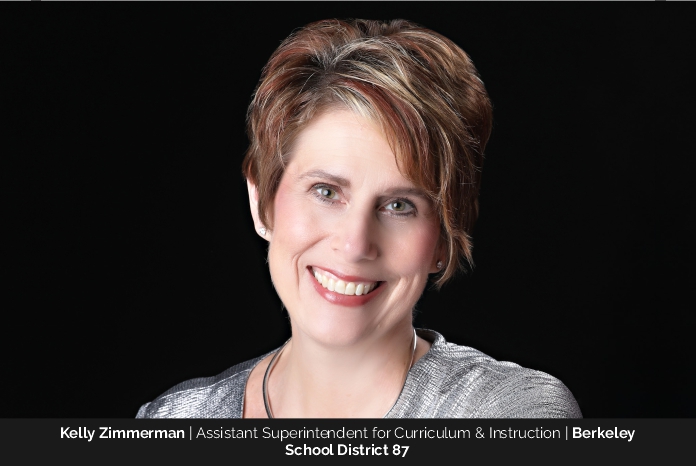
Bringing a noticeable transformation to education starts with a single, unshakeable belief that a school can completely rewrite a child’s future. In Kelly Zimmerman’s case, that realization hit earlier in her career. She quickly learned that actual teaching extends far beyond delivering standard lesson plans. It demands knowing students personally, learning their backgrounds, and building a space where they truly believe in their own potential. Driven by her personal motto, “If not me, then who?” she took full ownership of her impact in the classroom.
Her work as a bilingual teacher, her time in early childhood professional development, and her role with Purdue’s Project Literacy cemented this mindset. Seeing young learners gain access to strong mentorship, rich language development, and equal opportunity proved how deeply the right environment shapes a life.
Eventually, her focus expanded. Instead of asking how she could support one student at a time, Kelly began examining how to construct entire school systems, where every educator shares the knowledge and responsibility to uplift every child. That relentless ambition now fuels her leadership every single day.
Taking the Helm Across the Whole Map
Thirty-one years in the trenches of education will teach anyone that real leadership happens on the ground. Kelly spent two decades as a school principal, grounding her work in bilingual classrooms, early childhood development, and literacy initiatives. That long stretch in the front office proved that managing a school goes far beyond tracking test scores.
It demands nurturing the culture, relationships, and daily experiences of every child and adult in the building. When she stepped into the role of Assistant Superintendent for Curriculum and Instruction at Berkeley School District 87, she grew that focus across the entire district. Kelly now spends her days aligning curriculum, instruction, and professional growth so educators have a precise, supportive framework. Her core purpose is simple. She designs district systems that remove unnecessary variation for teachers so they can concentrate on delivering extraordinary instruction for their students.
Two Heads Are Better Than One
Early in her career as a principal, Kelly fell into the common trap of thinking a strong leader had to solve every problem instantly and single-handedly. Real-world experience quickly shattered that belief. She watched factual, lasting progress take root only when the teachers directly doing the work gained the tools, voice, and shared responsibility to propel change themselves.
That inflection point fundamentally changed her approach entirely. Kelly realized that “leadership is not about having all the answers. It is about building others’ capacity to find and create answers together.” Instead of stepping in to fix every issue on her own, she focuses on creating a space where teams collaborate to unpack complex issues. That move from solo problem-solver to collective-strength builder is now the nexus of her entire educational philosophy, thereby creating “autonomy within structure.”
Staying the Course Without Burning Out
An endless inbox and a constant stream of urgent problems can easily consume an educator’s entire life if they let it. Kelly keeps her footing by dropping the illusion of a perfect schedule and focusing purely on what actually deserves her energy. She knows the daily work carries massive weight. However, the people behind that work matter just as much.
By protecting time for those closest to her and keeping relationships at the center of her supervision, she stays level-headed. She treats her role as a long-distance run rather than an exhausting dash, building a pace that keeps her energized for the long haul.
Lifting the Teachers to Lift the Students
Real progress in a school district never happens by accident, nor does it happen by sticking to outdated routines. Kelly approaches student achievement as a moral imperative, knowing schools must equip young minds for unmapped paths. In her words, “We must prepare scholars for their future, not our past.” Yet, she is also aware that without personal development on the part of the building’s adults, student progress would inevitably plateau. “Success is,” she adds, ” ultimately about increased capacity and improved outcomes.” When teachers gain strong clarity on their learning intentions, teams analyze real evidence, and principals evolve from simple building managers into true instructional guides, the whole environment evolves.
To this, Kelly elaborates. “When adults become more capable, scholars benefit.” It’s like a butterfly effect, which allows one improvement to ripple through an entire system.
Moving Mountains Without Losing the Human Element
Rolling out district reforms can easily feel like dumping another heavy load onto already exhausted teachers. Kelly understands that resistance rarely comes from a lack of caring, but rather from the burnout of endless mandates being forced from above. To break that cycle, she actively involves staff in the process and uses solid evidence to explain the deeper reason behind every decision. Frameworks like PLC+, instructional coaching, and teacher clarity are brought in to streamline daily work rather than add clutter. She proves that real transformation comes from working smarter together, knowing that “the most crucial lesson has been that lasting change requires both clarity and trust.”
Turning Managers into Champions of Learning
Redefining how an entire district operates takes far more than adopting a shiny new curriculum package. The veteran administrator takes immense pride in shifting principals away from basic administrative oversight and turning them into instructional leaders who understand classroom instruction. This change seamlessly ties together classroom walkthroughs, continuous feedback loops, collaborative planning, and visible learning methods into a unified engine. “For me, the accomplishment isn’t any single program. It is the development of a more coherent system of adult learning and instructional leadership,” Kelly shares.
By honing the skills of the educators directing the charge every day, she and her team nurture a setting where lasting growth becomes the standard. In her eyes, the calculus of transformation is uncompromisingly elemental: “Better teachers, better outcomes.”
Connecting the Dots…
Eliminating confusion is the single most effective way to help teachers thrive in the classroom. Kelly understands that educators get completely worn down when handed a dozen different framework models that do not align. For her, the future of a school system begins with coherence. Rather than piling on extra demands, she concentrates on stitching curriculum, professional learning, collaborative planning, PLCs, assessment practices, instructional coaching, teacher clarity, and leadership development strategies into one seamless action plan.
Just as important, her emphasis is on the people who make those systems work. The perspective is based on empowering teachers through structured clarity rather than overwhelming them with constant oversight. She has observed that “Programs do not transform schools. People using effective systems will transform schools. Within our district, I have coined the phrase “Autonomy within Structure.”
By building these sturdy operational frameworks, she gives educators the freedom to bring those systems to life in their own unique ways.
All Hands-on Deck
Actual collaboration operates well past rounding up staff members for an impromptu meeting. Kelly instills environments where teachers feel safe looking directly at student data, pooling their expertise, and troubleshooting chokepoints as a cohesive team.
That thinking redefines the district’s work with PLC+ and collaborative planning, establishing a culture where mutual accountability directly contrives classroom practice. Kelly actively tears down the common boundary mindset that separates school buildings from central administration. She also believes leaders have to model the culture they want to see.
“Leadership cannot be about ‘my department,” “my building,’ or ‘my initiative,” Kelly expresses, “The work belongs to all of us.” Reminding staff members that everyone shares the same mission helps them step up, put ideas on the table, and take proactive steps together. When people know they do not have to figure everything out alone, they become more willing to learn, contribute, and take thoughtful risks.
Keeping an Ear to the Ground
Working through today’s changing classrooms requires staying vigilant without chasing every shiny latest trend. Kelly, as a seasoned industry executive, knows yesterday’s answers cannot automatically solve today’s challenges, which is why she and her team keep a close eye on modern research, neuroscience, and AI tools. Instead of turning every emerging idea into a mandatory district initiative, they filter new developments through a practical, research-backed perspective. Something that is built to last.
As Kelly puts it, “We have to be discerning. We should ask: What does the evidence tell us? What do our scholars need? What does our data tell us? What does research tell us? And how does this fit into the larger system we are building?”
Such a check keeps curiosity from becoming a distraction. It gives educators room to explore, question, and keep learning while keeping sight of what genuinely serves scholars and strengthens the system as a whole.
Passing the Torch with Giving Others Room to Rise
The best leaders do more than lead. They leave people stronger than they found them. Kelly sees leadership as a way of creating possibility in others. That starts with scholars. She wants them to understand what they are learning, why it matters, and how they will know they have actually learned it. The bigger plan is to help them become responsible, curious, complex thinkers who can solve problems and contribute meaningfully to their communities.
The same thinking carries into her work with teachers and upcoming leaders. Kelly focuses on building their capacity and giving their point of view room to grow. She does not believe leadership belongs to the person with the loudest voice or the most answers. It calls for courage, curiosity, humility, consistency, and the willingness to bring people together around a purpose greater than themselves.
And that is where Kelly reckons her own impact. When the people she works with walk away more confident and capable because of what they have built together, she knows the work has made a difference.
Advising The Next Generation
Stepping into educational leadership demands a crystal-clear purpose, meaning ‘knowing your why’ that easily outlasts daily frustrations. Kelly encourages upcoming academic heads to stay connected to classrooms, teachers, scholars, and families rather than making decisions from an isolated office. Those at the helm also need to stay close enough to experience education firsthand, never making decisions about education without experiencing education, and understand the realities influencing those they serve.
She prefers a succession-minded approach that does not make one person indispensable. Her idea is to develop people who can guide, think, solve problems, and strengthen the organization.
The primary goal is to empower without micromanaging. Kelly urges the aspirants, “Listen before you lead.” She continues, “Be courageous enough to improve what is not working while being humble enough to recognize that you may not have the answer yet.” That combination of conviction and humility says a lot about the professional she has become and why she is among The 10 Most Visionary Leaders Transforming Education, 2026.
She feels that great educational leaders do not need to be the smartest mind in the room. They rather build spaces where everyone gets smarter together. As Kelly captures the essence of it, “That is where real transformation happens.” And we salute her vision.
Leaving Big Shoes to Fill
A lasting impact in education is never built out of binders, manuals, or temporary programs. Kelly aims to leave behind a culture where adults and children alike feel backed, challenged, and capable of constant growth. She wants people to feel valued and empowered to become better at what they do, rooted in a deep belief in the capacity of both children and adults.
Real success lies in cultivating independent teams that flourish long after a single leader steps aside. Kelly puts the heart of it into words and states, “I hope I leave behind leaders who no longer need me. That, to me, is the ultimate measure of leadership: not how much depends on you, but how much becomes possible because you were there.”
Success means building an enduring environment where educators keep collaborating, asking better questions, leaning on hard evidence, believing in every scholar’s potential, and developing the people around them. That is the kind of legacy Kelly wants her work to leave behind.