
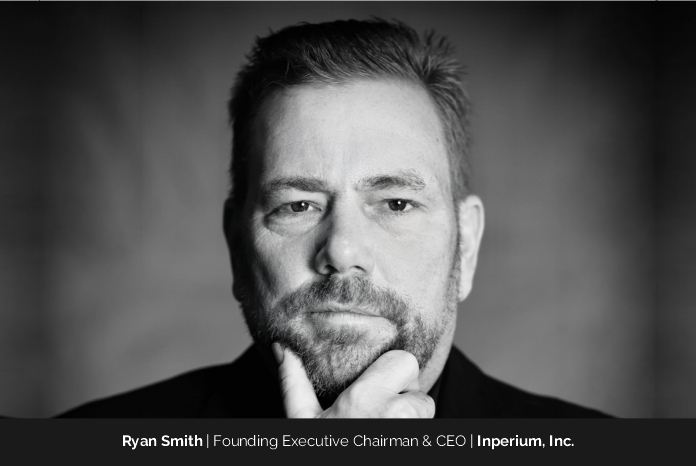
Ryan Dewey Smith, Founding Executive Chairman & CEO of Inperium, Inc., has spent his career transforming how nonprofit organizations achieve long-term sustainability. Through an innovative affiliation model that combines mission with scale, he’s helped build stronger, more resilient organizations while expanding access to essential community services.
In this interview, he shares the experiences that shaped his leadership, the vision behind Inperium, and the lessons he’s learned about innovation, stewardship, and building lasting impact.
Shaped by Resilience, Guided by Mentors
Ryan traces his leadership philosophy to his childhood. As an only child, he developed independence early, learning to solve problems on his own while nurturing his creativity and curiosity. “I often joke that I became a ‘master of solitude,’ but there’s some truth to that. It shaped how I think and how I approach challenges,” he reflects.
Born to teenage parents, Ryan grew up alongside them as they worked tirelessly to build a better future. Their perseverance instilled a strong work ethic, while frequent moves and changing schools taught him resilience, adaptability, and the confidence to build relationships wherever he went.
His passion for helping others was inspired by watching his parents serve people through business and healthcare. A college internship with Transact of Reading One, supporting children with ADD/ADHD, further cemented that calling. “It showed me firsthand how meaningful the right support system can be in changing someone’s future,” he recalls.
After graduation, Ryan joined Family Guidance Center, working with adults living with serious mental illness in a partial hospitalization program. Helping launch a dual diagnosis program reinforced his belief that innovation and compassion can go hand in hand. “Those early experiences confirmed that I wanted to spend my career building organizations that could improve lives while creating sustainable systems to support that mission,” he shares.
Ryan credits several mentors with shaping his leadership. His grandmother, Nan, instilled strength and independence; Dr. Judy Warchal at Alvernia challenged him academically; high school baseball coach Stan Bagenstoss taught discipline and teamwork; and later, Kevin Fee and Fred Lokuta broadened his leadership perspective. “Looking back, every one of those experiences and relationships helped prepare me for the responsibilities I have today,” he observes.
Building Stronger Nonprofits Through Shared Purpose
Ryan founded Inperium after seeing outstanding nonprofit organizations struggle, not because they lacked passion or delivered poor services, but because they lacked the scale, capital, and infrastructure needed to thrive. Too many leaders were consumed by payroll, compliance, technology, and financing instead of focusing on the people they were meant to serve.
After years of growing Supportive Concepts for Families, he realized there was a better way. While the nonprofit sector often viewed independence as the ultimate goal, Ryan believed long-term sustainability mattered more. He envisioned a model that would preserve an organization’s mission, leadership, and local identity while providing the financial strength and shared resources of a larger enterprise, laying the foundation for Inperium’s affiliation model.
Today, that vision has evolved into a national network of mission-driven nonprofits supported by shared services, access to capital, leadership development, and the long-term resilience needed to strengthen communities for generations. “The mission has never changed. We’re still focused on protecting and strengthening nonprofits. We’ve simply proven that when you build scale with purpose, you can create more opportunities for employees, expand access to care, and ultimately improve the lives of the people those organizations exist to serve,” Ryan explains.
“Success requires active commitment – you have to cause something to happen rather than waiting for it.” – Bear Bryant.
Turning Skepticism into Lasting Credibility
Ryan’s biggest challenge as CEO has been asking people to believe in something they had never seen before. “When we started Inperium, there wasn’t really a blueprint for what we were building. In the nonprofit world, people often assume that if organizations come together, someone has to lose their identity or give up control. We believed the opposite, but convincing others of that took time,” he recalls.
The challenge extended beyond nonprofit leaders. As Inperium grew, Ryan and his team had to introduce banks, rating agencies, and institutional investors to an entirely new approach to nonprofit sustainability rather than a familiar investment model. “That meant we had to become very good at telling our story, backing it up with data, and proving that the model worked through results, not just ideas,” he observes.
The experience taught Ryan that skepticism is part of innovation. Rather than resisting it, he focused on listening, answering tough questions, and consistently delivering results. “Today, I think people are paying attention not because of what we’ve said, but because of what we’ve accomplished. That’s been the most rewarding part of the journey,” he reflects.
Leading with Discipline and Long-Term Vision
Ryan believes one of the greatest disciplines of leadership is deciding where his time creates the most value. As Inperium continues to grow, opportunities, challenges, and decisions constantly compete for his attention. “I’ve had to learn that being busy isn’t the same as being effective,” he admits.
He focuses on the organization’s long-term health by prioritizing strategy, capital, partnerships, and leadership development over day-to-day operations. “I need to stay connected to what’s happening across the organization, but just as important is trusting the people we’ve put in leadership positions to do what they do best.”
Just as important is ensuring every decision aligns with Inperium’s mission. “Growth is exciting, but growth by itself isn’t the goal,” Ryan insists. “Every opportunity has to strengthen our ability to serve people and make the organization more sustainable for the long term. Keeping that perspective, even when there are short-term pressures, is probably the most important discipline I have as CEO.”
That disciplined approach has driven several defining milestones. Inperium’s first affiliation agreement in Pennsylvania validated its model, while its first out-of-state affiliation with Wake in North Carolina proved it could scale nationally. The creation of Apis Services further showed how shared services could strengthen affiliates while preserving each organization’s identity and mission.
Ryan also takes immense pride in how the organization responded during the COVID-19 pandemic. “Our teams continued delivering critical services during one of the most challenging periods our industry has ever faced, and they did so with remarkable resilience and commitment,” he shares.
More recently, oversubscribed bond issuances in 2024 and 2026 underscored institutional investors’ confidence in Inperium’s long-term strategy, while surpassing $1 billion in annual revenue under contract marked another significant milestone. “Each of these achievements reinforces that our model is working and that we’re creating opportunities for mission-driven organizations to thrive together,” Ryan affirms.
Adapting to a Changing Nonprofit Landscape
When Ryan began his career, most nonprofits operated independently, and success was often measured by longevity rather than adaptability. Today, organizations face workforce shortages, tighter regulations, cybersecurity risks, rising costs, increasing demand for services, and more competitive funding.
“The expectations have changed dramatically,” he observes. “At the same time, the corporate and financial communities have started looking at the nonprofit sector differently. We’re seeing more institutional investors recognize that well-run, mission-driven organizations can be strong, sustainable investments. That’s opened doors to new forms of capital that simply weren’t available to many nonprofits in the past.”
Rather than reacting to these shifts, Inperium has stayed ahead by building shared infrastructure, strengthening governance, investing in technology, expanding access to capital, and creating a model that allows affiliates to retain their identity while benefiting from the scale of a larger network.
“That’s enabled our affiliates to focus more of their time and resources on serving the people who need them most,” Ryan says. “I’ve always believed the nonprofit sector deserves the same level of innovation and strategic thinking as any other industry. As the landscape continues to evolve, that’s exactly how we’ll continue to approach it.”
Family, Perspective, and Purposeful Leadership
Outside of work, Ryan’s greatest source of pride is his family. “My wife, our boys, and even our dogs are what keep everything else in perspective. They’ve supported me through every challenge and every success, and no professional achievement compares to the life we’ve built together.”
He also values the relationships he has built with friends and colleagues who have challenged and inspired him. Writing his books has been another rewarding achievement, allowing him to share lessons learned over decades in the nonprofit sector. Away from work, Ryan enjoys riding motorcycles, and building his collection reminds him to make time for interests beyond his career.
Rather than striving for perfect work-life balance, he focuses on what matters most. “The work we do at Inperium is important. The decisions we make affect real people, real families, and entire communities. I take that responsibility seriously, but I’ve also learned that you can’t lead well if you’re running on empty,” he observes.
One of his greatest leadership lessons has been learning to trust others. By building strong teams and empowering leaders, he can focus on the bigger picture while ensuring the organization remains in capable hands. Spending time with family and creating space to think are central to his routine. Ryan believes many of his best decisions have come from stepping back and asking whether they’ll strengthen the organization for the long term.
“At the end of the day, I want to lead sustainably. Not just for me, but for the people around me and for the organizations that trust us. If we’re going to build something that lasts, we have to lead with that long-term perspective every day,” he insists.
“For how you spend this life will someday be defined by everything that is remembered in the dash you leave behind.” – Linda Ellis.
Leadership Rooted in Trust and Stewardship
Ryan believes leadership today is less about having all the answers and more about creating an environment where talented people can solve complex problems together. “The challenges organizations face today are too complex for any one leader to tackle alone,” he observes. “Whether financial uncertainty, workforce shortages, changing regulations, or technological disruption, leaders have to build cultures that are adaptable, collaborative, and grounded in trust.”
For him, leadership begins with stewardship. It extends beyond growing the organization to protecting its mission, developing its people, and making decisions that ensure long-term sustainability. “Short-term wins mean very little if they compromise long-term sustainability,” he states.
Ryan also believes great leaders dare to make difficult decisions while remaining transparent and accountable. “The easiest answer is often ‘no.’ Real leadership is asking, ‘How do we make this work?’ and then bringing the right people together to find a solution. That mindset has shaped everything we’ve built at Inperium,” he explains.
Ryan believes that leaders can build institutions that create lasting impact for generations by seeing leadership as a shared responsibility built on purpose, disciplined execution, and trust, by empowering others, and by creating systems where people and organizations can thrive.
Empowering Tomorrow’s Mission-Driven Leaders
Ryan hopes his leadership demonstrates that organizations don’t have to choose between mission and growth. “For too long, people have believed that nonprofits have to stay small to stay true to their purpose. I want the next generation of leaders to see that they can build both mission-driven and financially sustainable organizations. Those things aren’t in conflict. They actually reinforce one another,” he clarifies.
He’s also a firm believer in giving people opportunities before they feel fully prepared, trusting them with responsibility and supporting them as they grow into leadership roles. Ultimately, Ryan hopes to inspire leaders who think beyond short-term results and focus on lasting impact.
“The nonprofit sector needs people who are willing to challenge old assumptions, embrace innovation, and make decisions that will strengthen their organizations for decades to come. If we’ve helped create more leaders who think that way, I’ll consider that one of our greatest accomplishments.”
Lead with Curiosity and Purpose
Ryan encourages aspiring nonprofit leaders to stay curious and commit to lifelong learning. “The world is changing too quickly to rely on what worked ten years ago, or even five years ago. The best leaders are the ones who are willing to ask questions, challenge assumptions, and keep growing throughout their careers,” he observes.
He also believes great leaders spend more time listening than talking, learning from the people they serve and the teams they lead. Understanding their challenges leads to better decisions. Above all, Ryan encourages young leaders to pursue purpose over position.
“Leadership isn’t about having your name on the door. It’s about creating value, earning trust, and leaving an organization stronger than you found it. If you focus on serving others and stay committed to the mission, the opportunities will come.”
Conclusion
Ryan Dewey Smith’s greatest aspiration is to have strengthened the nonprofit sector for future generations. He takes pride in helping shift the conversation from choosing between mission and sustainability to proving that organizations can achieve both.
More than personal recognition, he values seeing affiliate organizations expand services, invest in their people, and better serve their communities. Ryan hopes his legacy will be an enduring model, built to outlast any one individual, that continues strengthening mission-driven organizations for generations.