
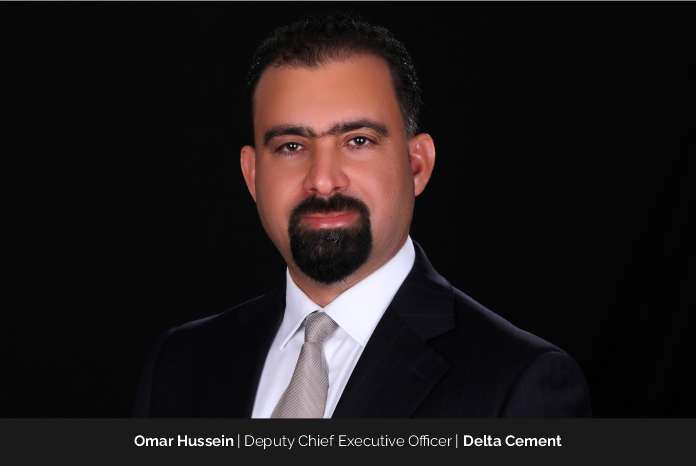
As the Deputy Chief Executive Officer at Delta Cement, Omar Hussein drives operational excellence, sustainability initiatives, and strategic growth while fostering a culture of accountability and empowerment across the organization.
Values That Shape Leadership in Action
Omar’s leadership is guided by daily values, especially in cement manufacturing. “Transparency and responsibility have always been at the core of my work. Trust is built when people can rely on my word and see consistency between decisions and actions,” he says.
Working across production, maintenance, projects, and cross-functional teams taught him the importance of reliability and results: stable production, reduced downtime, clear processes, and stronger departmental performance. Each step required learning and adapting. “I value developing people, identifying talents, and giving teams the tools they need to grow and deliver at a higher level,” he adds.
Omar emphasizes aligning teams behind clear goals and translating vision into action. “Managing large teams means dealing with different personalities and challenges. I try to lead with fairness, listen carefully, and understand the pressures people face on the ground. A respectful environment improves morale and directly impacts performance,” he observes.
As change is constant, from technology upgrades to market shifts and sustainability demands, flexibility, solutions-focused thinking, and composure help Omar manage multiple responsibilities while keeping the company aligned.
“The future belongs to those who believe in the beauty of their dreams.” – Eleanor Roosevelt.
Evolving Leadership for a Changing Industry
In the technically and strategically demanding cement industry, Omar’s leadership evolved through experience and challenges. He learned the value of involving people, collaborating, and listening to ground teams to make well-informed decisions. “The complexity of cement operations makes this approach essential,” he notes. “With experience, I realized that sustainable results depend on people, not pressure.”
He focuses on building trust, developing talent, and creating a culture of ownership by coaching teams, setting clear expectations, and giving them space to lead. Managing multiple high-impact roles taught him to delegate effectively, empowering teams, accelerating work, and strengthening accountability across departments.
With increasing regulations and environmental demands, Omar incorporates long-term thinking – evaluating alternative fuels, supporting carbon-reduction initiatives, and aligning operations with sustainability standards. “Ethical decision-making and compliance are now central to every major decision,” he adds.
Whether in solar projects, WHR integrations, system upgrades, or digital tools, Omar embraces innovation. “Part of my role is pushing teams to challenge old habits, adopt better technologies, and think beyond ‘how things used to be done,’” he remarks. Digital tools, automation, and analytics now guide his decisions through production KPIs, maintenance metrics, and quality dashboards.
Driving Operational Excellence and Strategic Growth
Omar’s role at Delta Cement spans operational, administrative, and strategic responsibilities, connecting day-to-day performance with long-term goals and aligning all departments. He coordinates with operations, production, and technical teams to ensure stable output, reduced downtime, and improved performance, monitoring KPIs, following maintenance schedules, supporting root-cause analysis, and integrating quality, mechanical, electrical, and production units.
He also leads projects to reduce clinker factor, introduce alternative raw materials, and align operations with sustainability standards, including evaluating green cement feasibility, carbon-reduction opportunities, and regulatory compliance. “By coordinating between teams and ensuring production issues are addressed quickly, I help improve plant reliability, reduce costs, and maintain a consistent production flow – key drivers for financial stability. Eliminating gaps between departments leads to faster decisions, fewer misunderstandings, and smoother execution of company strategies,” he explains.
Following up on major technical and development projects ensures timely delivery, strengthening infrastructure, energy efficiency, and competitiveness. “Through sustainability initiatives, digital transformation, and product development, I help position Delta Cement for long-term relevance, meeting current needs while building capabilities future markets will expect,” Omar adds.
“Start by doing what’s necessary; then do what’s possible; and suddenly you are doing the impossible.” – Francis of Assisi.
Resilience Tested, Leadership Refined
Omar notes that managing multiple stakeholders while keeping projects on track is always challenging. With overlapping objectives, the key is aligning clients, owners, contractors, and market partners toward a unified direction that supports progress and long-term success.
A defining moment in his career came during the construction and commissioning of Delta Cement Line 2, where equipment delays, supply chain disruptions, and coordination gaps created high-pressure conditions affecting timelines and production.
“During this period, I had to remain calm and strategic while coordinating complex dependencies across engineering, procurement, and operations. It required rapid risk assessment, difficult trade-off decisions, and clear, consistent communication so every stakeholder – from senior leadership to on-ground teams – understood priorities and the path forward,” he recalls.
The experience shaped his leadership, reinforcing resilience, structured problem-solving, and the importance of empowering teams. Most importantly, it taught him that leadership is defined under pressure – not only through timely decisions, but by building trust, motivating people, and turning challenges into opportunities for collective growth.
“All our dreams can come true, if we have the courage to pursue them.” – Walt Disney.
Crucible Moments That Shaped Leadership
Looking back at his journey at Delta Cement, Omar recalls crucible moments that tested his character and shaped his leadership. Early on, he realized that while confident in operations and strategy, connecting across departments did not come naturally. Coordinating production, maintenance, HR, and administrative teams required active listening, trust-building, and understanding others’ perspectives, which strengthened relationships and improved outcomes.
“I learned that offering a well-considered, honest perspective, backed by data and experience, is far more valuable than hedging or over-explaining. Whether discussing production priorities, project risks, or sustainability initiatives, speaking decisively has strengthened both my credibility and the team’s confidence in my guidance. Share your viewpoint clearly and confidently; leaders respect honest, well-informed input,” he advises.
Recognizing that no leader succeeds alone, Omar prioritized building strong, capable, and diverse teams, mentoring employees with the right mix of skill, integrity, and drive, and creating an environment where people can take ownership and grow. “This approach strengthens operational performance and drives strategic initiatives forward. Surround yourself with talented people of integrity and give them space to excel,” he recommends.
“We may encounter many defeats, but we must not be defeated.” – Maya Angelou.
Intentional Choices for Sustainable Leadership
Omar acknowledges that while “work-life balance” can feel unattainable, it is possible with a deliberate strategy. “I approach work-life integration by defining success on my own terms. Instead of relying solely on external achievements, I regularly reassess what truly matters to me, both professionally and personally, ensuring my daily decisions reflect those priorities,” he explains.
He sets clear boundaries with technology, manages availability, protects time for family and focused work, and relies on strong support networks, delegating effectively to prioritize high-impact decisions. At home, open communication ensures responsibilities are balanced.
“I make deliberate choices about travel and commitments, evaluating each opportunity based on its long-term value and alignment with my personal and professional goals. For me, integration is not about achieving a perfect balance; it’s about making intentional choices that allow me to perform at a high level while sustaining my well-being and the relationships that matter most,” he concludes.
“Be grateful for what you already have while you pursue your goals.” – Roy T. Bennett.
Leading Sustainability, Innovation, and Community Impact
Omar takes pride in Delta Cement’s initiatives advancing sustainability, operational excellence, and community engagement. The company supported the “Your Environment” project and contributed to its long-term carbon-neutrality roadmap, aligning production and product development with international standards.
Operationally, he led projects introducing advanced technologies in production, filtration, and industrial waste management, reducing environmental impact while improving efficiency, and supported efforts to enhance the plant’s green spaces. On the social front, Delta Cement engaged in programs like Rand Gallery Day to support emerging talent and strengthened its distribution network for wider product accessibility.
Together, these initiatives reflect a vision of integrating sustainability, innovation, and community impact into Delta Cement’s long-term growth strategy.
Empowering Leadership in Action
For Omar, being an empowering leader means “creating an environment where people are trusted, supported, and equipped to perform at their highest potential.” It’s about sharing authority, giving teams autonomy, and enabling them to take ownership and contribute meaningfully to organizational goals.
Omar adds that, in today’s fast-changing business landscape, empowering leadership involves developing people’s capabilities, offering guidance without micromanaging, and ensuring they have the confidence and resources to succeed.
“At its core, empowering leadership fosters accountability, continuous learning, and mutual respect, where teams feel valued, motivated, and encouraged to bring forward new ideas,” Omar notes. This drives performance, engagement, innovation, and long-term organizational resilience.
Preparing for the Cement Industry’s Future
Omar predicts that, over the next five years, the cement industry will face structural and operational challenges from decarbonization, shifting demand, and rapid technological change. Declining cement and clinker demand, driven by alternative materials, supply-chain optimization, and clinker-reduction technologies, will push producers to innovate and operate sustainably.
Sustainability will require lower-carbon production through blended cements, alternative raw materials, and energy-efficient technologies, while regulatory expectations intensify. Competition will grow as producers adopt digitalization, automation, and advanced manufacturing to reduce costs and optimize logistics amid supply-chain volatility and energy pressures.
Delta Cement is preparing by developing alternative raw materials and blended cements, modernizing production lines with SCADA, WHR optimization, and advanced filtration, advancing toward carbon neutrality through technology and partnerships, strengthening logistics and distribution networks, and investing in skilled professionals to drive innovation.
This strategy emphasizes resilience, sustainability, and innovation – ensuring competitiveness while contributing to a low-carbon construction future.
Building Accountability and Motivation Across Teams
Omar fosters accountability and motivation by creating clarity, empowering people, and modeling the values he expects. He ensures expectations are clear so every team member understands responsibilities, performance indicators, and outcomes, reinforced through check-ins, open dialogue, and feedback.
“Transparent communication is key,” he says. “Encouraging open conversations about progress, challenges, and risks builds trust and allows individuals to raise concerns and propose solutions safely.” He also emphasizes recognition, celebrating achievements to boost morale and motivate teams to sustain high performance.
Accountability is about support, not blame. With guidance, mentorship, and resources, teams feel equipped to overcome obstacles. Leading by example with integrity, reliability, and fairness sets the tone, inspiring ownership and purposeful performance. These practices create a culture where people feel valued, motivated, and accountable, enabling cohesive, sustainable results.
Lead by Example and Keep Learning
Omar advises emerging leaders to combine deep industry knowledge with strong leadership and continuous learning. “Focus on industry expertise,” he says. “Understanding raw materials, production processes, sustainability trends, and the competitive landscape provides the foundation for informed, strategic decisions. Stay curious and keep up with technological advancements and market shifts in this transforming sector.”
He recommends building a broad skill set – financial acumen, strategic thinking, communication, and project management. “Invest consistently in professional development through courses, workshops, and industry conferences,” he adds. Personal leadership qualities are equally vital: lead by example, take initiative, embrace challenges, speak up, take calculated risks, and empower teams in a culture where people feel valued. Maintain resilience and a mindset of continuous improvement.
“Aspiring leaders who blend expertise, integrity, and courage will find meaningful and rewarding opportunities in this industry,” Omar observes.
Balancing Competitiveness with Sustainability
Delta Cement stays competitive by embedding sustainability into its core strategy rather than treating it separately. “Environmental responsibility is directly linked to operational efficiency, cost optimization, and long-term market positioning,” Omar explains.
The company invests in advanced, low-carbon technologies – carbon capture, optimized filtration and waste management, and innovative CO₂ applications – staying ahead of regulations and reducing operational risks. Renewable energy and efficiency projects, including solar integration, WHR optimization, and system upgrades, lower energy dependency, stabilize costs, and enhance environmental performance, while process improvements minimize waste and extend asset life.
Delta Cement also strengthens supply-chain sustainability, embedding environmental performance across sourcing, logistics, and partnerships, while fostering employee engagement and stakeholder trust through training, awareness, and transparent communication. By combining innovation, efficiency, and sustainability, the company reduces environmental impact and reinforces its competitive advantage.
Fostering Growth Through Mentorship
Mentorship is central to Omar’s leadership journey, helping him sharpen problem-solving skills, expand industry knowledge, and gain confidence for greater responsibilities. “Throughout my career, mentors provided guidance, honest feedback, and a strategic perspective to navigate complex decisions,” he recalls.
Omar pays it forward, leading by example, demonstrating the behaviors, integrity, and work ethic he expects from future leaders, offering one-on-one guidance, constructive feedback, and stretch assignments to help team members grow. He empowers decision-making and ownership while remaining accessible for support.
Through coaching, onboarding, and connecting high-potential employees with his network, Omar ensures mentorship is part of the company culture. “Ultimately, mentorship is reciprocal. I learn from my teams just as much as they learn from me,” he notes.
“Change your thoughts, and you change your world.” – Norman Vincent Peale.
Conclusion
Omar Hussein has strengthened Delta Cement’s operational excellence, advanced its sustainability agenda, and fostered a culture of accountability, empowerment, and leadership development. He stresses consistency, noting that leadership is built through disciplined daily habits, not occasional effort, and that true legacy comes from shaping people, not just leaving things behind. His legacy rests on six pillars – character, choices, conduct, consistency, confidence, and compassion – that shape how we build, create, grow, and are remembered.