
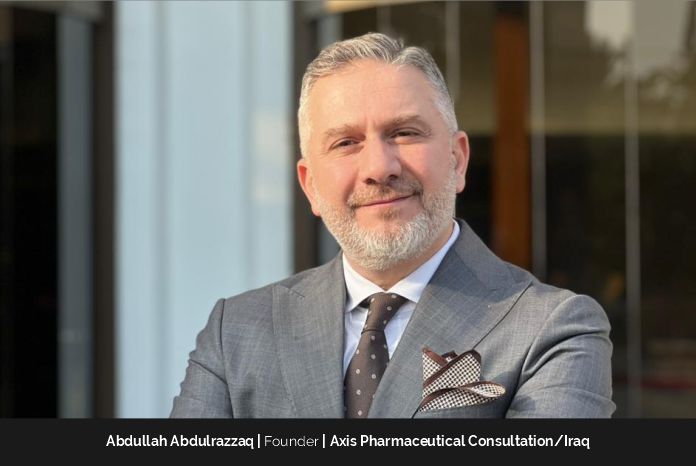
In a country where healthcare has endured decades of disruption, rebuilding systems is not merely a technical challenge, it is a moral responsibility. Abdullah Abdulrazzaq, Founder of Axis Pharmaceutical Consultation in Iraq, understands this reality with uncommon clarity. With over 26 years of experience across regional and multinational pharmaceutical organizations, Abdullah has lived through Iraq’s most turbulent healthcare transitions and emerged with a singular purpose: to help reshape the pharmaceutical sector into one that is ethical, patient-centered, and globally aligned. His journey is not defined by ambition alone, but by a deep sense of duty to restore credibility, knowledge, and access within a system long affected by isolation and imbalance.
A Market Transformed, A Responsibility Realized
The turning point that inspired Abdullah to establish Axis Pharmaceutical Consultation can be traced back to Iraq’s post-2003 transformation. Once almost entirely dependent on government supply through KIMADIA, the healthcare system shifted dramatically toward privatization, with nearly 80 percent of medical demand now met by the private sector. This change created opportunity, but also exposed serious gaps in regulation, expertise, and ethical practice.
For Abdullah, this moment demanded action. “I felt a strong responsibility to contribute what I had learned to this critical phase of Iraq’s healthcare evolution,” he explains. After decades of working with leading pharmaceutical companies across local and international markets, he recognized that Iraq needed more than products, it needed guidance, structure, and professional consultancy to navigate its new reality. Axis was founded to serve as that bridge, connecting global pharmaceutical players with Iraqi businesses while ensuring that patients gained access to modern, effective treatment options.
Reconnecting Iraq to Global Pharmaceutical Progress
One of the most pressing challenges Abdullah sought to address was Iraq’s prolonged disconnection from global pharmaceutical advancements. Years of sanctions and economic blockade from the 1990s until 2003 had left the country lagging behind while innovation accelerated elsewhere. As a result, many therapies available in Iraq became outdated, limiting patient outcomes and clinical progress.
Establishing Axis was, in many ways, an act of reintegration. Abdullah envisioned a consultancy that could help the Iraqi market catch up to global standards while respecting local realities. “Innovation must be adapted, not imported blindly,” he asserts. His approach focuses on translating international best practices into practical, ethical, and sustainable solutions tailored to Iraq’s regulatory and cultural framework.
A Vision Forged by Experience Across Eras
Having worked both before and after 2003, Abdullah brings a rare dual perspective to pharmaceutical leadership. Prior to the market shift, pharmacists in Iraq played a largely restricted role, dispensing centrally approved therapies with limited autonomy. Post-2003, the expansion of the private sector created new possibilities, but also new risks.
This contrast shaped the vision behind Axis. Abdullah believes Iraq must align with global pharmaceutical trends while empowering local expertise. “The goal is not to imitate, but to evolve intelligently,” he explains. Axis operates at the intersection of science, ethics, and communication, ensuring that progress translates into real-world impact rather than theoretical advancement.
Ethics as the Foundation of Advancement
At the core of Abdullah’s mission is a commitment to raising pharmaceutical standards through ethical promotion and evidence-based practice. He emphasizes that sustainable growth in healthcare cannot exist without trust. “Short-term gains achieved at the expense of compliance always result in long-term loss,” he states firmly.
Through Axis, he works to empower healthcare professionals with the knowledge and ethical mindset required for responsible engagement. Continuous professional development, transparent communication, and patient-centered thinking are not optional values, they are foundational principles. For Abdullah, advancing pharmaceutical standards means aligning scientific rigor with moral accountability.
Overcoming Regulatory Barriers Through Persistence
Launching Iraq’s first formally recognized pharmaceutical consultancy was no simple task. Regulatory uncertainty posed the greatest challenge, requiring nearly nine years of legal study and dialogue. Abdullah submitted his first formal request to the Iraqi Pharmacists Syndicate in 2016, initiating extensive discussions about compliance, professional scope, and the role of consultancy within pharmaceutical business.
“It was the first time pharmacists were officially positioned to play a recognized role in business consultancy,” he explains. After years of persistence and regulatory refinement, approval was finally granted in September 2025, a milestone not just for Axis, but for the profession as a whole. The achievement stands as a testament to Abdullah’s belief that systemic change requires patience, credibility, and unwavering commitment.
Defining Achievements Beyond Commercial Success
Throughout his career, Abdullah has led and introduced several landmark initiatives, including the launch of low-molecular-weight heparin (Clexane) with Sanofi, advanced prostate cancer therapies, and multiple vaccine programs during his tenure as Country Manager for GSK in Iraq. He also played a key role in elevating Julphar’s presence in the Iraqi market to regional prominence.
Yet, he considers his co-initiation of the Pharmaceutical Promotion League in 2017 among his most meaningful achievements. The organization became a vital link between the Ministry of Health and the private sector, representing pharmaceutical companies and scientific bureaus while promoting ethical engagement. His collaboration with the Iraqi Pharmacists Syndicate and academic institutions further reflects his commitment to preparing the next generation for global competitiveness.
Innovation with Responsibility and Purpose
When advising organizations, Abdullah approaches innovation with discipline rather than hype. He begins by identifying unmet needs, whether in patient outcomes, physician engagement, access, or internal efficiency, before proposing solutions. “Innovation must balance creativity with compliance,” he explains.
A key focus of his work is translating complex scientific data into actionable insights for healthcare professionals. While digital tools and AI are valuable, Abdullah emphasizes that people, skills, and mindset remain the true drivers of sustainable progress. Innovation, in his view, should enhance value delivery while safeguarding ethics and patient wellbeing.
Leadership Grounded in People and Clarity
Abdullah’s leadership philosophy is shaped by hard-earned lessons. He believes people consistently outperform strategies, making coaching and empowerment central to success. Clear priorities, transparent communication, and timely decision-making define his approach, along with staying closely connected to real market conditions rather than operating from a distance.
Most importantly, he measures leadership success by the independence and growth of others. “Strong leaders develop successors, not followers,” he explains. This belief extends to his client relationships, which are built on trust, honesty, and long-term partnership rather than transactional exchange.
Shaping the Future of Iraq’s Pharmaceutical Sector
Looking ahead, Abdullah envisions a pharmaceutical sector in Iraq that is credible, patient-centric, and respected beyond national borders. His long-term goal is to raise ethical and scientific standards, develop local talent, bridge global practices with local realities, and shift commercial thinking toward outcomes rather than volume.
He also sees data-driven healthcare, real-world evidence, digital tools, and AI analytics transforming the industry by 2026, provided innovation remains responsible and compliant. “The most successful organizations are those that innovate with purpose,” he asserts.
A Legacy of Trust and Long-Term Impact
As Abdullah Abdulrazzaq reflects on his journey, his focus remains firmly on the future. He hopes to leave behind a healthcare ecosystem built on transparency, professionalism, and trust, one that supports sustainable growth and earns international confidence. For him, leadership is not about titles, but about integrity, learning, and human-centered thinking.
“The leaders who will shape the future of pharma,” Abdullah Abdulrazzaq says, “are those willing to play the long game, combining scientific rigor, ethical leadership, and a genuine commitment to people.” Through Axis Pharmaceutical Consultation, he continues to do exactly that, helping Iraq’s pharmaceutical sector move forward with clarity, credibility, and conviction.