

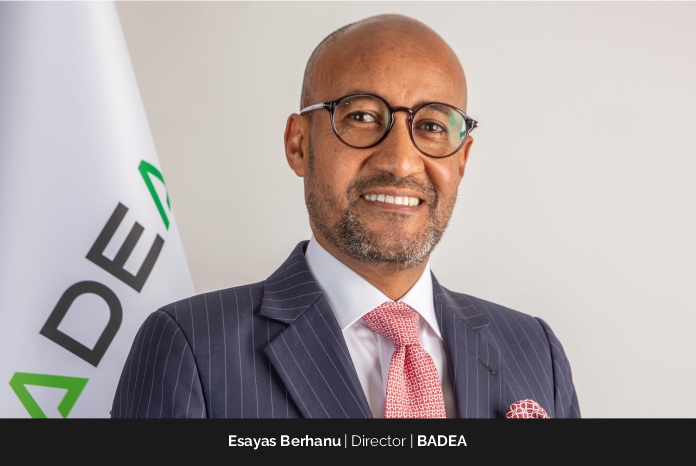
Esayas Berhanu is Trade Finance Director at the Arab Bank for Economic Development in Africa (BADEA), based in Riyadh, Saudi Arabia. He leads the origination, structuring, and management of trade finance solutions across Sub-Saharan Africa, supporting sovereign entities, financial institutions, and corporates through trade loans, term loans, LC confirmations, pre- and post-export financing, and risk participation.
Berhanu aims to expand BADEA’s regional presence, build a diversified portfolio of medium- and short-term investments, and mobilize liquidity into underserved markets. His strategic objectives include facilitating trade flows, strengthening local banking systems, and positioning BADEA as a key counter-cyclical trade finance provider. He’s committed to maintaining strong risk discipline while ensuring sustainable returns and implementing trade finance programs focused on Arab-African trade, intra-African trade, and international trade initiatives.
Bridging Gaps, Driving Innovation, Lasting Impact
Berhanu’s journey was shaped by professional experiences and a deep understanding of development finance’s power to restore confidence, catalyze opportunity, and give communities tools to shape their own future. Across African markets, banks, sovereign entities, and corporates struggle to access hard currency, manage financial risks, and facilitate importers and exporters.
“When the financing gap became strikingly apparent, it became clear to me that institutions like BADEA hold a vital position in bridging these critical gaps,” he says, noting how it enables the flow of trade, bolstering local banking systems and economic stability.
Having understood these dynamics, he expanded beyond executing transactions to strategically mobilizing capital, structuring innovative solutions, and fostering partnerships that yield financial sustainability and meaningful development impact. “It’s at this intersection of finance and tangible economic outcomes that I find my true purpose, continuously driving me to make a lasting difference in the world of economic development,” he reflects.
Berhanu approaches new ideas with a clear and specific market need, aligning innovative solutions with existing risk parameters and capital constraints before integration into established frameworks. Pilot programs test viability and effectiveness before scaling, ensuring innovation remains controlled and quantifiable, and enhancing developmental impact and financial performance. “By maintaining this balance, I aim to foster sustainable growth and greater overall success,” he states.
Acting Responsibly When the Path Is Unclear
One of Berhanu’s most challenging decisions involved a critical trade finance intervention in an uncertain macroeconomic environment marked by acute foreign exchange shortages, political risk, and banking sector pressures -requiring an exceptionally cautious approach despite an undeniable need for liquidity.
He had to balance safeguarding institutional capital with responding to a crisis affecting supply chains, essential imports, and local financial institutions. After extensive analysis, stakeholder dialogue, and scenario testing, he moved forward under a structured, risk-mitigated framework that included strong security arrangements, robust counterpart monitoring, and strategic partnerships to distribute exposure.
The experience taught him several lessons about leadership:
- True leadership is measured by the courage to act responsibly when the path forward is unclear.
- Challenging decisions rarely offer perfect information. A leader must act decisively but with disciplined judgment and a framework that protects long-term sustainability.
- In MDBs, taking zero risk can generate zero impact. The challenge is to structure risk responsibly so developmental benefits are delivered without compromising institutional resilience.
- Communicating the rationale behind difficult decisions is essential. Engaging openly with colleagues, management, and external partners reinforces trust and strengthens collective ownership.
- Working with DFIs, commercial banks, and regional partners is critical. Shared risk, shared insight, and shared commitment matter in fragile environments.
- Once the decision is made, the leader must own it. Leadership means standing by your team, institution, and mission.
“In the end, the intervention stabilized a vital supply chain, supported local financial institutions, and helped maintain confidence in a stressed market,” Berhanu recalls. “More importantly, it reinforced my belief that leadership in development finance is defined not by avoiding difficult decisions, but by making them responsibly – with clarity, integrity, and purpose.”
A Three-Dimensional Approach to Measuring Success
Berhanu evaluates success through three dimensions: financial sustainability, development impact, and strategic relevance. From a financial standpoint, he emphasizes portfolio quality, effective utilization, and risk-adjusted returns, ensuring a well-diversified trade finance portfolio with strong risk management.
“I maintain rigorous discipline in assessing counterparties, avoiding concentration risks, and mitigating potential financial exposures. This disciplined approach safeguards our assets while enhancing our ability to respond to trade finance fluctuations,” he explains.
For Berhanu, success involves additionality and the capacity to facilitate trade flows that would not have occurred without intervention – supporting critical imports such as essential food supplies and energy resources, and promoting exports that bolster local economies. He’s committed to strengthening local financial institutions to better facilitate trade transactions within their markets.
“By enhancing their operational capacity, we unlock new avenues for growth and development in these communities,” he explains. Strategically, Berhanu assesses effectiveness in expanding into underserved markets, deepening partnerships, and positioning the institution as a reliable source of counter-cyclical liquidity. He builds trust and collaboration with local entities to enhance impact, enable growth, and foster resilience.
Berhanu defines success as the efficient deployment of capital to achieve significant economic impact while ensuring the institution remains resilient over the long term. “Success is reflected in the tangible benefits we create for communities and economies, underpinned by a sustainable and responsible approach to finance,” he clarifies.
Strategic Pillars Driving Africa’s Economic Transformation
BADEA contributes to sustainable growth across Africa through four strategic pillars: trade facilitation, private sector development, infrastructure financing, and partnerships. Its trade finance pillar enables trade flows by providing liquidity and risk mitigation in Sub-Saharan Africa, ensuring access to essential imports – fuel, agricultural inputs, raw materials, pharmaceuticals, and energy – while supporting export sectors.
BADEA extends credit lines and risk-sharing facilities to local financial institutions, strengthening their capacity to support SMEs and corporations, creating a multiplier effect in the real economy. In infrastructure, it provides medium- to long-term financing for energy, agriculture, industry, and health – key drivers of structural transformation, job creation, and diversification.
BADEA also mobilizes capital through close collaboration with DFIs, Arab institutions, and international banks to attract financing into underserved markets. Through its Arab-African cooperation mandate, it facilitates cross-regional trade and investment, strengthening economic linkages and long-term resilience. Overall, it combines targeted interventions with financial discipline, ensuring capital delivers measurable development outcomes and sustainable institutional growth.
Purpose, Discipline, & Agility in Innovation
For Berhanu, innovation in development finance begins with a simple belief: progress is possible when purpose and discipline work together. Driving innovation within multilateral institutions requires strategic vision, diplomacy, and operational agility. Successful leaders exhibit several core qualities:
- They translate new products and partnerships into measurable development outcomes, anticipating shifts in global trade, liquidity, and geopolitics.
- They align differing priorities across stakeholders, creating space for innovative solutions even in politically sensitive contexts.
- They balance creativity with rigorous risk assessment, championing pilot programs, structured risk-sharing, and data-driven decision-making.
- They understand operational realities – foreign exchange shortages, trade bottlenecks, regulatory constraints, and local banking systems – to create tailored solutions.
- They cultivate partnerships with DFIs, commercial banks, export credit agencies, and regional institutions to unlock capital and expand access.
- They foster open dialogue and safe environments for experimentation.
- They remain adaptive, learning from market shifts, technology, and client needs.
- They are values-driven, inspiring trust for long-term, sustainable innovation.
Purpose, Boundaries, and Being Fully Present
Berhanu balances his senior MDB leadership role with personal well-being through intentional discipline, strong boundaries, and a values-driven approach to time management.
He prioritizes strategic responsibilities that deliver the greatest impact, delegating operational tasks to an empowered, high-performing team. He invests in capable colleagues, decentralizes decisions, trusts their expertise to reduce pressure, and sets deliberate boundaries around personal time to maintain clarity and avoid burnout.
Berhanu treats family time with the same commitment as professional engagements, remaining fully present. He incorporates exercise, reflection, and rest to stay resilient. Purpose fuels his energy while reminding him that meaningful impact is not achieved at the expense of personal life.
Trade Finance as a Stabilizing Force
One of the most meaningful achievements in Berhanu’s professional journey has been contributing to the expansion of trade finance operations in underserved African markets. The impact is driven by tangible improvement to economies facing liquidity shortages, foreign exchange constraints, and supply chain disruptions.
He designs and implements trade finance solutions that address structural gaps and support critical imports – food, fuel, pharmaceuticals, and agricultural inputs – while helping export-driven sectors remain competitive. “This experience reinforced my belief that, when structured responsibly, trade finance becomes far more than a financial instrument; it becomes a stabilizing mechanism for national economies,” he states.
Equally meaningful is strengthening local financial institutions through credit lines, risk-sharing, and structured partnerships – equipping them to support SMEs and trade intermediation. “Knowing they’re better positioned to serve their markets has been deeply rewarding,” he reflects. This accomplishment showed that development finance can step in when markets struggle, proving MDBs help African economies stay resilient. It embodies his core purpose: turning financial ideas into real development results and systems that outlast individual deals.
Building Trust, Scaling Partnerships Across Regions
Berhanu notes that fostering collaboration between Arab and African partners requires alignment of interests, cultivation of trust, and tailored solutions that deliver tangible value to both parties. His primary goal is to understand the priorities of both sides, bridging gaps to identify mutually beneficial transactions.
He leverages trade finance instruments such as LC confirmations, trade finance lines, and risk participations to deploy capital into African markets in a measured manner, ensuring investments are short-term, self-liquidating, and aligned with investor risk appetite while granting African partners access to global trade flows.
Berhanu also emphasizes robust risk-sharing structures involving DFIs and commercial banks to enhance confidence in transactions, particularly in higher-risk or underserved markets. Building long-term relationships and transparency through consistent engagement, clear communication, and exceptional execution establishes trust.
“In cross-regional partnerships, trust is not something that can be manufactured overnight; it is cultivated over time through reliability and demonstrated performance, which, in turn, lays a solid foundation for future collaboration,” he affirms, emphasizing his commitment to scalable platforms beyond one-off transactions, establishing ongoing trade lines and sustainable frameworks that evolve, to foster continuous interaction and mutual prosperity between Arab and African partners.
Key Trends Redefining Development Finance Globally
Berhanu outlines several key trends shaping development finance: a shift from traditional aid toward capital mobilization, leveraging private investment to drive growth in emerging markets; a tighter connection between trade and global liquidity, prompting reevaluation of how liquidity enhances trade flows; and geopolitical realignment reconfiguring supply chains.
Another trend is the rise of climate finance, underscoring urgent funding needs to address climate change and encourage green investment. Lastly, there is growing recognition of the need for stronger domestic capital markets in developing countries to better channel investments. Together, these trends are redefining DFIs from mere lenders into proactive catalysts of investment and resilience, fostering financial returns and sustainable development outcomes.
Shaping Africa’s Next Generation of Leaders
Berhanu notes that Africa’s greatest resource is the vision, creativity, and resilience of its people – and his role is to unlock that potential. He aims to shape a new generation of confident, mission-driven African leaders operating at a global standard while grounded in the continent’s realities, and to demonstrate that finance, applied responsibly, can be a catalyst for structural transformation.
Berhanu wants the next generation to see that African markets are defined by the scale of their opportunities, not their challenges, and that African-led expertise can compete globally and deliver meaningful impact by structuring innovative solutions, strengthening local institutions, and mobilizing capital. He hopes to inspire leaders bold enough to challenge traditional models, disciplined enough to uphold strong governance, and visionary enough to prioritize development impact alongside financial performance.
“Africa’s future will be shaped by leaders who combine technical excellence with purpose, and if my work helps even a few young professionals recognize their potential to drive change, that would be one of the most meaningful legacies of my career,” he reflects.
Principles for Purpose-Driven Careers
Berhanu shares several principles for aspiring finance professionals, advising them to pair intellectual curiosity and deep purpose with technical excellence, driven by a genuine commitment to improving lives:
- Build a strong technical foundation in risk management, financial analysis, macroeconomics, trade finance, and development policy.
- Seek on-the-ground exposure to emerging and frontier markets to understand foreign exchange shortages, liquidity constraints, trade bottlenecks, and institutional capacity gaps.
- Cultivate a global mindset to navigate diverse cultures, regulatory systems, and political landscapes.
- Embrace analytical rigor and integrity, never compromising on governance standards.
- Balance innovation with responsibility – explore new structures but safeguard institutional resilience.
- Build relationships and learn from mentors who provide guidance and open doors.
- Stay mission-driven, remembering that finance can be a tool for transformation.
Berhanu underscores ambition and patience in building careers through continuous learning, humility, and commitment to meaningful contributions. “If you stay curious, disciplined, and purpose-driven, you’ll find not only success but also a profound sense of fulfillment in the work you do,” he predicts.
Conclusion
Esayas Berhanu believes finance, applied responsibly, transforms economies and uplifts communities. At BADEA, that belief drives his mission – to turn capital into lasting resilience across Africa.